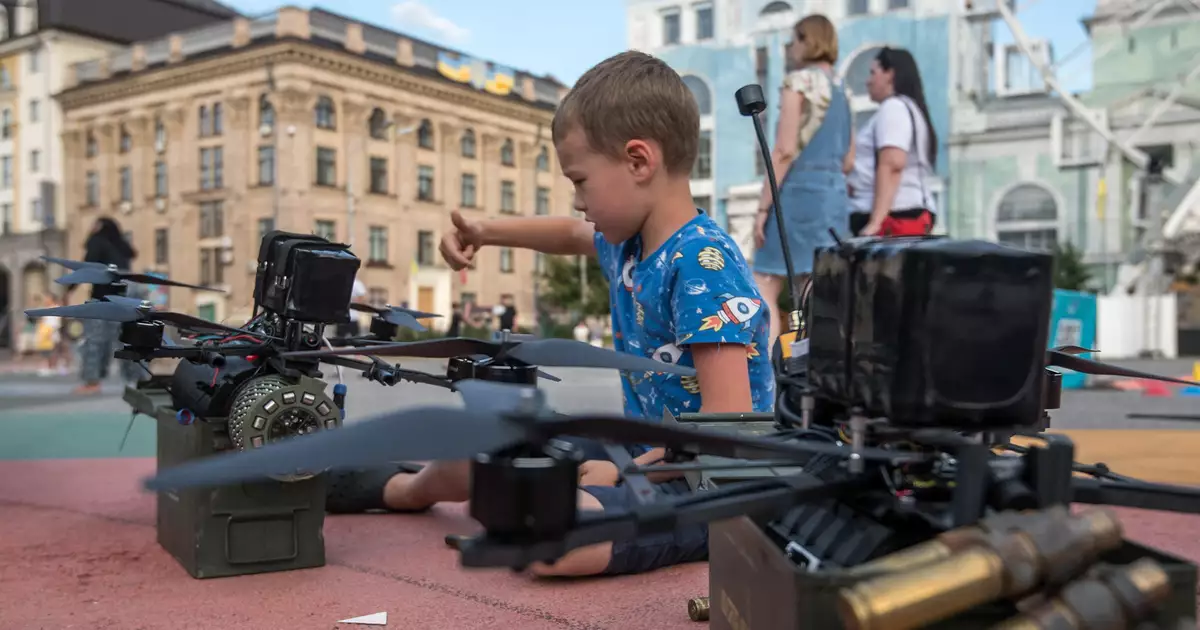

Lithuania’s Drone Academies: Engineering a Drone-Literate Society on NATO’s Frontier
In a move that fuses national security imperatives with a vision for technological ascendancy, Lithuania has announced a sweeping initiative to establish a network of “civil-resistance” drone academies. By 2028, these academies aim to train 22,000 citizens—including 7,000 children—in first-person-view (FPV) drone design and piloting. This ambitious program is more than a reaction to the shifting contours of warfare in Eastern Europe; it is a calculated leap toward embedding drone literacy as a foundational civic skill, with implications that reverberate across defense, education, industry, and geopolitics.
The Strategic Pivot: From Conscription to Technological Readiness
Lithuania’s population, at just 2.8 million, cannot support a large standing army. Instead, the country is betting on distributed technological readiness—transforming civilians into a latent reserve of intelligence, surveillance, reconnaissance (ISR), and strike capability. The lessons of the Russo-Ukrainian war are unmistakable: low-cost, rapidly iterated drones have upended battlefield economics, enabling swarms of sub-$2,000 FPV units to neutralize multi-million-dollar armor. In this new paradigm, asymmetric force multipliers are not just desirable—they are essential.
The drone academy initiative dovetails with Lithuania’s “Total Defence” doctrine, itself a post-Crimea innovation that broadens security from a strictly military concern to an all-of-society endeavor. By institutionalizing drone competence among civilians, Lithuania is not only hedging against manpower scarcity but also signaling a societal commitment that complicates adversarial escalation calculus. The public inclusion of youth in this program serves as a psychological deterrent, projecting resilience and preparedness to Moscow and beyond.
Technological Democratization and the Dual-Use Dividend
At the heart of the curriculum are hobbyist-grade platforms—Betaflight, Ardupilot, and open-source autopilots—that iterate faster than traditional defense procurement cycles. This democratization of unmanned systems is transformative:
- Workshops, 3-D printers, and simulation platforms purchased for youth training double as agile prototyping labs, fostering local supply chains in aerospace-grade additive manufacturing and electronics.
- Early exposure to autonomy stacks—from path-planning algorithms to mesh networking and real-time video encoding—cultivates a workforce fluent in the technologies underpinning not just defense, but also commercial logistics, energy inspection, and precision agriculture.
- Software-defined advantage becomes the new currency, pressuring traditional defense contractors to shift from high-margin hardware to low-margin, service-oriented models.
Lithuania’s approach mirrors the cyber hygiene campaigns of neighboring Estonia, but with an airborne twist. The potential for cross-border convergence—merging cyber and drone curricula—foreshadows a future where digital and aerial domains are inseparable, and where resilience is measured in both code and flight hours.
Economic, Industrial, and Policy Ripples
The economic logic of training eight-year-olds in advanced aeronautics is unassailable: it front-loads a decade of talent incubation, creating a robust pipeline for both defense primes and the burgeoning civilian drone services sector. This living laboratory is poised to attract venture capital focused on dual-use technologies, drawing hardware accelerators, semiconductor fabs, and AI-edge computing vendors to the region.
Key implications include:
- EdTech meets DefenseTech: Expect a surge in simulation software, VR flight trainers, and cloud-based telemetry analytics tailored for K-12 environments.
- Component supply chains: The demand for micro-gimbals, encrypted radio modules, and lithium-polymer batteries could strain global supply networks, accelerating EU efforts to reshore critical components.
- Data governance: The telemetry and video data generated by thousands of trainees will drive innovation in secure storage, edge AI, and cyber-hardening—fertile ground for enterprise partnerships.
Yet, the program is not without its ethical and legal complexities. Weaponizing a civilian skill base blurs combatant status under international law, raising questions that policymakers must address proactively to avoid strategic backlash. Boards and executives, too, will need to weigh the optics of youth militarization against the undeniable societal benefits of advanced STEM education—a tension that will shape ESG narratives across industries.
The Dawn of Drone Literacy: A Baltic Blueprint for the Future
Lithuania’s drone academies represent more than a defensive hedge—they are a national wager on distributed expertise and technological sovereignty. As “drone literacy” migrates into the societal mainstream, the country is poised to set precedents in credentialing, workforce development, and regulatory frameworks that will ripple across NATO and the EU.
For technology leaders, investors, and policymakers, the message is clear: aligning with this emerging drone-literate society offers an early-mover advantage in a rapidly evolving dual-use economy. The Baltic experiment may well become a blueprint for how small nations can punch above their weight in the age of autonomous systems—where the classroom, the workshop, and the battlefield converge in the hands of a new generation.

 By
By
 By
By

 By
By
 By
By


 By
By