


The Rewiring of Leadenhall: Hybrid Work, Gen Z, and the New Urban Social Code
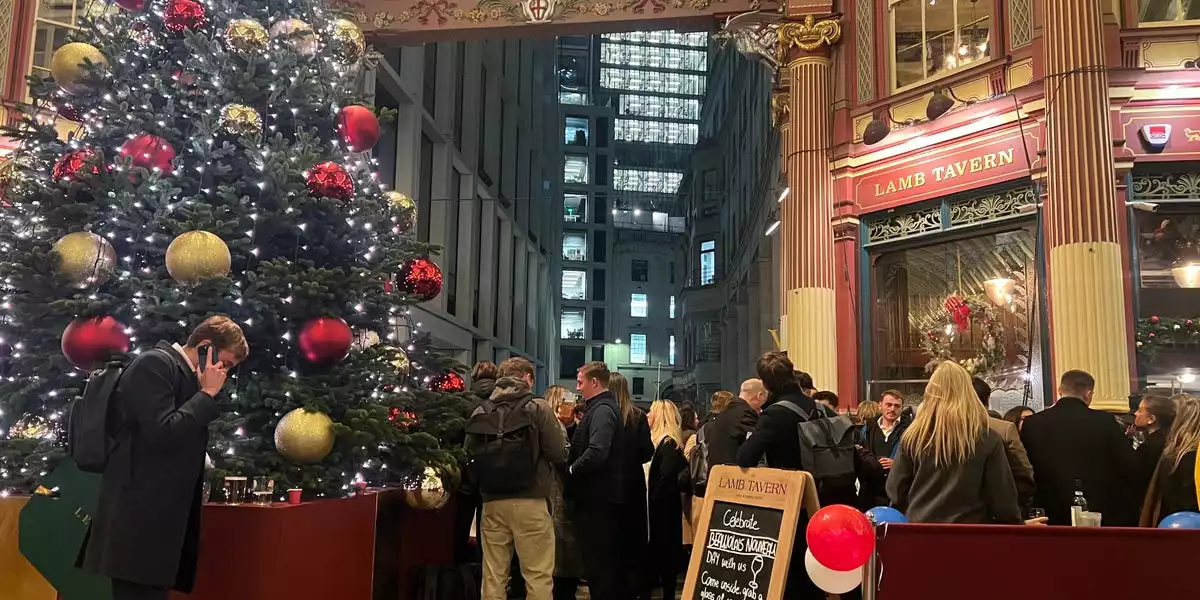
In the heart of London’s financial district, Leadenhall Market has long served as both a barometer and a stage for the City’s after-hours rituals. Once, Friday evenings unfurled with a predictable crescendo—crowds of professionals spilling onto cobbled lanes, pints in hand, as the week’s pressures dissolved in a collective exhale. Today, the rhythm is unmistakably altered. Leadenhall, like much of the Square Mile, is recalibrating under the weight of three converging forces: the rise of hybrid work, a generational pivot away from alcohol, and a determined policy push to safeguard the night-time economy.
Hybrid Work and the Compression of Social Demand
The structural shift toward hybrid work has upended the City’s temporal landscape. Where Fridays once reigned supreme, the pulse of physical attendance now peaks from Tuesday to Thursday. This compression has profound implications for hospitality operators:
- Footfall is concentrated: Demand for food and beverage is squeezed into a narrower window, intensifying competition for prime locations and reshaping staffing models.
- Peripheral office vacancies climb: As companies downsize or decentralize, landlords face downward pressure on lease values, and hospitality tenants must fight harder for frontage that guarantees mid-week crowds.
The result is a city whose social map is redrawn weekly, with Thursday emerging as the new Friday—a phenomenon echoed in the shifting primetime slots of American sports stadiums. Operators who adapt, optimizing inventory and labor for these mid-week surges while trimming costs on underutilized Fridays, are finding margin where others see only contraction.
Gen Z, Wellness, and the Evolution of the After-Work Ritual
If hybrid work is the architect of new rhythms, Gen Z is the author of new priorities. The latest Health Survey for England reveals that 26% of 16–24 year-olds now abstain from alcohol—a historic high. Per-capita alcohol consumption in the UK has dropped by nearly a third since the mid-2010s, yet spend per occasion remains steady, signaling a “better, fewer” approach that prioritizes quality and experience over volume.
This generational shift is catalyzing a splintering of the traditional “drink-only” proposition:
- Hybrid experiences flourish: Volleyball leagues, padel courts, and “sweat-then-sip” formats are on the rise, blending wellness, sport, and social connection in ways that echo the bundling cycles of digital media.
- Low- and no-alcohol innovation accelerates: Once an afterthought, these SKUs now post double-digit growth, competing on flavor, adaptogenic benefits, and even electrolyte content. The beverage industry is racing to capture a share of the £37 billion UK health-and-wellness market, blurring the line between “drinks” and “wellness beverages.”
For operators, the message is clear: floor plans must evolve to accommodate activity clusters—mezzanines for table tennis, e-darts, or even co-working by day and socializing by night. The venues that thrive will be those that create multi-dimensional value, extending dwell time and expanding the definition of hospitality.
Data, Policy, and the Modular Nightlife Economy
As the experience stack fragments, data becomes the connective tissue. Mobile ordering, occupancy sensors, and AI-driven demand forecasting—once the domain of quick-service chains—are migrating into pubs and bars. By capturing the “data exhaust” of compressed peak periods, operators can drive precision marketing and negotiate more favorable supplier terms. Real estate investors, too, are underwriting refurbishments that add flexible amenity spaces, hedging against the volatility of single-purpose nightlife venues.
Policy, meanwhile, is not standing idle. City Hall’s revitalization task force, convened by Mayor Sadiq Khan, signals a recognition that the night-time economy is a strategic asset, not a peripheral indulgence. Expect to see:
- Zoning flexibility for mixed-use developments
- Extended outdoor seating licenses
- ESG-linked financing for retrofits that meet new noise and energy standards
These interventions aim to ensure that the City’s after-work ritual is not merely preserved but reimagined for a new era—one where wellness, digital convenience, and flexible real estate converge.
The City’s Social Future: Modular, Data-Driven, and Resilient
Looking ahead, the consensus among analysts—including those at Fabled Sky Research—is that the after-work pint is not vanishing but re-platforming. The baseline scenario sees the hybrid model stabilizing, Thursday as the apex social node, and low/no-alcohol beverages growing at over 15% CAGR. The upside? A modest return of Friday footfall and a renaissance for premium craft spirits. The downside? A prolonged squeeze on disposable income, pushing more socializing into the home or virtual sphere.
For stakeholders across hospitality, beverage, real estate, and corporate HR, the imperative is to treat the nightlife economy as a modular, data-driven ecosystem. Those who blend wellness, digital tools, and flexible space will capture the loyalty—and spend—of a new generation of City professionals, ensuring that Leadenhall’s story is one of evolution, not extinction.

 By
By
 By
By
 By
By
 By
By
 By
By










