
When Reputational Risk Becomes Existential: OpenAI’s Board Crisis and the New Rules of AI Governance
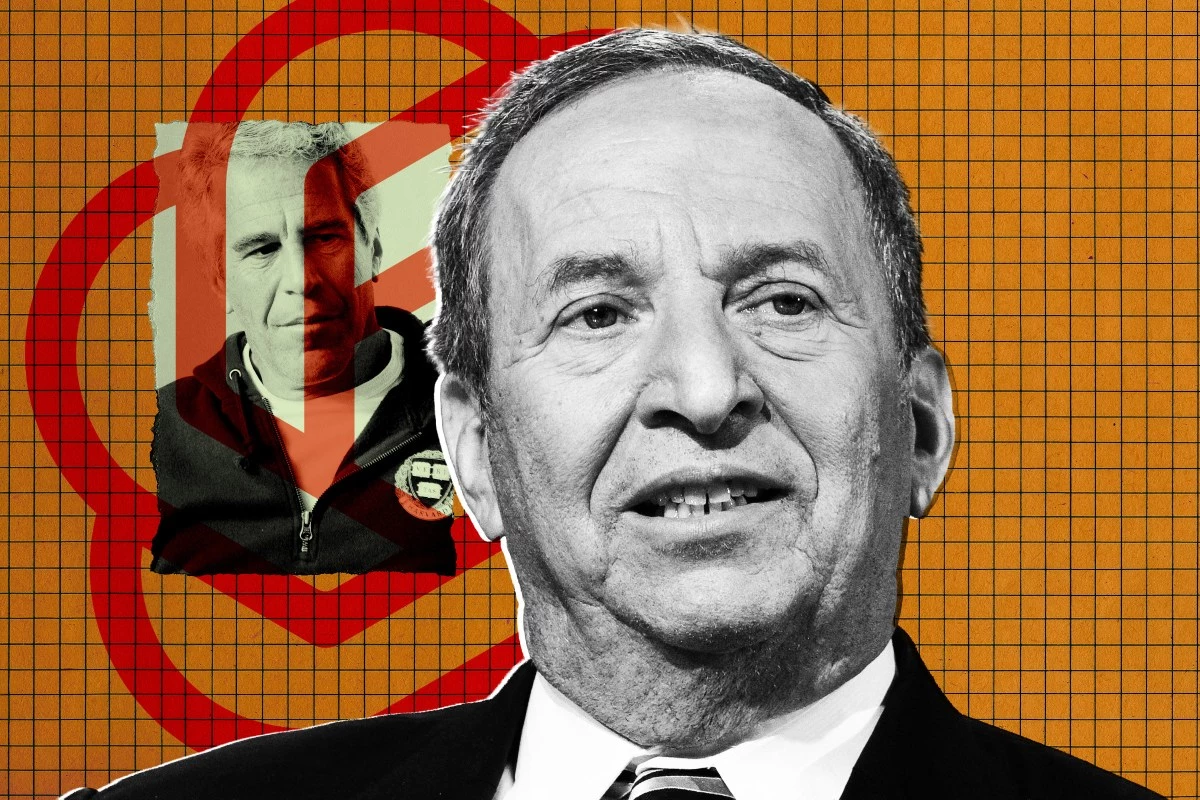
The recent resignation of former U.S. Treasury Secretary Larry Summers from OpenAI’s board, following the public release of Jeffrey Epstein’s e-mail archive, marks a watershed moment in the evolution of artificial intelligence governance. While the facts center on a single director’s personal entanglements, the reverberations are unmistakably systemic—exposing the fragility of AI’s hybrid business structures and the rising premium on institutional trust. In an era where generative-AI firms are racing toward trillion-dollar markets under the watchful gaze of global regulators, the episode is a case study in how reputational risk has become inseparable from capital formation and strategic viability.
The Anatomy of a Boardroom Shock: Trust, Power, and the Hybrid AI Entity
OpenAI’s governance model is a precarious balancing act. Its capped-profit structure attempts to reconcile a nonprofit mission with the capital-hungry realities of frontier AI development. Summers, as both a shareholder and outside director, was more than a credentialed economist—he was a bridge to Washington and Wall Street, lending OpenAI the gravitas needed to court sovereign wealth, institutional investors, and policymakers. His abrupt exit, triggered by ethically compromising correspondence with Epstein, has not only reshuffled internal voting blocs but also exposed the company to the bargaining leverage of heavyweight stakeholders such as Microsoft.
The implications are immediate and multifaceted:
- Reputational contagion: In the AI sector, trust is currency. A single director’s scandal can ripple through procurement pipelines, compliance audits, and enterprise partnerships, raising the cost of doing business and inviting scrutiny from both regulators and the media.
- Pattern recognition by regulators: The migration of ESG frameworks and “know-your-director” protocols from finance into AI is now all but inevitable. Board-level vetting will increasingly include background checks for past affiliations with sanctioned or criminal entities, codifying a new baseline for fiduciary hygiene.
The episode also comes at a delicate time for OpenAI, still recovering from the aftershocks of last year’s governance crisis involving CEO Sam Altman. Media coverage now draws a direct line between board instability and questions about oversight, amplifying investor anxiety about “key-person” risk and the potential for reputational contagion across the AI investment landscape.
Capital, Compliance, and Competitive Dynamics in the Age of AI Scrutiny
For OpenAI and its peers, the cost of capital is now inextricably linked to perceptions of governance stability. Any hint of boardroom turbulence can nudge up the risk premium demanded by sovereign funds and top-tier venture capitalists underwriting the sector’s voracious appetite for compute and talent. This dynamic is particularly acute as generative-AI firms face intensifying regulatory scrutiny and the specter of export controls on advanced models.
Summers’ departure also leaves a vacuum in government relations. His ability to translate macroeconomic impact into Beltway vernacular was a strategic asset, especially as legislators draft safe-harbor provisions and debate the national-security implications of AI. Without that informal policy consigliere, OpenAI’s influence in Washington may wane—potentially emboldening hawks pushing for tighter controls on chip exports and AI model deployment.
Meanwhile, the talent market is watching. Elite researchers and enterprise-sales leaders weigh company ethics alongside compensation. Governance turbulence can become a recruiting narrative for rivals like Anthropic, Google DeepMind, and xAI, who may position themselves as havens of “values stability.” Yet, there is an opportunity for OpenAI: by operationalizing world-class compliance analytics, the company could transform governance rigor into a strategic moat—making its “clean bill of health” as important as model accuracy or inference cost.
The New Playbook: From Character Due-Diligence to Strategic Resilience
The Summers-Epstein affair is not an isolated event. Serial governance shocks—from FTX’s implosion to the Super League debacle—have conditioned investors to punish entities that fail the “character due-diligence” test. In AI, where capital intensity meets geopolitical sensitivity, this translates into:
- Longer syndication cycles and stricter term sheets: Expect more frequent moral-turpitude clauses and background checks akin to anti-money-laundering protocols, especially from asset managers and endowments eager to demonstrate “responsible AI” exposure.
- Insurance market recalibration: Underwriters of directors-and-officers (D&O) policies may soon introduce exclusions for ties to high-risk individuals, effectively taxing poor governance.
- Supply chain risk: Board instability can weaken perceived policy influence, emboldening regulators to tighten access to cutting-edge silicon from NVIDIA or AMD—a nonlinear threat that few scenario models capture.
As central banks soften their stance and liquidity returns to global markets, reputational liabilities can still crowd out cheaper refinancing—precisely when AI firms need to pre-pay for GPUs and secure long-lead-time power contracts.
The Summers episode signals the maturation of AI into a systemically important sector, where governance rigor is a competitive differentiator and lapses can propagate through the intertwined networks of capital, talent, policy, and supply chains. Executives who treat reputational resilience as a first-order design constraint—on par with model performance—will be best positioned to navigate the next inflection point in this rapidly professionalizing industry. In the end, the real test for OpenAI and its peers is not how they weather a single scandal, but how they institutionalize trust in a world where the stakes have never been higher.

 By
By
 By
By


 By
By
 By
By

 By
By