
A high-profile Autopilot crash spotlights the fragile contract between driver and machine
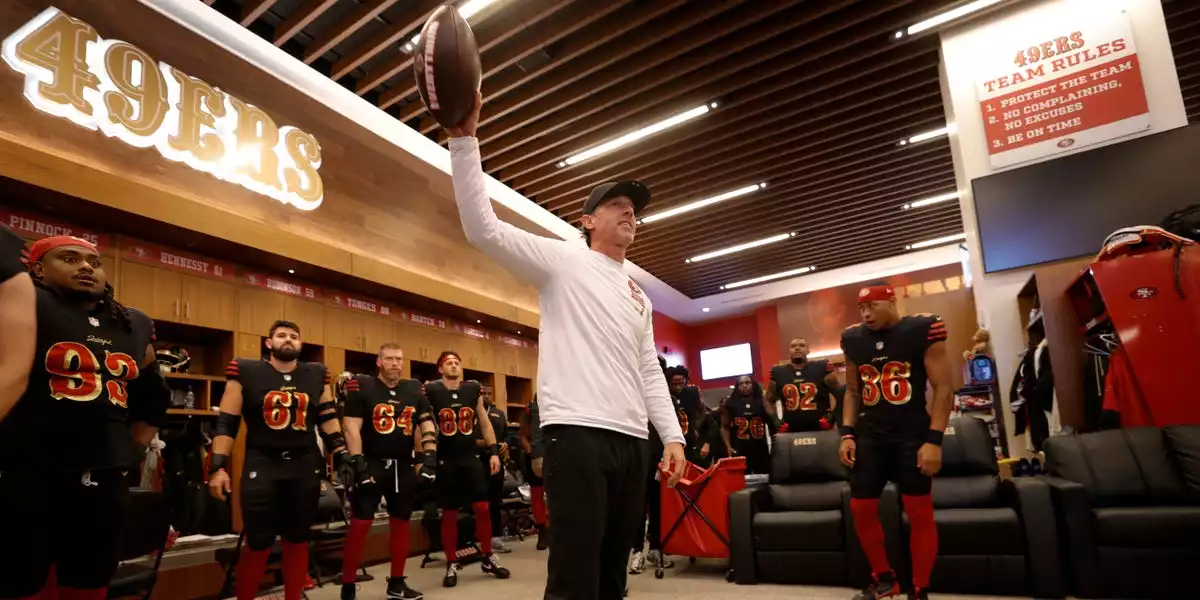
The reported July 14 collision in Palo Alto involving San Francisco 49ers head coach Kyle Shanahan and a Tesla Model S operating under Autopilot lands at an uneasy intersection of celebrity visibility, consumer technology, and public safety. According to the account provided, the vehicle veered into oncoming traffic and struck a Mercedes-Benz SUV after Shanahan looked away to retrieve a phone that had fallen into the rear seat. He has said he is uncertain whether Autopilot was disengaged at the moment—an ambiguity that, on its own, captures one of the most persistent challenges in modern advanced driver-assistance systems (ADAS): drivers may not always know, with confidence, *who is in control*.
Shanahan’s injuries—multiple fractures, a concussion, and a deep facial laceration—underscore the physical stakes of even brief lapses in attention. His public posture is notable for its clarity: he has accepted responsibility, expressed regret for the risk posed to others, and emphasized that Level 2 driver-assist systems require continuous vigilance. At the time of writing, neither Tesla nor the 49ers organization has issued a formal response, leaving the incident to function less as a corporate narrative and more as a real-world stress test of how semi-automation is understood and used.
For business and technology leaders, the episode is not merely a headline. It is a concentrated case study in human factors engineering, product liability, regulatory trajectory, and the economics of trust in mobility technology.
Level 2 autonomy: where interface design meets human complacency
Tesla Autopilot—like comparable offerings across the industry—sits in the Level 2 category: the system can assist with steering and speed, but the human driver remains responsible for monitoring the environment and intervening immediately. This “human-in-the-loop” model is deceptively demanding. It asks people to remain alert while the machine performs much of the visible work—an arrangement that can erode attention precisely because it feels stable.
Two technical fault lines stand out in Shanahan’s description:
- Status ambiguity and disengagement uncertainty: If a driver cannot reliably tell whether Autopilot is engaged, partially engaged, or has silently handed back control, the handoff becomes a safety-critical moment. The most dangerous failures in semi-automation are often not dramatic malfunctions, but confused transitions.
- The distraction gap: The trigger here—reaching for a phone—reflects a broader reality of the attention economy. ADAS does not eliminate distraction risk; in some cases, it can lower perceived risk, making distraction more likely.
This is where human-machine interface (HMI) design becomes a strategic differentiator. The industry’s next gains may come less from incremental lane-keeping polish and more from systems that make misuse harder and correct use intuitive. That includes:
- More assertive driver-monitoring systems (DMS) such as camera-based eye tracking, head-pose estimation, and attention scoring
- Escalation logic that moves from gentle prompts to audible alerts to controlled slowdown when attention is lost
- Clearer, redundant feedback on system state (visual + auditory + haptic) to reduce uncertainty during engagement/disengagement
The deeper lesson is that Level 2 autonomy is not “almost self-driving.” It is a continuous teamwork exercise between human and machine—one that fails when either party assumes the other has it covered.
The business fallout: liability, insurance pricing, and consumer confidence in ADAS
High-profile ADAS crashes can reshape markets in ways that extend far beyond a single vehicle or brand. The immediate business questions cluster around liability allocation, insurance economics, and demand elasticity for driver-assist features.
Key pressure points include:
- Liability and litigation exposure: Even when a driver accepts responsibility, the broader ecosystem—manufacturers, software suppliers, and insurers—must contend with how system design, warnings, and marketing claims could be interpreted by regulators, courts, and juries.
- Insurance premium recalibration: Insurers price risk based on frequency, severity, and uncertainty. Publicized incidents can accelerate premium increases for certain models or feature packages, indirectly raising the total cost of ownership and affecting financing decisions.
- Consumer trust and adoption curves: ADAS growth depends on confidence. If consumers begin to view Level 2 systems as confusing or overhyped, adoption may slow—impacting not only automakers but also the supplier stack, including chipmakers, Tier-1 integrators, and sensor vendors.
Competitive dynamics also sharpen. Legacy OEMs and newer entrants are watching for opportunities to differentiate on safety validation, driver monitoring, and transparent capability labeling. In a market where many features appear similar in brochures, demonstrable safety performance and credible communication can become decisive.
Regulation and strategy: the coming push for monitoring, data, and clearer claims
Regulators in the U.S. and Europe have been debating tighter standards for ADAS, and incidents like this tend to add urgency—particularly around mandatory driver monitoring, data logging, and investigation access. The strategic implication for automakers is straightforward: the compliance bar is likely to rise, and the winners will be those who treat governance as product design, not paperwork.
Business leaders should watch for several likely directions:
- Stronger requirements for driver-monitoring systems as a condition for offering certain hands-on features
- More explicit labeling rules that constrain how “autopilot” or “self-driving” language can be used in consumer contexts
- Standardized event data recording to clarify system status, driver attention, and control transitions during crashes
There is also a reputational dimension unique to high-visibility brands: celebrity associations can amplify marketing lift, but they also amplify downside when things go wrong. In that sense, Shanahan’s candid framing—emphasizing vigilance and personal accountability—may ultimately do what product manuals often fail to do: communicate, in plain language, what Level 2 automation actually demands.
The broader takeaway for the mobility industry is that the path to autonomy is not only a race for better perception and planning algorithms. It is a race to build trustworthy human-machine partnerships, where the system is harder to misuse, easier to understand, and designed around the realities of human attention—especially when attention is most likely to slip.

 By
By
 By
By
 By
By

 By
By

 By
By
 By
By