
A new kind of planetary “weather map” for an ice giant long left in the dark
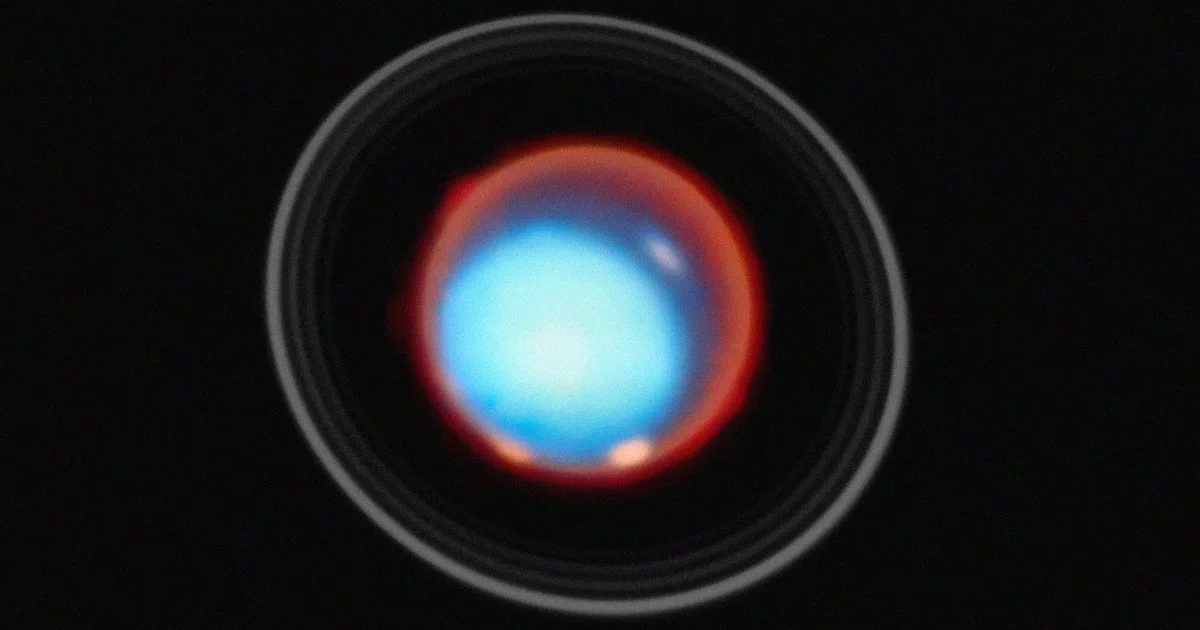
The James Webb Space Telescope (JWST) has delivered what amounts to a three-dimensional diagnostic scan of Uranus’s upper atmosphere, using its Near-Infrared Spectrograph (NIRSpec) to observe the planet across nearly a full rotation. For planetary science, this is more than a prettier picture: it is a shift from episodic snapshots—most famously Voyager 2’s 1986 flyby—to systematic, rotationally complete remote sensing that can disentangle how Uranus behaves over time and longitude.
At the center of the result is a rare combination of capabilities: faint near-infrared emission sensitivity, stable space-based observing conditions, and spectroscopy that can separate overlapping signals from high-altitude molecules and ions. The outcome is the most comprehensive view yet of how Uranus’s upper atmosphere is structured vertically—temperature layers, ion density gradients, and the energetic processes that knit them together.
Key observational takeaways with high retrieval value for researchers and modelers include:
- Vertical temperature and ion density mapping across a broad swath of the planet, enabling true 3D atmospheric characterization rather than a 2D disk average.
- Identification of two bright auroral bands plus multiple dimmer regions, forming the first three-dimensional visualization of Uranian auroras.
- Evidence that Uranus’s upper atmosphere has continued cooling since the 1990s, sharpening a long-running puzzle about the planet’s energy balance.
- Auroral morphology that does not resemble Earth’s polar-confined patterns, reinforcing that Uranus is governed by a fundamentally different magnetic geometry.
Auroras as a proxy for Uranus’s hidden magnetosphere—and a stress test for dynamo theory
Uranus is an outlier in the solar system’s magnetic family. Its magnetic axis is tilted by 97.77° relative to the rotation axis, a configuration that complicates nearly every intuition derived from Earth, Jupiter, or Saturn. In practical terms, that tilt means the planet’s interaction with the solar wind—and the pathways that funnel charged particles into the atmosphere—can reorganize in ways that are difficult to predict without direct measurements.
JWST’s auroral mapping matters because auroras are not just light shows; they are remote signatures of magnetospheric structure. Where auroras brighten, field lines and particle precipitation are telling a story about the magnetic environment that cannot be directly sampled today because no dedicated in-situ Uranus mission is currently operating.
From a modeling perspective, the dataset provides unusually strong constraints for:
- Magnetohydrodynamic (MHD) simulations that attempt to reproduce field-line topology and time-variable reconnection under extreme axial tilt.
- Coupled climate–magnetosphere models, because the observations resolve vertical gradients in temperature and ionization that serve as boundary conditions.
- Comparative planetology and stellar physics, where Uranus becomes a natural laboratory for non-Earthlike dynamo behavior—useful not only for ice giants but for interpreting magnetized bodies across astrophysical contexts.
The continued cooling trend is equally consequential. Upper-atmosphere temperatures are shaped by a balance of solar input, internal heat, chemistry, and magnetospheric energy deposition. If Uranus is cooling despite intermittent auroral energy, it raises pointed questions about radiative efficiency, chemical composition changes, and the degree to which the planet’s internal heat flux differs from expectations. JWST’s spectroscopy does not close the case—but it narrows the plausible explanations by turning a decades-long debate into a quantitatively constrained problem.
The technology story: NIRSpec’s deep-space spectroscopy and the spillover economy
JWST’s Uranus results are also a referendum on instrumentation strategy. NIRSpec’s performance illustrates how cryogenically cooled optics, modern detector arrays, and stable space-based platforms extend planetary science beyond visible imaging into direct measurement of faint molecular and ionic emissions. This is precisely the kind of capability that can convert “hard-to-visit” targets into data-rich environments, even when mission budgets or timelines delay dedicated spacecraft.
That has downstream implications for the industrial base and adjacent markets. High-precision spectroscopy and cryogenic mechanisms are not confined to flagship astronomy; they are part of a broader technology stack with potential spillovers into:
- Earth-observation and climate monitoring, where spectroscopy supports greenhouse gas detection, pollution tracking, and compliance verification.
- Secure communications and sensing, where advanced detectors and precision optomechanics can translate into higher sensitivity and lower noise systems.
- Medical and scientific imaging, where detector innovation and calibration techniques often migrate from space science into terrestrial instrumentation.
Just as important is the data pipeline. A 3D atmospheric dataset built from rotationally resolved spectroscopy is computationally demanding, pushing the need for advanced analytics, machine learning-assisted retrievals, and high-performance computing. This creates a natural interface between space science and the technology sector—particularly cloud and simulation providers—where partnerships can accelerate model iteration and broaden access to complex datasets.
Strategy and market implications: remote breakthroughs expose the in-situ gap
JWST’s success strengthens the argument that multi-purpose flagship telescopes can deliver outsized returns across many targets, including ice giants. Yet it also underscores a strategic gap: remote sensing can infer magnetospheric behavior, but it cannot fully replace in-situ measurements of fields, particles, and plasma dynamics.
For space agencies and stakeholders weighing next steps, the most actionable implications cluster around mission architecture and collaboration:
- A Uranus orbiter or probe concept can now be refined using JWST-derived auroral latitudes and atmospheric structure, improving payload prioritization (notably spectrometers and magnetometers) and observation planning.
- International, modular mission designs look increasingly pragmatic, distributing cost and risk while preserving scientific ambition—an approach already mirrored in the multinational collaboration patterns behind JWST science.
- Dual-use technology development—especially in infrared detectors and cryogenic subsystems—offers a pathway to sustain manufacturing capability while enabling commercial returns outside deep-space exploration.
JWST has effectively reopened Uranus as a living system rather than a distant postcard: a planet with dynamic auroras, evolving upper-atmosphere temperatures, and a magnetic architecture that challenges standard models. The more clearly Uranus comes into focus, the more it looks like a bridge between solar system science and exoplanet interpretation—an ice-giant template for understanding atmospheres under energetic particle bombardment, and a reminder that the most valuable frontier data often arrives first through better instruments, not closer proximity.

 By
By
 By
By

 By
By
 By
By


 By
By