
The Late-Night Stage as a Geopolitical Arena
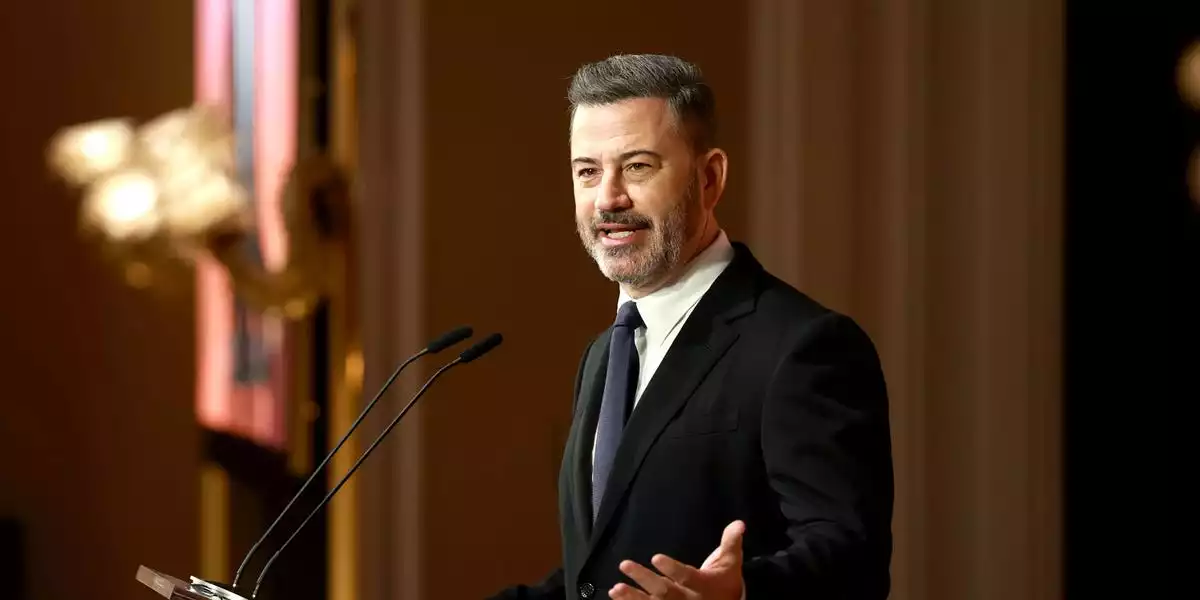
Jimmy Kimmel’s “alternative Christmas message” on Channel 4 was more than a seasonal quip or a celebrity’s foray into British television. It was a vivid tableau of the new world order in global media—a world where the boundaries between entertainment, politics, and international influence are increasingly porous. Kimmel’s pointed critique of U.S. leadership, delivered from a London broadcast slot, did not merely entertain; it exposed the intricate dance between regulatory muscle, star power, and the globalization of commentary.
This episode arrives at a moment of heightened regulatory vigilance. The FCC’s swift, public warning to Kimmel’s home network, ABC, after his earlier political remarks, signals a new era of interventionist oversight. The message to broadcasters is clear: political dissent on legacy airwaves may now carry not just reputational, but existential risk. Yet, paradoxically, this very scrutiny amplifies the leverage of marquee talent. ABC’s rapid renewal of Kimmel through 2027, even as controversy swirled, is a testament to the network’s calculation that in a fragmented attention economy, the cost of losing a proven audience magnet far outweighs the hazards of regulatory friction.
Regulatory Flashpoints and the Economics of Attention
The FCC’s posture—hinting at the politicization of license renewals—has introduced a chilling-effect premium to the business of linear broadcasting. Compliance is no longer a box-ticking exercise; it is a strategic imperative, woven into enterprise-level risk models alongside data privacy and antitrust exposure. For broadcasters, the specter of politicized enforcement means scenario-planning for regulatory turbulence, with a renewed focus on geo-adaptive ad technology that can dynamically swap region-specific ad loads in the wake of controversy.
Meanwhile, advertisers are recalibrating their calculus. The volatility of “regulatory sentiment” is now priced alongside traditional brand-safety metrics. High-profile controversy, once a reliable engine for short-term impressions, now threatens the stability of long-tail CPMs. Networks, in turn, are hedging with dynamic ad insertion and international syndication—a strategy that not only diversifies revenue but also provides insulation against domestic market softness. British, Australian, and Nordic buyers increasingly see U.S. late-night IP as cost-effective, premium content, with licensing fees offering a buffer against the vagaries of the American ad market.
Star Power, Platform Convergence, and the Global Commentary Boom
The economics of late-night television are being rewritten in real time. As streaming budgets normalize and the cost of high-end scripted series becomes harder to justify, unscripted voices like Kimmel’s have emerged as strategic assets—cost-efficient, rapid-turnaround content that reliably trends across social channels. The rapid reinstatement of Kimmel’s show after its brief suspension is a case study in the “too-valuable-to-cancel” dynamic: star creators with strong digital followings can now weaponize the risk of audience migration in negotiations, wielding unprecedented bargaining power.
Controversy, far from being a liability, has become a catalyst for cross-platform engagement. Spikes in search volume and clip-sharing drive incremental viewership on YouTube and Hulu, reinforcing the importance of windowing rights and sophisticated cross-platform analytics in renewal talks. For international broadcasters like Channel 4, commissioning an American talk-show host for a holiday address is more than counter-programming—it is public diplomacy by proxy, contextualizing U.S. politics for local audiences while monetizing global curiosity. The “outsider commentary” format is poised to proliferate, with public broadcasters from CBC to ZDF likely to replicate the model as a differentiator from domestic punditry.
Navigating the Next Regulatory Cycle: Strategic Imperatives
The strategic implications for media executives, advertisers, and policymakers are profound:
- Broadcasters must treat compliance as a core enterprise concern, investing in adaptive ad tech and flexible distribution architectures that can withstand regulatory shocks.
- Streaming platforms should anticipate parity regulation, positioning transparency in content-moderation AI and political-ad libraries as competitive differentiators, while acquiring globally portable commentary franchises to fill schedule gaps.
- Advertisers need to price in “polarization volatility,” leveraging real-time brand-safety dashboards and rapid-response social campaigns to harness earned-attention boosts without exposing themselves to reputational blowback.
- Policymakers face the challenge of cross-jurisdictional feedback loops, as domestic regulatory threats push commentary offshore, amplifying voices through foreign channels and complicating efforts to shape the information ecosystem.
Kimmel’s Channel 4 appearance, then, is not merely a footnote in the annals of late-night television. It is a signal event in the ongoing fusion of content, regulation, and geopolitics—a reminder that volatility, for those prepared to harness it, can be transformed from existential threat into enduring strategic advantage. In this new era, the winners will be those who build data-rich, cross-border monetization strategies and treat political risk as a core design principle, not an afterthought.

 By
By
 By
By
 By
By
 By
By
 By
By
 By
By

 By
By