
A new kind of escalation: when commercial cloud becomes a declared battlefield
Iran’s Islamic Revolutionary Guard Corps (IRGC) has moved beyond rhetorical condemnation into a more explicit doctrine: naming major U.S. technology companies as military targets. The list—reported to include Google, Microsoft, Palantir, IBM, Nvidia, and Oracle—is notable not only for its market weight, but for what it implies about modern power. In the IRGC’s framing, these firms are no longer merely vendors or platforms; they are operational enablers of U.S. military capability through cloud infrastructure, AI-enabled targeting, and advanced computing that supports weapons development and intelligence workflows.
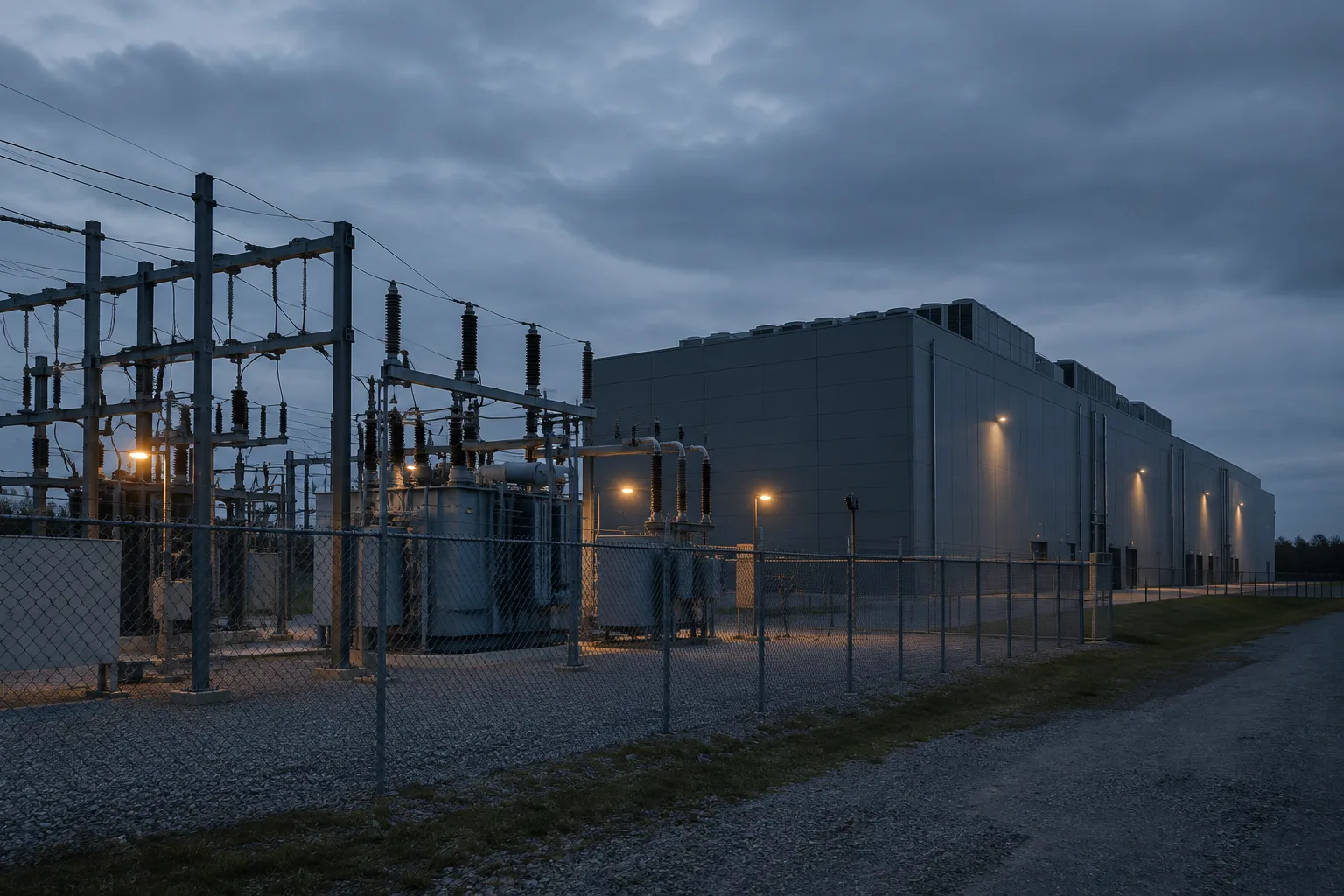
The reported drone strikes causing “structural damage” to Amazon Web Services (AWS) facilities in the UAE and Bahrain—if verified—would mark a sharp inflection point: kinetic action directed at corporate technology infrastructure outside a traditional battlefield. Even in an era of persistent cyber conflict, the open targeting of data centers and cloud regions signals a shift toward what many security analysts have warned about for years: an “infrastructure war” where the distinction between civilian and military assets becomes increasingly hard to sustain.
This development lands in a geopolitical context shaped by retaliatory logic and contested narratives, including references to U.S. and Israeli strikes and an operation against an Iranian bank that reportedly resulted in civilian casualties. Regardless of attribution debates, the strategic message is clear: commercial technology stacks are being treated as strategic terrain.
—
Dual-use technology under pressure: cloud, AI, and the cyber-physical merge
At the heart of this escalation is the reality that cloud computing and AI are inherently dual-use. The same platforms that run consumer search, enterprise analytics, and logistics optimization can also support surveillance, command-and-control, and decision advantage. That duality is not new; what is new is the apparent willingness of a state adversary to treat the enabling infrastructure as targetable in physical space.
Several operational implications stand out:
- Concentration risk in regional cloud hubs: Hyperscale data centers are designed for resilience, but they are also geographically fixed, capital-intensive, and often clustered near power and connectivity corridors. In geopolitically sensitive regions, that physical footprint becomes a liability.
- Edge computing and disaggregated architectures accelerate: Expect faster adoption of edge nodes, micro-data centers, and containerized compute that can shift workloads away from a small number of high-value sites. This is not only a latency play—it is a survivability strategy.
- Multi-cloud and hybrid-cloud become less optional: Many enterprises already pursue multi-cloud for pricing and redundancy. Under kinetic-risk assumptions, multi-cloud becomes a continuity mandate, with failover planning tied to geography, not just availability zones.
- Cyber-physical convergence becomes the baseline threat model: The next generation of risk is blended—cyber intrusion to map systems, disrupt controls, or degrade monitoring, paired with physical sabotage or strike. This raises the bar for security programs beyond conventional IT controls.
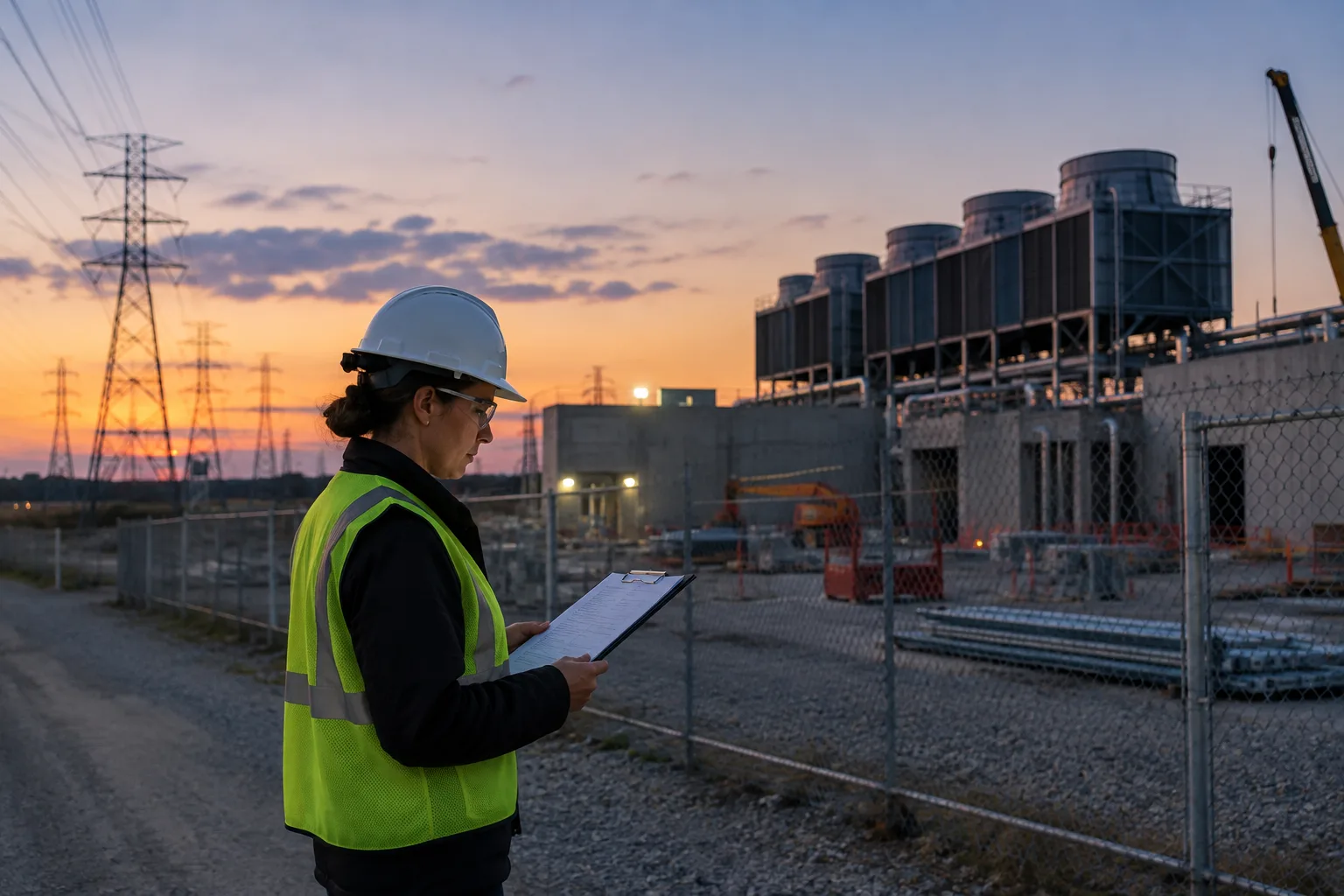
For corporate security leaders, the likely response is a deeper commitment to zero trust architectures, segmented networks, hardened identity systems, and “assume breach” monitoring—paired with physical hardening, supply-chain assurance, and crisis operations that treat data centers as critical infrastructure akin to ports or power stations.
—
Market and balance-sheet consequences: war-risk premiums meet hyperscale economics
When a state actor publicly designates named firms as targets, the immediate market reaction is not always dramatic—but the risk repricing mechanisms begin to move beneath the surface. Investors, insurers, and lenders tend to respond less to headlines than to the prospect of sustained exposure and repeatable loss.
Key economic and financial implications include:
- Equity valuation sensitivity: Large-cap technology firms can absorb shocks, but persistent geopolitical exposure can trigger risk-adjusted revaluations, particularly for companies perceived as deeply embedded in defense and intelligence ecosystems or heavily exposed to Middle East operations.
- Corporate debt and cost of capital: War-risk premiums can flow into bond yields, especially if insurers raise prices or narrow coverage terms for critical facilities.
- Insurance tightening: War-risk and terrorism coverage for data centers, satellite ground stations, and network hubs is likely to become more restrictive. Insurers may introduce:
– stricter location-based exclusions
– higher deductibles and premiums
– demands for enhanced physical security and redundancy as underwriting conditions
- Procurement and workload migration: Enterprises with regional deployments may accelerate workload shifts toward onshore or allied jurisdictions, reshaping demand patterns for cloud regions and colocation providers.
- AI and semiconductor supply-chain stress: Firms tied to advanced compute—especially AI accelerators and specialized chips—could face additional fragmentation pressures as governments and manufacturers reassess fabrication footprints, export controls, and end-use scrutiny.
The broader effect is a subtle but meaningful change in how “digital infrastructure” is priced: not merely as a utility, but as an asset class with geopolitical duration risk.
—
Strategic recalibration for boards and policymakers: protecting the private sector’s strategic role
This episode underscores a structural shift: the “battlefield” now plausibly includes data centers, undersea cables, satellite links, and cloud control planes—assets predominantly owned and operated by the private sector. That reality forces uncomfortable questions about norms, deterrence, and responsibility.
For technology companies and enterprise customers, several strategic actions are likely to rise to the top of board agendas:
- Kinetic-risk scoring in enterprise risk management (ERM): Mapping critical assets by geography, connectivity dependencies, and local security conditions—then tying those maps to incident playbooks and continuity budgets.
- Infrastructure diversification by design: Building for geographic redundancy across jurisdictions, not just across regions within the same theater.
- Public-private operational integration: Expanded threat intelligence sharing, joint exercises, and clearer protocols for crisis coordination—especially where cloud services underpin national critical functions.
- Standards and norms-setting: A renewed push for international expectations around the protection of civilian technology infrastructure, even as states increasingly view that infrastructure as inseparable from military capability.
At the geopolitical level, the longer-run risk is ecosystem bifurcation: a hardening of parallel “secure cloud” blocs and sovereign technology stacks, reducing interoperability and raising costs. The IRGC’s declaration—paired with reported strikes—does not merely threaten individual facilities; it challenges the assumption that global cloud infrastructure can remain politically neutral plumbing. In the emerging security environment, the most valuable compute is also the most contestable terrain, and the firms that power the digital economy may find themselves navigating deterrence dynamics once reserved for states.

 By
By
 By
By
 By
By
 By
By
 By
By

 By
By