

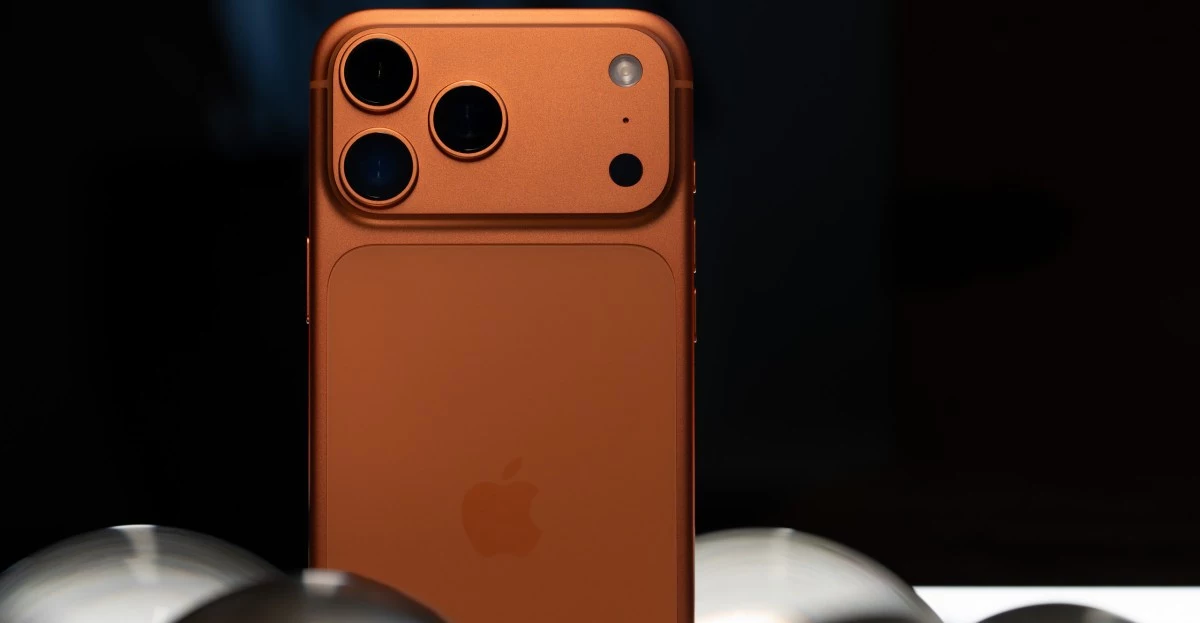

The Disappearance of Night-Mode Portrait: A Lens on Apple’s Evolving Priorities
The iPhone 17 Pro and Pro Max have arrived, and with them, a subtle but telling omission: Night-mode Portrait photography, a feature that has defined the Pro iPhone experience since 2020, is conspicuously absent. While its removal might seem trivial—an edge-case for most users—the decision reverberates far beyond photography. It signals a pivotal moment in the evolution of computational imaging, resource allocation, and the delicate dance of customer expectations in a maturing smartphone market.
Computational Photography’s Crossroads: Silicon, Sensors, and the AI Trade-Off
At the heart of this change lies the intricate choreography between hardware and software. The iPhone 17 Pro’s A19 Bionic chip, now boasting a more muscular Neural Matrix (NPU), has shifted the internal balance of power. More die area is dedicated to on-device AI, compressing the headroom once reserved for the image signal processor (ISP)—the very engine that made Night-mode Portraits possible under challenging lighting.
The new “Eagle Eye” sensor, with its stacked-pixel architecture, offers improved high-ISO noise performance for standard shots. Yet, it demands longer read-out windows for the dual-frame fusion required by Night Portraits. When combined with the thermal and power constraints Apple imposed to position the 17 Pro as a leader in energy efficiency, the result is a zero-sum game. Night-mode Portrait, with its appetite for simultaneous LiDAR depth-mapping, multi-frame HDR, and semantic segmentation, simply didn’t make the final cut.
This is not a bug, but a deliberate act of engineering triage—one that reflects the growing complexity of mobile imaging pipelines. As computational photography matures, each new feature compounds the cost and complexity of silicon, firmware, and quality assurance. Pruning a feature used by less than 2% of users, according to internal analytics surfaced during the Epic v. Apple litigation, frees up resources for generative AI photo remixing and other headline-grabbing capabilities slated for iOS 19.
The New Economics of Premium Smartphones: Loss Aversion and Strategic Repositioning
For Apple’s premium customers, however, the calculus is more emotional. At a $1,199-and-up price point, even minor regressions can feel like betrayals. In a market where the average upgrade cycle now stretches beyond four years, consumers expect every new device to be a superset of its predecessor. The omission of a legacy feature, no matter how niche, risks eroding brand trust and nudging power users toward rivals like Google’s Pixel or Samsung’s Ultra, both of which trumpet their “no feature left behind” ethos.
Yet, Apple’s move may be less about subtraction and more about repositioning. By quietly removing Night-mode Portrait, the company could be laying the groundwork for a services-centric future—one where advanced imaging capabilities migrate to paid cloud offerings, such as iCloud+ or the anticipated Apple Intelligence suite. This shift from edge to cloud not only opens new monetization avenues but also aligns with broader industry trends: as hardware innovation plateaus, the locus of differentiation moves to software, services, and the AI layer.
Industry Ripples: Supply Chains, Competitive Narratives, and the Next Wave
The ramifications extend well beyond Cupertino. Custom image sensors and LiDAR modules, already in short supply, are being prioritized for Apple’s Vision Pro spatial-computing devices. By reducing the iPhone’s depth-capture workload, Apple can ease component allocation stress and double down on its mixed-reality ambitions—a signal to suppliers that the future may be spatial first, smartphone second.
Competitors are watching closely. Google’s upcoming Pixel 9 reportedly increases its NPU budget by 20% to power “Night Sight Portrait 2.0,” framing the narrative as one of relentless computational progress. Meanwhile, third-party developers and accessory makers see opportunity in the gaps—external sensors, cloud-assisted post-processing, and differentiated app ecosystems can fill the void left by Apple’s strategic pruning.
For enterprise buyers and decision-makers, the lesson is clear: feature volatility is the new normal. Roadmaps will increasingly reflect the push and pull of silicon constraints, AI priorities, and shifting business models. Proactive narrative management becomes essential, as silence in the face of perceived regression can magnify negative sentiment and influence both consumer and enterprise procurement.
The absence of Night-mode Portrait on the iPhone 17 Pro is more than a footnote in a spec sheet; it is a tangible marker of the smartphone’s pivot from maximalist convergence to deliberate, AI-centric curation. For those attuned to these signals, the path ahead is clear: the next wave of value creation will be captured not by those who cling to every feature, but by those who read the deeper currents of strategic realignment—across devices, services, and the ever-expanding ecosystem of computational imaging.

 By
By
 By
By

 By
By
 By
By


 By
By







