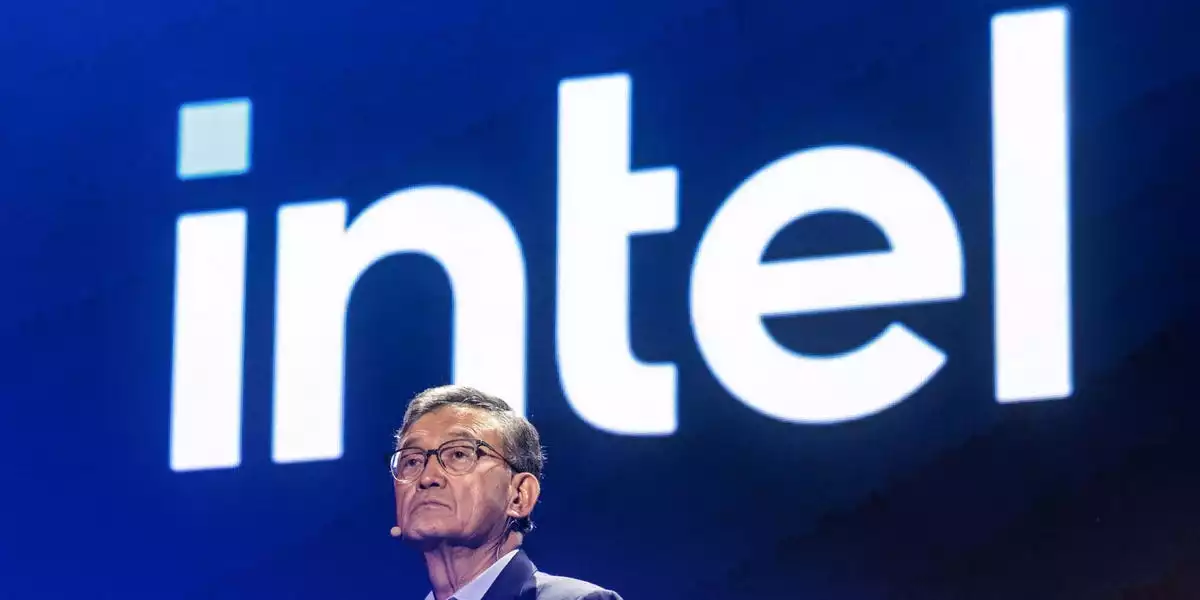

A recalibrated Intel: what the Data Center Group cuts signal beyond headcount
Intel’s decision to implement targeted workforce reductions in its Data Center Group (DCG) lands as another clear marker of a company still in the middle of a multi-year reset. The precise number of roles affected has not been disclosed, but the move follows earlier reductions—more than 5,000 factory jobs cut in 2022 and over 15,000 roles eliminated in August 2024—all tied to Intel’s stated ambition to reach $10 billion in cost savings by 2025.
Intel is framing the latest action as organizational realignment rather than demand-driven retrenchment, emphasizing that product roadmaps and customer commitments remain intact. That distinction matters: in the data center market, perception can be as consequential as silicon. Hyperscalers, enterprise buyers, and OEM partners plan infrastructure years ahead; any hint of roadmap instability can quickly translate into procurement hedging, dual-sourcing, or accelerated platform transitions.
The more revealing story is not simply that Intel is cutting costs—it is *where* it is cutting, and what that implies about the company’s evolving priorities in data center CPUs, AI accelerators, networking silicon, and platform software.
Roadmaps “unchanged,” priorities sharpened: the technology subtext
Intel’s assurance that DCG roadmaps will proceed suggests a deliberate attempt to protect the company’s most visible competitive fronts—especially Xeon and its broader push into AI inference and training. In practice, “roadmaps unchanged” often means fewer parallel bets, tighter program governance, and more explicit prioritization of platforms that can win share or defend margins.
Several technology implications stand out:
- R&D concentration on high-leverage platforms
Intel’s data center competitiveness increasingly hinges on a small set of outcomes: credible Xeon performance-per-watt, compelling accelerator economics, and differentiated platform features (security, manageability, memory and I/O leadership). Streamlining DCG can be read as an effort to shift resources away from lower-impact functions and toward core execution.
- Process-node and packaging urgency
As transistor scaling delivers less “free” performance than in prior eras, the competitive edge is often determined by process readiness and packaging sophistication. Intel’s ability to translate investments in advanced nodes (e.g., 4nm/3nm-class ambitions) and packaging technologies such as Foveros and EMIB into reliable, high-volume data center products remains central to its narrative. A leaner organization can reduce internal friction—though only if critical engineering depth is preserved.
- IDM 2.0 and multi-fab pragmatism
Under the IDM 2.0 strategy, Intel is balancing internal manufacturing with external foundry relationships. A reshaped DCG may accelerate a more modular supply approach—where certain components or tiles can be sourced from the best-fit manufacturing path, whether internal or via partners such as TSMC. That flexibility is increasingly aligned with how modern data center silicon is built: heterogeneous, multi-die, and optimized for time-to-market.
- Software-hardware co-design as a differentiator
The data center is no longer a pure hardware contest. Performance leadership is increasingly “realized” through software enablement—compilers, kernels, AI frameworks, virtualization stacks, and workload-specific tuning. Intel’s restructuring implicitly raises the bar for tighter co-design with hyperscalers and ISVs, where optimized stacks can translate into measurable total cost of ownership (TCO) advantages.
Cost savings, capital discipline, and the hidden risk: institutional knowledge
Intel’s cost program is not occurring in a vacuum. The company is operating amid intense competitive pressure and a capital-heavy roadmap that demands sustained investment. Workforce reductions are one of the few levers that can materially alter near-term operating expense, but they also carry second-order effects that can either strengthen or weaken execution.
Key business and operational dynamics include:
- Margin and cash flow protection under price pressure
Data center competition is being shaped by AMD’s EPYC momentum and Nvidia’s dominance in AI data center GPUs, both of which influence pricing power and platform selection. Lower fixed costs can help Intel defend gross margin and preserve cash for the investments required to regain or maintain performance parity.
- Reallocation toward growth vectors
The industry’s center of gravity has shifted from general-purpose compute toward heterogeneous architectures—CPUs paired with GPUs, NPUs, FPGAs, and specialized accelerators. Intel’s ability to fund accelerators (including the Gaudi line and successors) and advanced packaging capacity may improve if organizational complexity is reduced.
- Talent continuity as the execution bottleneck
The most underappreciated risk in repeated restructuring cycles is not morale—it is knowledge leakage. Data center silicon programs depend on deep, tacit expertise in validation, power management, platform integration, and manufacturing handoff. If reductions inadvertently thin out “glue” roles—those that connect architecture to productization—schedule slips and quality issues can emerge even when roadmaps look stable on paper.
Competitive positioning amid AI demand, geopolitics, and industry consolidation
Intel’s DCG move also reflects a broader recalibration across semiconductors: Moore’s Law maturation, rising costs of leading-edge development, and the strategic importance of supply chains. The timing intersects with policy and geopolitics, particularly as Intel stands to benefit from U.S. CHIPS and Science Act incentives tied to domestic manufacturing expansion.
From a market-structure perspective, the reshuffle aligns with three macro trends:
- Specialization over sprawl: Major players are narrowing focus toward high-margin domains—AI compute, networking, and advanced packaging—while deprioritizing efforts that do not clearly translate into platform leverage.
- Ecosystem-first competition: Winning in the data center increasingly requires co-engineering with cloud providers, tight integration with software ecosystems, and reference architectures that reduce deployment friction.
- Consolidation pressure: As capital intensity rises, companies are pushed toward portfolio rationalization—potentially including divestitures of non-core assets and selective acquisitions for IP, packaging capability, or edge-AI acceleration.
Intel’s latest DCG reductions ultimately read as a wager that speed, focus, and capital efficiency can be improved without sacrificing the engineering depth needed to compete in the most unforgiving segment of the semiconductor market. The next signals to watch will be practical rather than rhetorical: cadence of Xeon and accelerator launches, packaging and node execution, and whether Intel can translate a leaner organization into faster, more predictable delivery for hyperscalers and enterprise customers who increasingly buy outcomes—not chips.

 By
By
 By
By

 By
By
 By
By


 By
By