

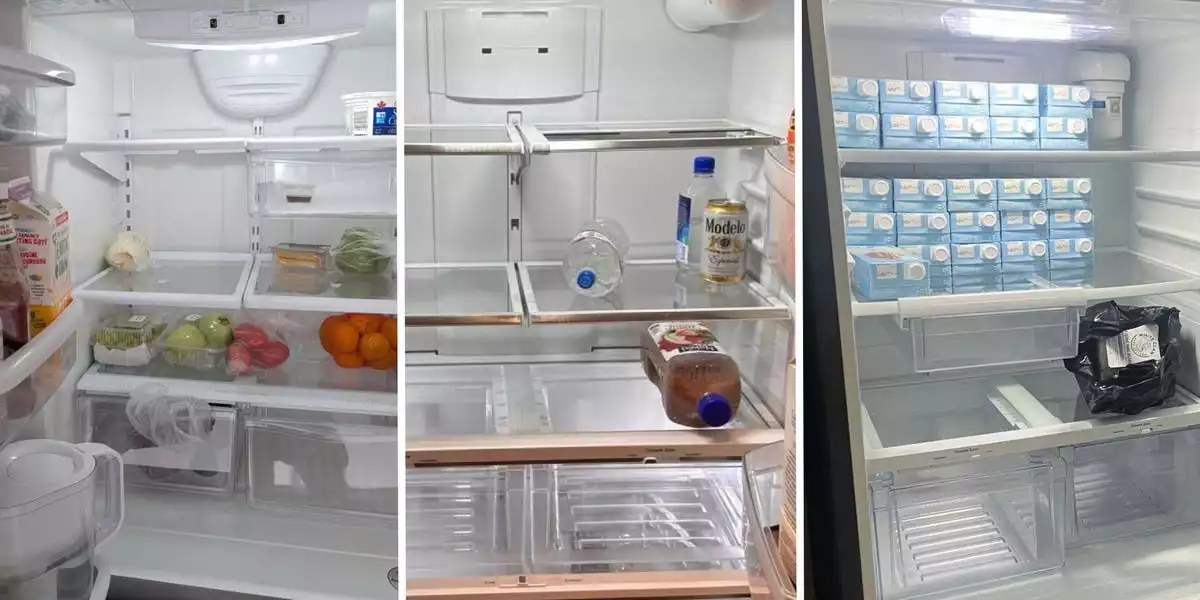

The Empty Fridge as a Mirror: Gen-Z Founders and the New Food-Tech Paradigm
It begins with a glance inside the refrigerator: a tableau of minimalism, where the only constants are bottled supplements and the faint chill of possibility. This is not a scene from a dystopian novel, but the lived reality of a new cohort of venture-backed founders, as profiled by Business Insider. Their kitchens, stripped of the familiar trappings of home-cooked life, offer a window into the evolving psyche of Gen-Z knowledge workers—where the act of eating has been fully subsumed by the logic of the on-demand economy.
From Scarcity to Strategy: The New On-Demand Lifestyle
The bare fridge, once a symbol of want, now signals a calculated trade-off. These young entrepreneurs, aged 22 to 29, have not abandoned nutrition for lack of means, but for the pursuit of time. Their default pantry is the algorithmic abundance of DoorDash and Uber Eats, with only the occasional rotisserie chicken or protein shake breaking the monotony of delivered meals. Cooking, for this cohort, is a rare indulgence—one founder out of six still wields a spatula with any regularity.
What emerges is a portrait of convenience as the new operating system. For these digital natives, the “last mile” is not a hurdle but a baseline expectation. Food delivery platforms have evolved from luxury to necessity, their elasticity mirroring the cloud infrastructure that underpins their startups. The act of outsourcing meal preparation is not merely a lifestyle choice; it is a strategic reallocation of cognitive bandwidth, a way to squeeze one more productive cycle from each day.
Yet, this relentless optimization comes with its own paradoxes. Health consciousness flickers at the edges—protein drinks, the odd piece of fruit—but is often undermined by the chaos of erratic ordering. The founders’ approach to eating is fragmented, a patchwork of good intentions and algorithmic temptation.
The Food-Tech Stack and the Human Equation
Beneath the surface, a complex food-tech stack orchestrates this new normal. Consumer-facing apps mediate demand, while ghost kitchens and algorithmic pricing engines hum in the background, supported by cold-chain logistics and micro-fulfillment centers. The willingness of these founders to externalize meal prep entirely strengthens the case for further integration—APIs that blend nutrition data, dynamic menus, and even autonomous delivery into a seamless, invisible infrastructure.
But the human capital calculus is shifting. Where startup employees once traded salary for equity, they now trade nutrition for time. The implicit equation—one more work cycle per meal deferred—may inflate short-term productivity, but it also sows the seeds of future burnout and healthcare liabilities. Employers and insurers, slow to price these externalities, risk being blindsided by the long-term costs of this new diet of convenience.
Economic Ripples: Real Estate, Healthcare, and Urban Design
The implications ripple outward. Delivery platforms, buoyed by high-frequency users ordering 15-20 meals per week, see their unit economics improve—lifetime value rises, per-order acquisition costs fall, and gross margins strengthen. This dynamic supports robust valuations, even as broader consumer spending cools.
Real estate, too, is being quietly reshaped. The decline of in-home cooking reduces demand for large kitchens in luxury apartments, echoing the way remote work has redrawn the boundaries of office space. Meanwhile, mixed-use developments with ghost-kitchen zoning become newly valuable, and urban planners must reckon with the infrastructure demands of micro-fulfillment and food lockers.
Healthcare and insurtech find themselves on the front lines of a new nutritional volatility. As dependence on restaurant meals grows, so too does the actuarial risk for self-insured tech employers. Here, wellness-as-a-service platforms see opportunity: proactive meal planning, subsidized smart fridges, and integrations that turn healthy eating from aspiration into default.
Strategic Horizons: Where Platforms, Employers, and Cities Converge
For decision-makers, the path forward is clear but complex:
- Platforms and Marketplaces must invest in premium tiers—bundling unlimited delivery with personalized nutrition analytics—and forge partnerships with employers eager to convert empty-fridge risk into curated meal plans.
- Enterprise HR should audit meal spend, offer stipends for healthy vendors, and treat food benefits as a core retention tool, on par with flexible PTO.
- Consumer Brands are called to develop “counter-top native” products—shelf-stable, high-protein, and designed for the no-cook household—while leveraging QR codes to close the loop between packaging and digital reorders.
- Urban Developers will need to rethink amenity mixes, perhaps swapping communal kitchens for high-throughput food lockers, and invest in infrastructure tailored to micro-fulfillment tenants.
The next 12 to 24 months promise even greater acceleration. Expect weekday lunch delivery volumes to grow by nearly 10% in knowledge-worker ZIP codes, with secondary cities following suit as remote-first startups proliferate. Smart fridges and generative AI nutrition copilots will further compress the gap between hunger and fulfillment, while regulatory and ESG pressures drive innovation in sustainability and health incentives.
The empty fridge, then, is anything but trivial. It is a diagnostic snapshot of a society in transition, where the externalization of meal preparation reverberates through logistics, real estate, healthcare, and the very architecture of work. Those who recognize food consumption as a strategic lever—not a peripheral HR matter—will be best positioned to capture the cascading advantages of the no-cook household, as it moves from the margins of startup culture to the mainstream of urban life.

 By
By
 By
By
 By
By
 By
By
 By
By


 By
By







