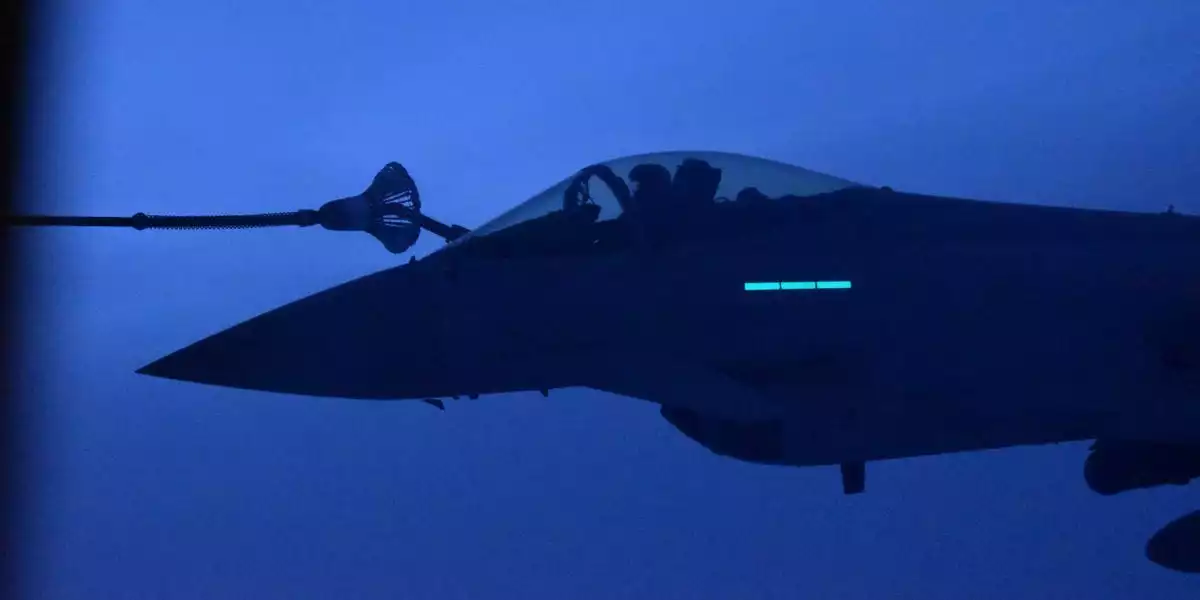

The Voyager Sortie: A New Era in Aerial Refueling and Strategic Reach
In the pale blue dawn above Eastern Europe, a Royal Air Force Voyager—a militarized Airbus A330-200—recently traced a looping, nine-hour arc across the sky. Its mission, codenamed Eastern Sentry, was as unassuming as it was profound: off-load nearly 20 metric tons of fuel to Eurofighter Typhoons and Swedish JAS 39 Gripens. But beneath the choreography of probe, drogue, and plume, the sortie crystallized a tectonic shift in the architecture of modern air power. The humble tanker, once relegated to the logistical periphery, is now the backbone of allied deterrence, digital command, and economic ingenuity.
Dual-Use Airframes and the Modular Revolution
At the heart of this transformation is the Multi-Role Tanker Transport (MRTT) concept. The Voyager, by leveraging the proven A330 platform, stands as a testament to modularity and convergence. No longer just a flying gas station, it simultaneously ferries troops, cargo, and even offers limited command-and-control (C2) capabilities. This convergence compresses fleet footprints, streamlines maintenance, and—crucially—enables rapid reconfiguration in response to shifting operational demands.
Key operational advancements include:
- Automated AAR (A3R) Trials: The RAF’s ongoing trials of automated refueling software promise a 15–20% reduction in crew workload and a significant drop in fuel-spillage risk, foreshadowing a future where sortie rates and operational tempo are dictated by software as much as by steel.
- Interoperability as Strategy: The seamless refueling of both Typhoons and Gripens under NATO’s STANAG 3971 protocols is more than technical compliance; it is a strategic handshake, particularly as Sweden accelerates its integration into NATO’s operational fabric.
- Economic Leverage: Converting retired or lightly used A330s is 35–45% less expensive than commissioning bespoke tankers. This economic calculus is quietly reshaping procurement strategies for mid-tier nations, democratizing access to strategic reach.
Industrial Dynamics and the New Defense Marketplace
The Voyager’s journey from civilian airliner to military linchpin is emblematic of a broader industrial metamorphosis. Airbus Defense & Space, for instance, benefits from the civil A330’s production efficiencies, while military retrofits extend the commercial program’s relevance. This virtuous concurrency blurs the line between civil and military aerospace, creating a stabilizing feedback loop in an industry often buffeted by cyclical demand.
Notable industrial implications:
- Supply Chain Resilience: The MRTT conversion line taps into the mature A330 supplier ecosystem, buffering against geopolitical chokepoints and accelerating delivery schedules—a subtle but potent advantage over clean-sheet designs.
- Budget Visibility: Legislatures are increasingly bundling MRTT procurement with digital upgrades, offering industry primes and suppliers multi-year budget clarity, in contrast to the volatility of fighter acquisition cycles.
- Sustainability as Strategy: With the A330’s Rolls-Royce Trent 700 engines already certified for up to 50% Sustainable Aviation Fuel (SAF) blends, refueling squadrons are poised to become early adopters, signaling demand for green aviation and preempting future regulatory headwinds.
Geopolitical Ripples: From Eastern Europe to the Indo-Pacific
The Eastern Sentry sortie was not merely an exercise in logistical prowess; it was a deliberate act of signaling. In the wake of Russian UAV incursions, the persistent presence of tanker-enabled fighter patrols transforms border skies into dynamic picket lines, complicating adversary calculus. The inclusion of Swedish Gripens, and the prospect of Ukrainian integration, further entwines the region’s security architecture with NATO’s digital and logistical backbone.
Beyond Europe, the implications reverberate across the Indo-Pacific. Australia, Singapore, and South Korea’s adoption of the A330 MRTT underscores a growing coalition logic: interoperability, homogeneity, and the ability to sustain long-range operations in contested airspace. The tanker, once an afterthought, is now a strategic enabler in a world defined by distributed basing and anti-access/area denial (A2/AD) challenges.
The Tanker’s Quiet Evolution: Digital Infrastructure and Autonomy
Perhaps most overlooked is the tanker’s metamorphosis into a high-altitude node of digital warfare. The Airbus MRTT “Smart Tanker” roadmap envisions platforms equipped with Ka-band SATCOM and multi-domain gateways, transforming these aircraft into ad-hoc routers for intelligence, surveillance, and reconnaissance (ISR) data. As loyal-wingman drones and stealthy uncrewed combat aerial vehicles (UCAVs) proliferate, the tanker’s role will extend to supporting autonomous receivers, demanding new software architectures and vision-based alignment systems.
For defense ministries and industry leaders, the lesson is clear: tankers are no longer mere enablers but pivotal assets in the digital order of battle. Those who recognize this evolution—allocating R&D to automation, integrating digital infrastructure, and leveraging conversion economics—will shape the future of air power. The RAF Voyager’s sortie was a glimpse into that future, where strategic reach, digital command, and sustainable innovation converge at 30,000 feet.

 By
By
 By
By
 By
By

 By
By


 By
By