

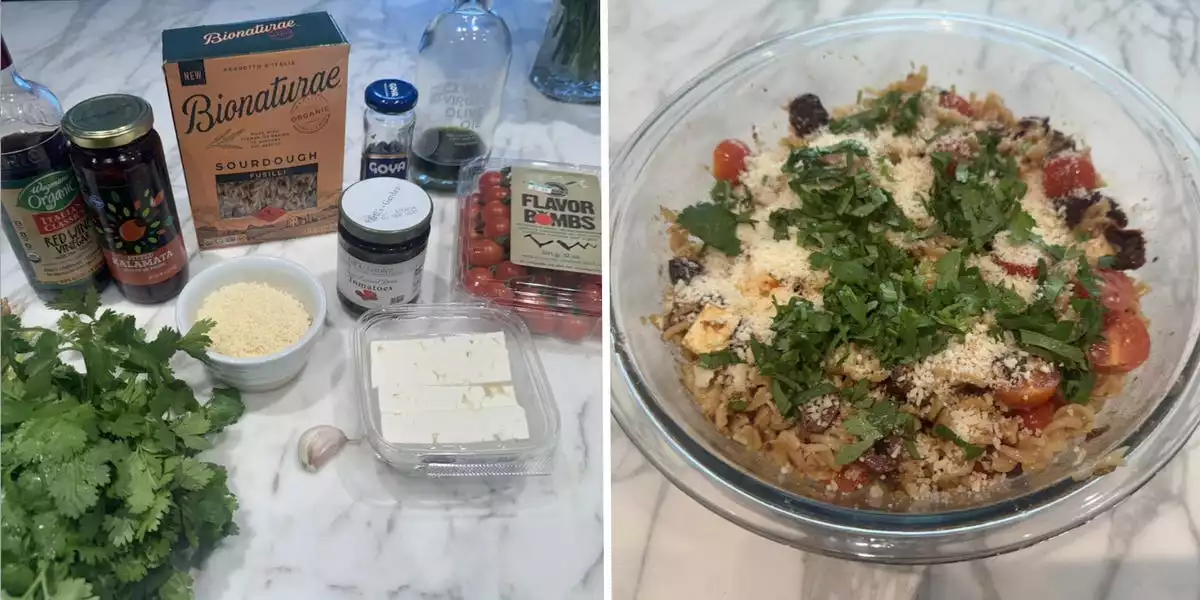

A Mediterranean pasta salad as a signal of where summer eating is headed
Ina Garten’s tomato feta pasta salad is more than a seasonal recipe finding its moment—it’s a compact case study in how consumer taste, convenience economics, and digital distribution are reshaping everyday food decisions. Built around fusilli and a high-contrast mix of fresh tomatoes, oil-packed sun-dried tomatoes, Kalamata olives, feta, capers, garlic, red wine vinegar, and olive oil, the dish lands squarely in the modern “bright, briny, satisfying” lane that has been steadily displacing heavier, mayonnaise-based sides at picnics and cookouts.
The appeal is structural as much as it is sensory. The recipe’s workflow—boil pasta while chopping and assembling the dressing—mirrors what time-strapped home cooks increasingly demand: parallelizable prep, minimal specialized technique, and a result that feels “restaurant-complete.” That operational efficiency matters in a summer entertaining context where the kitchen competes with the patio, the grill, and the guest list.
Just as importantly, the dish holds up. A pasta salad that stays flavorful for days aligns with a consumer reality defined by hybrid work schedules, batch cooking, and a preference for foods that travel well—whether to a backyard gathering or a weekday lunch container. In practical terms, it’s a recipe engineered for repeat use, and that repeatability is precisely what turns a single dish into a durable trend.
“Better-for-you indulgence” meets experience-driven home dining
The recipe’s popularity tracks with a broader behavioral shift: consumers increasingly want food that reads as health-forward without feeling restrictive. Olive oil, tomatoes, and capers carry positive nutritional associations, while feta and olives deliver the salt-fat satisfaction that makes the dish feel indulgent. This is the sweet spot of contemporary food culture—what many brands now position as “better-for-you” comfort.
Market signals reinforce the direction of travel. With reported 22% year-over-year growth in Mediterranean-style meal searches, the demand is not simply for a cuisine label, but for a recognizable set of attributes: acidity, herbaceousness, brine, and high-impact pantry staples that create depth quickly. Garten’s pasta salad checks those boxes with an ingredient list that is both aspirational and accessible.
The experiential dimension is equally central. The dish is designed around textural and flavor contrast—chewy sun-dried tomatoes against al dente pasta, creamy feta against sharp vinegar, briny olives and capers against sweet tomato. That multi-sensory payoff reflects a home-dining trend where consumers chase restaurant-like complexity without restaurant-like effort. It’s the same dynamic powering premium grocery growth, meal-kit positioning, and the “elevated pantry” movement: people are willing to pay for ingredients that compress time while expanding flavor.
Key consumer drivers embedded in the recipe format include:
- Low perceived risk: a trusted authority reduces hesitation and increases trial rates.
- High customization potential: easy swaps (pasta shape, herb additions, protein add-ons) without breaking the core profile.
- Portability and durability: a dish that performs at room temperature and improves after resting.
Ingredient economics, traceability, and the premium pantry supply chain
From a business lens, the recipe spotlights how value-added pantry items are becoming strategic profit centers. Oil-packed sun-dried tomatoes are a particularly telling example: they offer extended shelf life, consistent quality, and a premium cue through packaging and perceived craft. This is the same playbook that has elevated categories like marinated artichokes, roasted peppers, and specialty olives—products that turn preservation into both convenience and margin.
The emphasis on region-coded ingredients—Kalamata olives and artisanal feta—also maps to a willingness among many shoppers to pay a 10–15% premium for provenance signals. That premium is not only about taste; it’s about trust, story, and the belief that origin correlates with authenticity. As traceability tools mature, including blockchain pilots in olive oil distribution, the competitive advantage may shift toward brands that can substantiate origin claims with verifiable data rather than label language alone.
For retailers and CPG players, the commercial opportunity is less about any single recipe and more about the basket it builds. A pasta salad like this pulls multiple high-margin items into one purchase occasion—specialty vinegar, imported olives, feta, capers, premium olive oil—creating a repeatable “Mediterranean pantry” pathway that can be reinforced through merchandising and private label.
Notable product and packaging implications include:
- Expansion of oil-packed and marinated formats as premium shelf-stable solutions
- Demand for smaller, recipe-sized packaging to reduce waste and increase trial
- Sustainability pressure to rethink glass jars, pouches, and refill systems for oil-based products
Content-to-commerce, AI personalization, and the connected-kitchen runway
Ina Garten’s influence illustrates how recipes now function as high-performance media assets. In a content economy, a single high-traffic dish can drive affiliate revenue, sponsored ingredient placement, and cross-category sales in cookware and appliances. The modern recipe is not just instruction—it’s a conversion funnel, especially when it performs across formats: blog posts for search, short-form video for social discovery, and newsletters for retention.
This is where technology accelerates the flywheel. The ingredient matrix is structured enough for AI-driven personalization: apps can recommend substitutions (gluten-free pasta, reduced-sodium olives), scale portions, or adjust acidity based on user preference. The winners in this space will be systems that preserve culinary integrity while adapting to constraints like dietary needs, local availability, and budget.
Looking ahead, the next layer is workflow automation through IoT-enabled kitchen ecosystems. Connected appliances can turn “parallel prep” into guided execution—timed pasta cooking, dressing prompts, and portion planning—reducing friction for novice cooks and increasing consistency for everyone else. For brands, partnerships between software platforms and hardware makers could become a meaningful battleground, with recipes serving as the interface between consumer intent and product ecosystems.
What makes Garten’s tomato feta pasta salad commercially and culturally resonant is its dual identity: it is both a satisfying dish and a scalable template. In a market where convenience must coexist with quality, and where digital discovery increasingly dictates what lands on the table, that combination is exactly what turns a summer side into a durable signal.

 By
By
 By
By
 By
By
 By
By
 By
By

 By
By
 By
By







