
The Inflationary Reverberations of “Liberation Day”: Tariffs as a Structural Shock
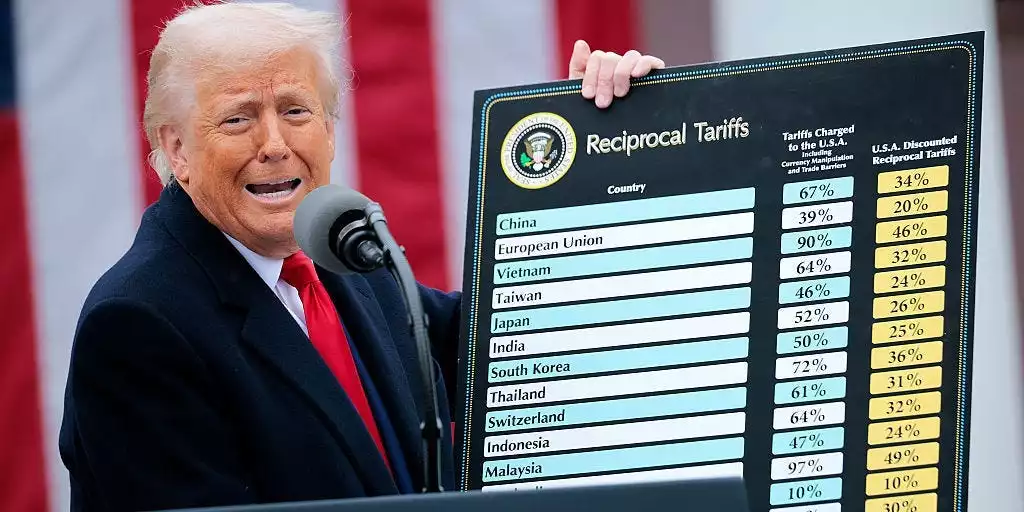
President Trump’s April 2, 2025, declaration of “Liberation Day” has set in motion an expanded tariff regime whose economic consequences are rippling far beyond the political theater. According to Bank of America, between 50% and 70% of these new tariff costs have already been passed directly onto U.S. consumers, inflating the core personal consumption expenditures (PCE) index by an estimated 30 to 50 basis points. S&P Global’s projection of $1.2 trillion in cumulative tariff costs this year frames these measures not as a mere policy lever, but as a structural shock with the power to reshape inflation, monetary policy, and the very architecture of global supply chains.
Inflation, Monetary Policy, and the Fiscal Feedback Loop
The mechanics are as old as international trade itself: tariffs, in open economies, function as a consumption tax. The Bank of America data confirms a near-linear transfer of cost from foreign producers to domestic consumers, a phenomenon that is now pushing the Federal Reserve into an increasingly complex policy corner. With core PCE inflation buoyed by 30 to 50 basis points, the Fed’s path toward its 2% target becomes more treacherous, raising the specter of a “higher for longer” interest rate environment that could persist well into 2026.
This inflationary impulse is not merely a monetary headache—it is a fiscal paradox. While the administration touts tariffs as a tool for deficit reduction, the inflationary feedback loop ultimately raises debt-service costs, threatening to offset any revenue gains. The result is a macroeconomic landscape where fiscal and monetary currents run in opposition, complicating the calculus for policymakers and corporate strategists alike.
Manufacturing, Technology, and the New Geography of Production
For manufacturers, the tariff regime is accelerating a shift that was already underway. Elevated landed costs are recasting Mexico, Central America, and parts of ASEAN as competitive alternatives to China. Boardrooms are no longer treating dual sourcing or “China-plus-one” as optional hedges; they are now minimum viable strategies. The automation dividend is also coming due: higher domestic labor costs are spurring capital investment in robotics and AI-driven plant optimization, with the International Federation of Robotics forecasting a 14% CAGR in North American robot installations through 2028—well above the pre-tariff baseline.
The technology sector, meanwhile, is experiencing a bifurcation. Tariffs on Chinese semiconductors and critical components are sustaining price wedges in mature-node chips and passive components, prompting hardware OEMs to reevaluate onshore wafer capacity and deepen ties with Taiwanese and Korean fabs. In contrast, cloud and SaaS vendors—insulated from physical bills of materials—are leveraging the moment to expand gross margins, using their pricing power while hardware peers absorb the shocks. The divergence between physical goods and cross-border data flows is widening, strengthening the case for a policy split: tariffs on atoms, open lanes for bits.
Consumer Adaptation and Non-Obvious Strategic Ripples
American households, particularly those in the 60th to 80th income percentiles, are responding with classic elasticity compression—shifting toward private-label goods at a pace reminiscent of the 2008 commodity spike. This presents existential threats to legacy brands, but also creates openings for agile entrants. Meanwhile, rising goods inflation is catalyzing a reallocation of discretionary spend toward services and digital experiences, a boon for streaming, travel, and hospitality sectors.
Beneath the surface, subtler dynamics are at play:
- Cyber-physical risk: As companies diversify supply corridors, their cybersecurity perimeters expand, introducing new third-party risks that are only beginning to register on CISO dashboards.
- Decarbonization arbitrage: Higher import costs are narrowing the price gap between conventional and low-carbon materials, accelerating procurement of green steel, recycled aluminum, and bio-based plastics.
- Tokenized trade finance: Small and mid-sized enterprises, squeezed by tariff-induced inventory costs, are piloting blockchain-based trade-finance platforms—a signal that distributed ledger technology may be nearing a real-world inflection point.
Strategic Imperatives for the Next Era of Global Commerce
For decision-makers, the implications are both urgent and nuanced:
- Portfolio hedging: Multinationals must model sustained tariff pass-through and stress-test earnings against incremental rate hikes.
- CapEx reprioritization: Investment committees should tilt toward automation, near-shore capacity, and digital customer channels.
- Pricing strategy: Brands with equity can consider modest price lifts, but must heed the warning signs of demand elasticity.
- Policy engagement: Active participation in emerging plurilateral trade agreements offers potential tariff offsets, while corporate affairs teams recalibrate lobbying agendas.
- ESG convergence: The intersection of tariffs and Scope 3 emissions creates a window to reposition supply-chain decarbonization as both a compliance mandate and an inflation hedge.
The “Liberation Day” tariffs are not a transient policy gambit but a structural event whose echoes will shape inflation, procurement, and technology roadmaps for years to come. Executives who treat this as a passing nuisance risk ceding ground to those who seize the moment to re-architect supply networks, digitize value delivery, and extract strategic advantage from geopolitical flux. In this new era, agility and foresight are not luxuries—they are imperatives.

 By
By
 By
By

 By
By
 By
By


 By
By