
Low-Earth Orbit’s New Reality: From Strategic High Ground to Crowded Commons
Low-Earth orbit (LEO) is rapidly shifting from a frontier defined by engineering ambition to an operating environment constrained by density, externalities, and systemic risk. The surge is being driven by two reinforcing forces: commercial mega-constellations seeking global connectivity and Earth observation scale, and government programs pursuing resilience, surveillance, and strategic redundancy. The result is a domain where the marginal satellite no longer adds only capability—it also adds congestion, collision probability, and atmospheric loading.
This congestion is not merely a space-traffic management problem. It is increasingly a business continuity issue for operators and a policy credibility issue for regulators who must reconcile space growth with environmental stewardship. Collision risk rises non-linearly as object counts increase, and the specter of debris cascading—often framed as Kessler Syndrome—turns isolated incidents into potential chain reactions. In practical terms, that means:
- Higher operational costs for collision avoidance maneuvers and tracking services
- Greater mission uncertainty as conjunction alerts multiply and false positives strain decision cycles
- Amplified systemic exposure where one collision can degrade orbital shells used by many operators
At the same time, the terrestrial impacts—once treated as peripheral—are becoming harder to dismiss. Light pollution from bright satellite trains is reshaping ground-based astronomy and complicating optical observations, with implications that extend from fundamental science to commercial imaging and space situational awareness. Meanwhile, falling debris risk, while statistically low per event, becomes more salient as reentry frequency climbs and public tolerance for “acceptable risk” narrows.
The Atmospheric Ledger: Reentry Metals, Alumina, and Rocket Soot as Climate-Adjacent Risks
The most consequential shift in the debate may be the growing body of concern that LEO activity is not environmentally neutral once spacecraft and rockets are considered end-to-end. Environmental scientists are increasingly focused on the chemical and radiative effects of materials introduced into the upper atmosphere through reentries and launches.
Key mechanisms now drawing scrutiny include:
- Metal aerosols from satellite burn-up, particularly aluminum compounds
- Alumina particulates that can enable heterogeneous reactions on polar stratospheric clouds—chemistry that echoes the pathways that once made chlorofluorocarbons (CFCs) so destructive to ozone
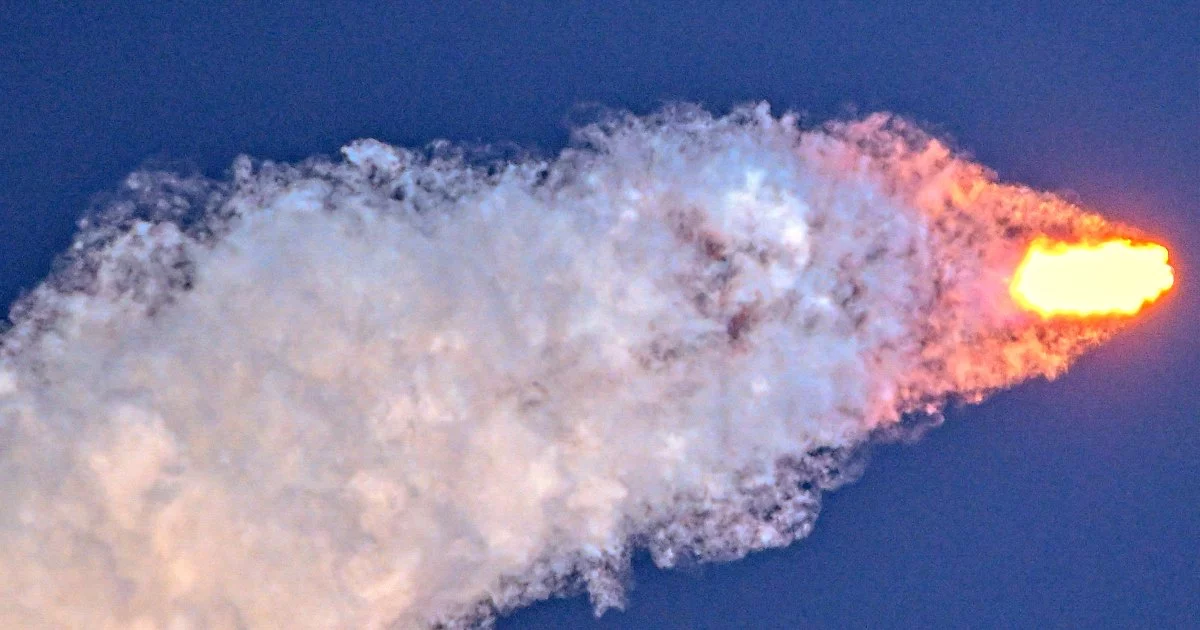
- Black-carbon emissions from hydrocarbon-fueled rocket engines, which absorb heat and can alter stratospheric temperature gradients and wind patterns
A notable 2025 simulation cited in the material suggests annual alumina releases on the order of ~10,000 metric tons could produce measurable temperature anomalies and even contribute to polar vortex disruptions—a finding that, if validated, would elevate satellite lifecycle management from a debris issue to a potential ozone recovery issue. That matters because ozone restoration has been one of the clearest success stories in global environmental governance; any credible risk of reversal would invite a sharper regulatory response and a more skeptical public narrative around “sustainable space.”
For industry, the strategic implication is straightforward: environmental externalities are becoming quantifiable, and once they are measurable, they become governable—through standards, reporting requirements, and eventually pricing mechanisms. The sector may be approaching a moment similar to what terrestrial industries experienced when emissions monitoring matured: the transition from voluntary best practices to auditable compliance.
The Economics of a Circular Space Industry: Servicing, Recovery, and the $1.2 Trillion Question
Against this backdrop, the most compelling counterweight to risk is the emergence of a circular-economy logic in orbit—one that reframes satellites from disposable hardware into serviceable infrastructure. Two mitigation pathways stand out: in-orbit servicing and active debris removal, both enabled by advances in autonomous rendezvous and proximity operations originally matured through cargo resupply and docking missions.
In-orbit servicing—robotic refueling, modular upgrades, life-extension—offers a structural benefit: it reduces the cadence of replacement launches and defers deorbiting, thereby lowering both debris generation and reentry-related atmospheric deposition. It also changes the business model. Instead of a one-time capital asset that decays toward disposal, satellites can become platforms with:
- Recurring service revenue (refueling, component swaps, software/hardware upgrades)
- Lower lifecycle cost volatility through planned maintenance rather than premature replacement
- Stronger reliability signaling to customers in defense, telecom, and Earth observation
Active debris removal adds a second economic narrative: orbital cleanup as resource recovery. The estimate of $1.2 trillion in recoverable scrap value is provocative—not because it guarantees a near-term mining boom, but because it signals how quickly debris can be reframed from liability to balance-sheet opportunity once capture, processing, and legal ownership are clarified. The near-term value may lie less in raw materials and more in risk reduction as a service—a product insurers, regulators, and constellation operators can all rationally pay for if it demonstrably lowers collision probability.
This is where competitive dynamics sharpen. Firms that can bundle launch + servicing + end-of-life recovery guarantees may gain strategic leverage, while smaller operators could face margin compression as insurance premiums rise and compliance burdens increase. The likely outcome is a market that rewards scale, operational discipline, and cross-sector partnerships—particularly alliances spanning aerospace, environmental monitoring, robotics, and materials recovery.
Governance and Market Design: When Space Traffic Meets Environmental Regulation
The policy trajectory implied by these developments is toward integrated governance that treats orbital congestion and atmospheric impact as a single coupled system. Pressure will build across national regulators, multilateral venues such as COPUOS, and emerging space-traffic management bodies to define enforceable norms around:
- Debris mitigation obligations and end-of-life performance
- Reentry and launch emissions reporting, including alumina and black carbon proxies
- Shared databases for orbital events and reentry characterization to improve predictive analytics
Market-based instruments are also moving from theoretical to plausible. Concepts such as tradable space-environment credits, insurer-backed “clean-orbit” certifications, and incentives for modular, repairable architectures could become the pragmatic bridge between innovation and accountability—especially if policymakers seek tools that scale faster than bespoke licensing negotiations.
The larger message for the space economy is that growth is no longer judged solely by launch cadence and satellite counts. It will increasingly be judged by lifecycle design, orbital conduct, and atmospheric stewardship—and the operators that internalize those constraints early are likely to define the next durable phase of commercial space, where legitimacy becomes as valuable as altitude.

 By
By
 By
By

 By
By
 By
By

 By
By
 By
By