
Reinventing Retail: Ikea and Best Buy’s Strategic Alliance in the Age of Home-Centric Living
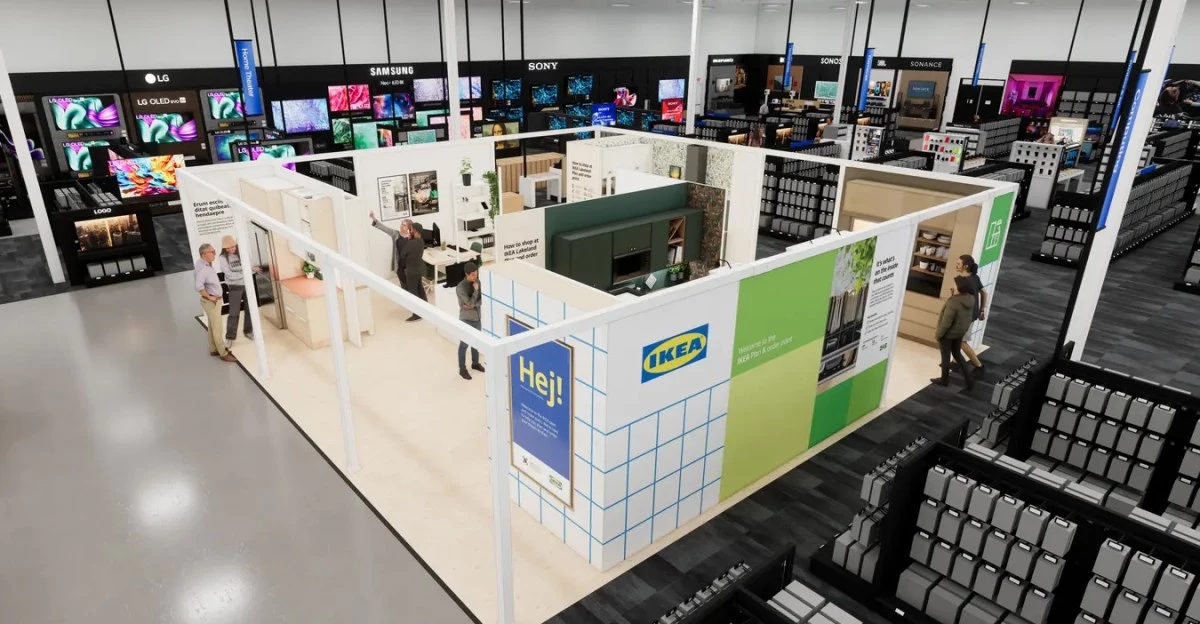
In an era where the boundaries between home, technology, and retail are dissolving, the announcement that Ikea will open 1,000-square-foot “shop-in-shops” inside ten Best Buy locations in Florida and Texas signals a profound shift. For the first time, Ikea’s products and services will be offered through a third-party U.S. retailer, an experiment that transcends mere real estate optimization and hints at a new commerce architecture for the post-pandemic world.
The New Geography of Retail: Omnichannel Compression and Market Expansion
The classic big-box model—monolithic, destination shopping experiences—has fractured. Today, retail is a portfolio game, with flagships, urban small-box stores, click-and-collect points, and now, in-store concessions. Ikea’s foray into Best Buy is emblematic of this omnichannel compression, where the cost of customer acquisition is recalibrated for efficiency and reach.
- Capital-light expansion: A 1,000-sq-ft footprint is just a fraction of a typical Ikea, slashing staffing, leasing, and inventory costs while multiplying customer touchpoints far beyond its 52 U.S. blue-box warehouses.
- Best Buy’s real estate renaissance: Appliance showrooms, with higher average tickets and lower obsolescence than consumer electronics, become more productive as Ikea’s furnishings increase dwell time and cross-selling opportunities—particularly for services like Geek Squad installations and financing.
This partnership is not simply about filling under-utilized floor space. It is a calculated response to the sustained surge in home-centric consumption, especially in Sun Belt metros where migration and home formation remain robust. By embedding itself within Best Buy, Ikea sidesteps the capital intensity of green-field expansion while extending its brand into new, high-growth markets.
Converging Ecosystems: Furnishings, Appliances, and the Connected Home
The modern kitchen and laundry room are no longer just functional spaces—they are connected ecosystems. By placing Ikea’s design consultations within the tech-forward environment of Best Buy, the partnership enables seamless cross-selling of smart home technology, sensors, and service plans.
- Smart home synergy: Ikea’s emerging line of Matter-compatible lighting and smart devices aligns with Best Buy’s Totaltech membership model, creating a unified platform for home upgrades.
- Data as a differentiator: Joint point-of-sale and design tool usage will yield granular insights into consumer intent at the room level, informing supply chain forecasting and product development. Early negotiation of data governance will be crucial to ensure balanced value capture.
This convergence is not lost on competitors. The Ikea–Best Buy bundle—design, appliance, and install—poses a credible threat to Home Depot and Lowe’s, siphoning kitchen remodel dollars from the traditional DIY and contractor-oriented players. Moreover, the pilot could catalyze tri-party deals in underutilized malls, offering Ikea centrally located sites at minimal capital expenditure.
Operational Challenges and White-Space Opportunities
Scaling this model will test the resilience and adaptability of both partners. For Ikea, the challenge lies in absorbing incremental orders into its parcel and less-than-truckload networks without eroding customer satisfaction, especially amid persistent labor tightness and the ongoing normalization of ocean freight. For Best Buy, the opportunity is to monetize its connected-home platform, leveraging the increased dwell time and data-rich environment to upsell subscriptions, device protection, and even streaming services.
- Logistics innovation: The rise of micro-showrooms intensifies pressure on last-mile fulfillment. Third-party logistics providers and micro-fulfillment startups have a window to propose regionalized warehousing and route optimization solutions.
- Talent and experience: The hybrid labor model—melding Ikea’s consultative selling with Best Buy’s operational rigor—will require careful benchmarking of training, incentives, and brand-ambassador metrics to ensure a consistent, high-quality customer experience.
Retailers with adjacency gaps—think Lowe’s in smart home or Target in appliances—should take note. The concession model offers a nimble path to category expansion without the risks and costs of outright vertical integration. Technology vendors, too, can position embedded analytics and POS integration packages as plug-and-play solutions for future alliances.
The Road Ahead: A Blueprint for the Future of Retail
The Ikea–Best Buy pilot is more than a tactical experiment; it is a strategic probe into the future of commerce, where space, data, and services converge to create new forms of value. Success here could trigger a phased rollout to 50–75 locations, prioritized in metros lacking a full-size Ikea within a 60-mile radius. The implications ripple far beyond these ten stores, offering a blueprint for how retailers, suppliers, and technology partners might navigate the accelerating fusion of home, technology, and retail ecosystems.
As the lines between living, shopping, and connecting continue to blur, those who recognize the significance of this alliance—and act on its lessons—will be best positioned to shape the next decade of retail innovation.

 By
By
 By
By
 By
By
 By
By
 By
By
 By
By

 By
By