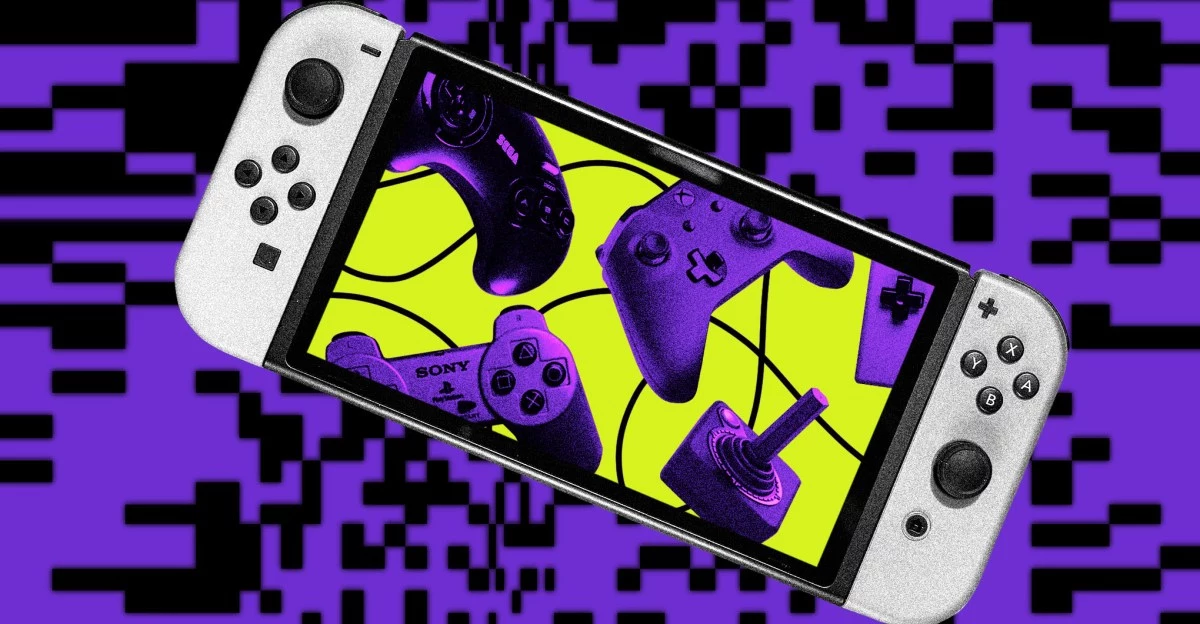

IGN’s Workforce Reduction: A Harbinger of Transformation in Gaming Media
The recent layoffs at IGN Entertainment—a Ziff Davis property—have sent tremors through the digital gaming media landscape. Eight members of the unionized IGN Creators Guild, representing roughly 12% of the unit, were let go, alongside engineering staff. These cuts arrive on the heels of a year marked by revenue growth, ambitious live events, and the high-profile acquisition of Gamer Network. The paradox is stark: expansion and profitability on one hand, contraction on the other. Yet, this juxtaposition is emblematic of deeper forces reshaping not only IGN, but the entire ecosystem of enthusiast media.
The Double Bind: Digital Media’s Economic and Technological Squeeze
At the heart of IGN’s restructuring lies a confluence of economic pressures and technological disruption that has rendered the old playbook obsolete. The secular decline in ad rates—driven by privacy regulations, brand-safety concerns, and a tepid market—has compressed margins for text-based coverage. Meanwhile, Google’s algorithmic updates have slashed referral traffic, disproportionately harming editorial teams that once thrived on long-tail search.
But perhaps the most existential threat comes from generative AI. As search engines and consumer platforms experiment with AI-generated summaries, the traditional publisher’s role as the gateway to information is eroding. Click-throughs dwindle as users receive answers without ever visiting the source. For a media conglomerate like Ziff Davis, this means that portfolio optimization is no longer optional—it is imperative.
Rising interest rates only compound the challenge, making speculative investment in audience growth less palatable. In this climate, headcount becomes the lever for preserving acquisition firepower and margin expansion, even when the top line is healthy.
Strategic Calculus: From Editorial Legacy to Data-Centric Operations
IGN’s recent moves suggest a classic conglomerate strategy: offset the episodic, capital-intensive nature of live events with fixed-cost rationalization. Unionization, while introducing predictability to labor costs, also raises the stakes for management in a low-growth ad cycle. The layoffs, timed shortly after the Gamer Network acquisition, hint at a drive toward integration synergies—consolidated content management, unified ad operations, and centralized video production.
The reduction in engineering staff is particularly telling. It may signal a pivot away from bespoke tooling toward off-the-shelf SaaS platforms, or a redirection of technical resources into AI-driven content operations. The latter would enable IGN to automate commodity content—patch notes, walkthroughs, and recaps—while preserving human talent for investigative and high-context features.
This is not an isolated phenomenon. Across games media, from Polygon’s divestiture to Giant Bomb’s spin-out, the industry is shedding legacy editorial structures in favor of nimble, creator-driven models. The gravitational pull of Twitch, YouTube, and Discord has fragmented the audience, diluting the bargaining power of established brands and forcing a reimagining of what it means to be a media operator in 2024.
Navigating the New Terrain: Imperatives for Stakeholders
For publishers and media operators, the path forward is clear but arduous:
- Diversify Revenue Streams: Move beyond CPM-driven models to embrace memberships, microtransactions, and licensing—insulating against the volatility of AI-disrupted search.
- Automate Intelligently: Deploy large language models for routine content, reserving editorial resources for high-value analysis and reviews.
- Invest in Community: Build and own discussion platforms to maintain direct engagement as social algorithms shift away from external link promotion.
Advertisers and brand partners must recalibrate their strategies, prioritizing experiential activations and demanding robust first-party data frameworks. Technology providers, meanwhile, should focus on interoperability and AI safety—delivering tools that streamline integration and reassure both regulators and unions.
For investors, the signals are nuanced. Union negotiations may delay expected synergies, while the performance of live events will serve as a barometer for the sustainability of IGN’s hybrid model. The calculus is shifting: what once was a game of scale is now one of agility, data, and differentiated engagement.
IGN’s workforce reduction is not merely a cost-saving maneuver—it is a bellwether for the structural realignment underway in enthusiast media. As cost rationalization, AI-powered automation, and portfolio arbitrage converge, the winners will be those who anticipate and adapt, investing boldly in technology and community while reimagining the contours of digital engagement. In this new era, resilience belongs to the lean, the data-savvy, and the relentlessly innovative.

 By
By
 By
By
 By
By
 By
By
 By
By


 By
By