


The Final Bell: Wrestling’s Health Reckoning and the Economics of Nostalgia
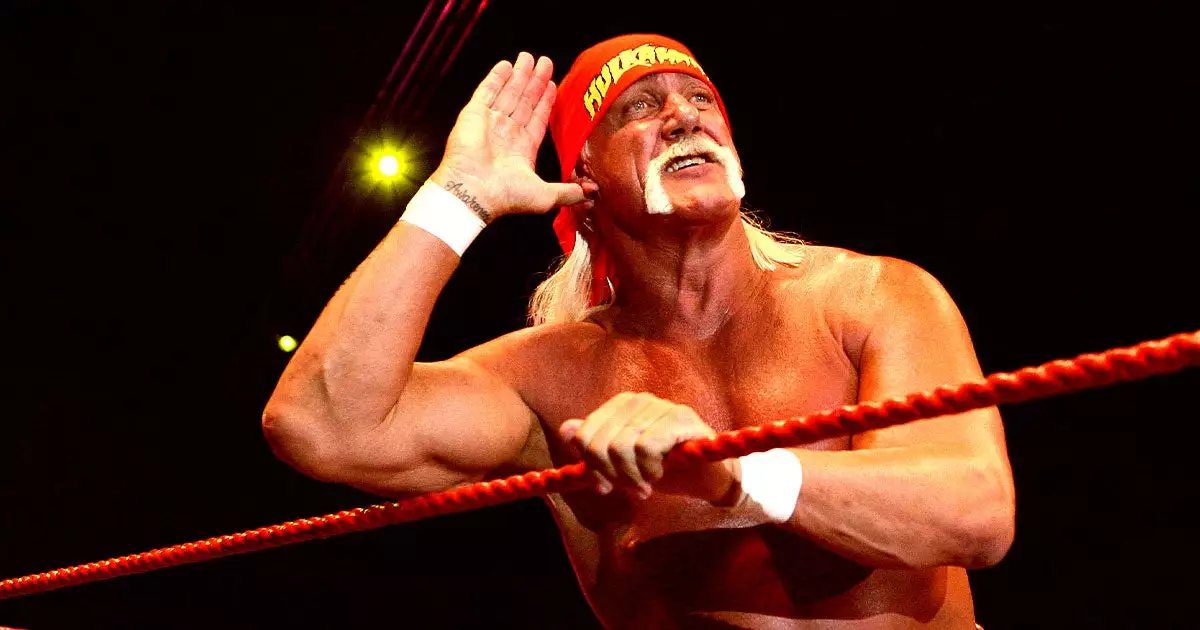
The death of Hulk Hogan—born Terry Bollea—at age 71, from cardiac arrest, reverberates far beyond the squared circle. For decades, Hogan’s larger-than-life persona defined professional wrestling’s golden era, his image synonymous with both the spectacle and the excesses of the industry. His passing, however, is not simply the end of an era; it is a stark reminder of the persistent health crises shadowing the $8 billion global wrestling business—a world where nostalgia and risk are inextricably intertwined.
Unmasking the Health Crisis: Cardiovascular Risk and the Contractor Paradox
Hogan’s career, marked by relentless physical trauma, multiple surgeries, and candid admissions of steroid use, highlights a pattern that has become tragically familiar. The premature deaths of wrestling icons from the 1980s and 1990s—often from heart-related conditions—underscore systemic vulnerabilities in athlete welfare. Unlike their counterparts in the NFL or NBA, professional wrestlers operate under an “independent contractor” model. This legal distinction has allowed promoters to sidestep comprehensive healthcare obligations, even as the industry’s public and private owners trumpet their ESG credentials.
The convergence of extreme athleticism, performance-enhancing drug (PED) culture, and long-term cardiovascular risk is now impossible to ignore. As public scrutiny intensifies, the lack of real-time biometric monitoring in wrestling—standard in other high-impact sports—stands out as a glaring omission. For technology providers, this gap signals a market ripe for disruption:
- Sensor OEMs and SaaS analytics firms can develop closed-loop health platforms tailored to the unique needs of independent-contractor athletes.
- Insurers and reinsurers are already leveraging AI-driven morbidity models, and Hogan’s death adds urgency to the pricing of risk for promotions without robust wellness programs.
The business case for advanced health-tech integration is clear: mitigate liability, preempt regulation, and protect the human capital that underpins the industry’s economic engine.
Nostalgia’s Double-Edged Sword: Media Rights, IP Longevity, and the Erosion of Legacy
Hulk Hogan remains, even in death, one of the most monetizable properties in sports entertainment. His likeness powers streaming archives, merchandise, and nostalgia-fueled live events. The paradox is acute: the very icons who drive viewership and licensing revenue are also the most vulnerable to the industry’s health hazards. Each loss narrows the palette for future content—documentaries, metaverse experiences, and even generative-AI “digital twins” depend on living legacy talent and high-fidelity archival material.
For rights-holders, the imperative is twofold:
- Accelerate digitization: 4K remastering and volumetric capture of archival footage can extend the monetization window before source material degrades or legal estates complicate clearances.
- Diversify storytelling: CGI-enabled character arcs and talent development programs that reduce reliance on extreme physicality can future-proof IP portfolios.
The economic footprint of wrestling continues to expand, but the attrition of its foundational stars poses a structural challenge to long-term content valuation.
Regulatory Crossroads: Labor, Liability, and the Future of Sports Entertainment
The regulatory landscape is shifting. Congressional interest in athlete welfare, already heightened by debates over collegiate NIL rights and CTE in football, is poised to pivot toward the unregulated corners of sports entertainment. Any move to harmonize PED oversight or mandate health benefits would fundamentally alter both the cost structure and the M&A calculus for combat-sports portfolios.
Private-equity investors and public markets are on notice. Due diligence must now account for:
- Contingent healthcare liabilities akin to defined-benefit pension risk.
- Brand governance pressures: Sponsors, wary of negative PED associations, may divert budgets to lower-risk properties such as e-sports or scripted dramas.
- Potential reclassification of wrestlers as employees, a shift that would materially compress EBITDA margins.
The wellness economy, valued at $5 trillion globally, craves authenticity. Strategic collaborations between wrestling promotions and medically vetted recovery-tech providers—hyperbaric chambers, stem-cell therapies, precision nutrition—could reposition wrestling as a laboratory for science-based human performance, unlocking new revenue streams and reframing public perception.
Navigating the Inflection Point: Strategic Imperatives for Stakeholders
Hogan’s passing is a clarion call for industry transformation. Promoters and rights-holders must embrace biometric baselines and transparent health metrics, not just to preempt regulation but to de-risk sponsor flight and sustain fan engagement. Healthcare and insurtech investors should pursue niche underwriting opportunities, integrating AI morbidity models with wearable-derived datasets. Technology suppliers are uniquely positioned to deliver edge-AI wearables and cloud analytics as compliance solutions, while public and private investors must recalibrate their models for latent health-liability reserves.
For policymakers, the moment is ripe to harmonize PED regulation across sports, leveraging best practices from established leagues and global anti-doping authorities. The future of wrestling will be shaped not only by its capacity for reinvention in the ring, but by its willingness to confront the realities outside it—a challenge that will define the next era of sports entertainment.
In this crucible of nostalgia, risk, and innovation, the industry stands at a crossroads. The choices made now will echo far beyond the roar of the crowd, shaping the legacy of wrestling for generations to come.

 By
By
 By
By
 By
By

 By
By


 By
By







