

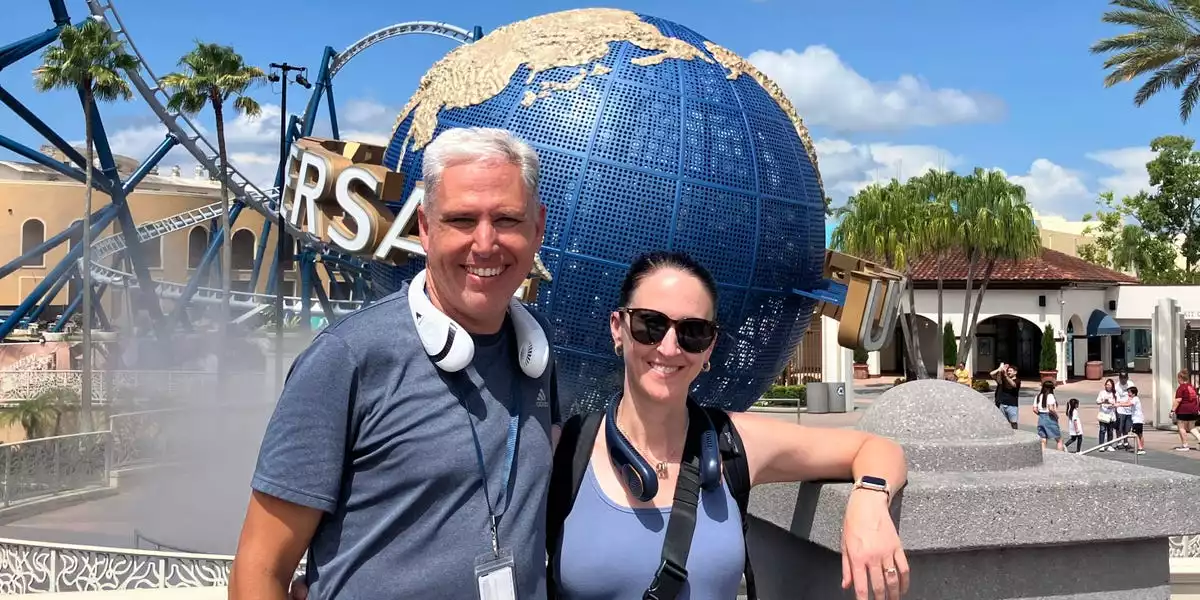

A six-day Orlando vacation as a real-world stress test for the experience economy
A U.S. family of five spending $8,620 on a six-day Orlando trip is not merely a personal budgeting story—it’s a revealing snapshot of how the experience economy is being financed, optimized, and operationalized in 2026-era travel. The cost structure is familiar to anyone tracking theme-park tourism: high fixed expenses up front, then a long tail of discretionary spending that can either spiral or be tightly managed.
In this case, the family’s major line items included:
- Flights: $1,451
- Airport parking: $84
- Two hotel rooms at Universal’s Terra Luna Resort (with four-day park-to-park tickets): ~$5,000
- Disney’s Hollywood Studios (with Lightning Lanes): ~$1,200
- Food: $767
- Souvenirs: $37
What stands out is not the sticker price—Orlando has become a premium-priced destination for peak-demand families—but the deliberate effort to convert complexity into savings. By using credit-card travel rewards ($1,920 reimbursed) and hotel dining credits ($600), the family reduced effective cost by nearly $2,500, a meaningful offset that reframes affordability without reducing the core experience.
This is the modern travel bargain: not “cheap,” but optimized—and increasingly dependent on financial tools, digital planning, and selective upgrades.
The new consumer playbook: micro-budgeting, time arbitrage, and selective premium spend
The family’s approach reflects a broader shift in consumer behavior: households are increasingly willing to pay for “big” experiences, but they demand control over value. That control is achieved through a combination of micro-budgeting and time arbitrage—spending where it meaningfully improves the day, while refusing add-ons that feel like poor marginal returns.
Several choices illustrate this emerging playbook:
- Experience-first allocation: The largest spend concentrated in tickets and lodging, the two categories most directly tied to memory-making and convenience.
- Selective queue-skipping: They paid for Lightning Lanes at Disney but skipped Universal Express Pass, relying instead on timing and planning—yet still capped waits at 45 minutes.
- Low-friction mobility: Avoiding a rental car in favor of ride-share (Uber) and on-site transport reduces both cost uncertainty and logistical overhead.
- Minimal retail leakage: Only $37 in souvenirs signals a disciplined boundary around discretionary purchases—an increasingly common pattern as consumers prioritize “doing” over “buying.”
The most consequential lever, however, was financial: travel rewards and credits functioned like a private discount layer. That matters because it changes how consumers perceive price. When nearly a third of gross spend can be offset through points, reimbursements, and bundled credits, the vacation becomes psychologically—and practically—more attainable.
For theme parks, hotels, and travel brands, this is a double-edged dynamic: rewards programs can stimulate demand and higher on-property spend, but they also train consumers to treat published prices as negotiable through loyalty ecosystems.
Theme parks as data-driven operating systems: crowd flow, digital access, and yield engineering
Behind the family’s itinerary is a sophisticated operational reality: major theme parks now behave less like static attractions and more like real-time capacity management platforms. The family’s ability to avoid extreme waits without purchasing every premium add-on underscores how much value is embedded in digital scheduling, early entry windows, and multi-day ticket design.
Key operational mechanisms at play include:
- Early access as a demand-shaping tool: Early-entry benefits don’t just reward guests; they redistribute crowd density and protect peak hours.
- Park-to-park mobility: Multi-day, multi-park passes encourage guests to spread demand across locations, smoothing bottlenecks while increasing perceived freedom.
- Dynamic pricing by another name: Bundles that combine lodging, tickets, proximity, and perks are effectively yield management products—they raise average revenue per guest while presenting the purchase as “value.”
- Queue economics: Paid line-skipping options (e.g., Lightning Lanes) monetize time savings, but the more interesting signal is that disciplined planning can sometimes substitute for paid access—creating a competitive tension between “premium convenience” and “smart optimization.”
Universal’s Terra Luna Resort package is particularly illustrative: it bundles rooms, tickets, and access benefits in a way that is difficult for consumers to unbundle and price-compare. That is not accidental. It’s a modern hospitality strategy designed to reduce price transparency while increasing conversion—especially for families who want predictability.
Meanwhile, the reliance on ride-share points to another structural shift: last-mile mobility is now part of the guest experience stack. For operators, deeper integrations with mobility platforms can improve routing, reduce congestion, and open up new ancillary revenue opportunities—while also generating richer behavioral data.
What executives should take from this: loyalty-fintech convergence and AI-personalized travel stacks
For business and technology leaders, the Orlando case study highlights a market reality: the next phase of travel growth will be won by companies that treat vacations as orchestrated systems, not standalone transactions. The family’s savings and time efficiency were not accidental; they were engineered through tools and programs that increasingly define competitive advantage.
Strategic implications that emerge clearly:
- Loyalty and fintech are now core distribution channels: Co-branded credit cards, points ecosystems, and dining credits are not peripheral perks—they are demand levers that can materially change purchase behavior and trip design.
- AI itinerary planning is becoming table stakes: The opportunity is to build or partner on AI-driven itinerary engines that optimize ride plans, dining, transport, and crowd forecasts in real time—improving guest satisfaction while nudging higher-margin purchases.
- Bundling will keep expanding—so will tiering: Expect more dynamically priced bundles that combine early access, reserved experiences, food credits, and premium viewing zones. The winners will be those who calibrate these tiers to protect guest sentiment while maximizing yield.
- Inflation resilience will depend on perceived value, not lower prices: As travel costs remain elevated, consumers will increasingly “pay full price” only if they can offset it through rewards or if the experience feels unmistakably worth it.
This family didn’t just take a vacation—they navigated a modern travel marketplace where time is monetized, loyalty is currency, and planning is a competitive advantage. For the industry, the message is equally clear: the future of theme-park tourism—and much of leisure travel—will be built by those who can integrate pricing, personalization, and partnerships into a seamless, value-legible journey that still feels like magic to the guest.

 By
By
 By
By

 By
By
 By
By

 By
By
 By
By







