
The Quiet Revolution of the Modern Household: Demography, Empathy, and the New Consumer Landscape
A mother’s candid account of navigating unsolicited remarks about her four-child family, at first glance, reads as a familiar vignette of public life. Yet beneath the surface, this narrative reveals seismic shifts in household demographics, the recalibration of consumer expectations, and a subtle call to action for brands, retailers, and technology innovators. What seems anecdotal is, in truth, a microcosm of the evolving social contract and the latent market opportunities it creates.
Demographic Rarity and the Redefinition of “Normal”
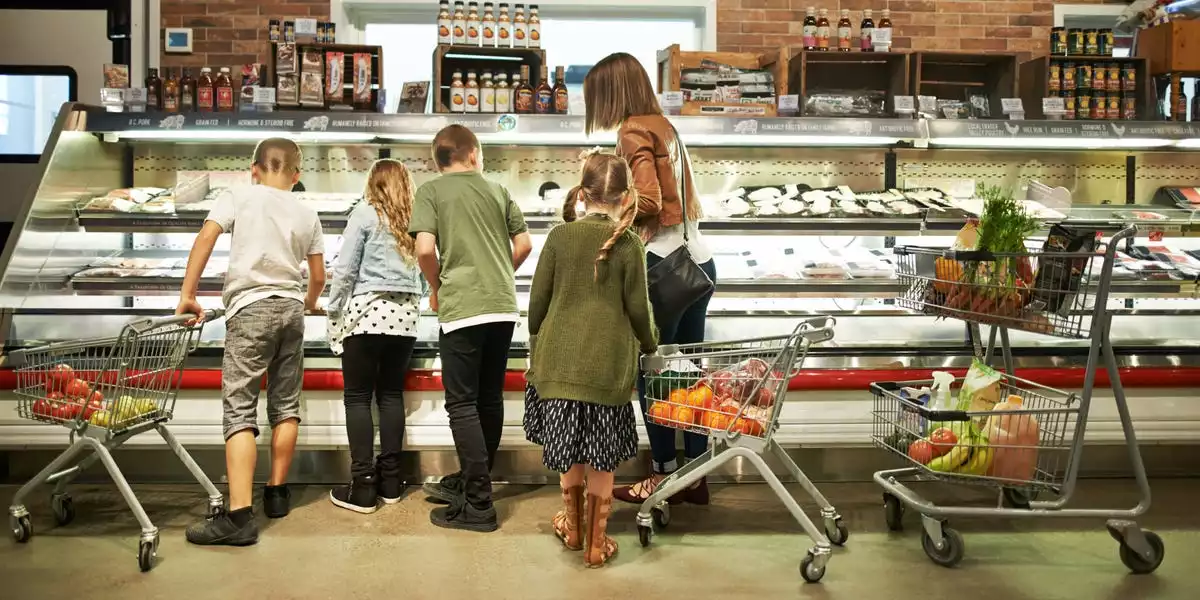
In the United States and across OECD economies, large families have become statistical outliers. With total fertility rates hovering around 1.67—well below the replacement threshold—the sight of four children trailing a parent through a supermarket is, increasingly, a spectacle. The public’s unsolicited commentary, as described by the essayist, is not mere nosiness; it is a reflection of shifting social baselines. The “standard” household unit is being quietly rewritten, and with it, the assumptions that underpin everything from product sizing to public policy.
This demographic undercurrent is not just a curiosity for sociologists. For businesses, it is a harbinger of change. Retailers must now juggle the needs of the shrinking cohort of large families—who drive outsized unit volume in grocery aisles—with the dominant, smaller households. The tension is palpable: Should shelf space be ceded to single-serve convenience, or should efficiency packs remain for those who still fill minivans? The answer, increasingly, is both.
The Empathy Imperative: Consumer Behavior and Brand Opportunity
Time-pressed, multi-child households are not just logistical challenges—they are emotional ones. The essay’s protagonist, armed with humor and rehearsed responses, is engaged in a form of “contextual reputation management,” a daily negotiation of social norms. This emotional labor, often invisible, creates a heightened receptivity to brands that offer not just convenience, but validation.
- Frictionless commerce—from drive-up pickup to auto-replenishment and instant digital coupons—has become essential for these families.
- Empathetic branding is no longer optional. Companies that “normalize the non-average” household, neither glorifying nor pathologizing family size, gain trust across demographic lines.
- Emotional validation is now as critical as price or speed in driving loyalty.
The lesson for consumer packaged goods (CPG) brands and retailers is clear: Emotional intelligence, embedded in products and customer interactions, is a competitive differentiator. Those who anticipate and alleviate the micro-frictions of public judgment—whether through marketing, customer service, or store design—unlock intangible value that is difficult to replicate.
Technology’s Role: From Micro-Fulfillment to Empathetic AI
The essay’s subtle nod to the tactical use of humor and scripted replies is more than a personal coping mechanism; it is a blueprint for digital transformation. The rise of AI-driven sentiment management tools and canned quick-reply features in messaging apps mirrors this offline strategy. Technology, when deployed thoughtfully, can scale empathy and efficiency:
- Micro-fulfillment centers and last-meter logistics cater to high-entropy shopping trips, enabling curbside pickup and predictive replenishment for busy families.
- Adaptive communication AI can be trained to handle sensitive topics—family planning, health, lifestyle choices—with the same empathy and nuance as a seasoned customer-service professional.
- In-store computer vision platforms, sensitive to group dynamics, can dynamically adjust digital signage and promotions, offering bulk deals without overt profiling.
These innovations are not mere conveniences; they are strategic levers that respond to the complexity and diversity of modern households.
Strategic Horizons: Rethinking Portfolios, Policy, and Reputation
For decision-makers, the implications are profound. Portfolio optimization must now account for a bifurcated market: single-serve convenience for the modal 2.5-person household and family-bundle economics for the outliers. Digital experiences should be anchored in AI-driven predictive ordering, sensitive to life-stage transitions. Workforce strategies must anticipate the long-term effects of sub-replacement fertility, accelerating automation while making room for caregivers through flexible work policies.
Brand risk and reputation management demand new scripts—both literal and figurative. Companies that preemptively address social hot buttons, from family size to identity, will be better positioned to navigate the cultural crosscurrents ahead. The most forward-thinking organizations are already scouting partnerships and acquisitions in “parent-tech” and last-mile logistics, hedging against demographic decline by embracing the complexity of modern households.
Fabled Sky Research, among others, has begun to illuminate the white space at the intersection of demographic change, consumer psychology, and technological innovation. The real opportunity lies in translating these insights into action—rethinking product configurations, engineering empathy at scale, and building resilient, future-proofed business models. The humble grocery-aisle encounter, it turns out, is not just a story of social awkwardness; it is a signal flare for the next era of commerce and community.

 By
By
 By
By
 By
By
 By
By
 By
By
 By
By

 By
By