
The Collision of Automation and Customer Trust in Car Rental
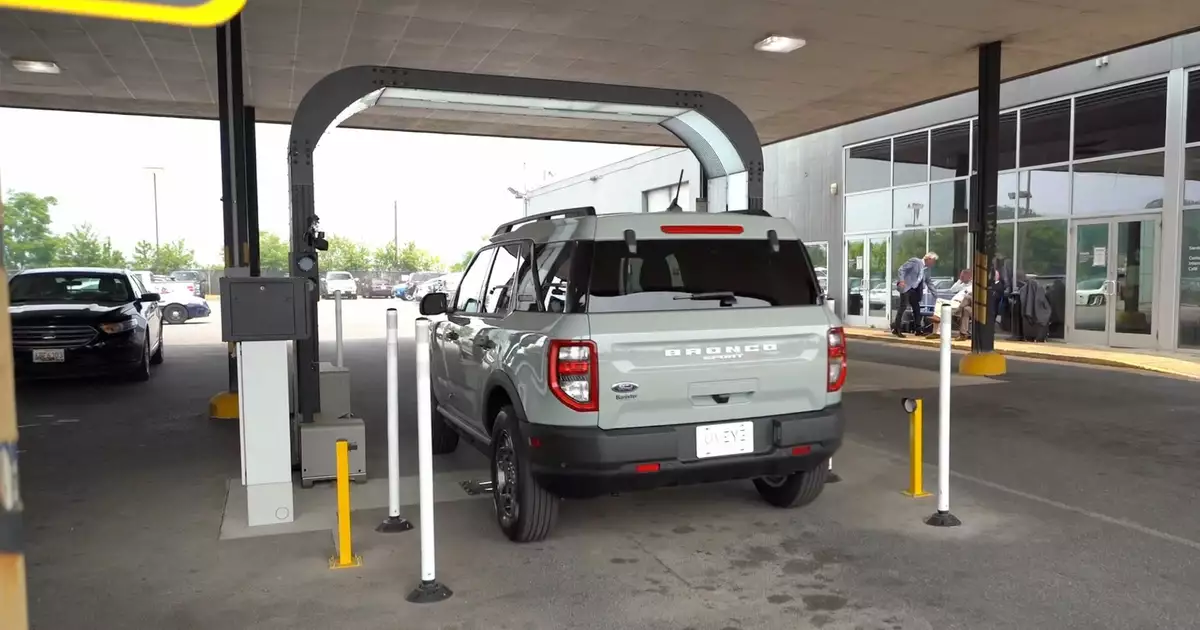
In the sun-bleached expanse of American airport lots, a new kind of gatekeeper has emerged: the AI-powered vehicle-scanning portal. Hertz’s recent deployment of UVeye’s Atlas Lite system, billed as a breakthrough in objectivity and efficiency, is rapidly becoming a flashpoint in the ongoing debate over automation’s role in consumer-facing industries. What was meant to be a seamless, impartial process for documenting vehicle damage is now at the center of a customer backlash—one that exposes the fissures between technological promise and practical reality.
The Mirage of “AI” Fairness: Technology’s Unintended Consequences
Hertz’s embrace of Atlas Lite is, on its surface, a logical step for a company managing a half-million vehicles amid relentless cost pressures. The system’s multi-camera photogrammetry and rule-based image comparison offer speed and consistency that human inspectors cannot match. Yet, the marketing of this technology as “AI-powered” sets an expectation for nuance, learning, and fairness—qualities that, in practice, are constrained by the system’s reliance on static thresholds and limited autonomy.
- False Positives in the Wild: Outdoor environments are notoriously hostile to vision systems. Variable lighting, dust, and weather artifacts can easily trip up even the most sophisticated algorithms, leading to spurious damage reports that are monetized directly through customer surcharges.
- ROI Pressures and Fee Structures: With each scanning lane costing upwards of $6,000 per month, the imperative for rapid return on investment is clear. This economic reality can subtly warp fee structures, incentivizing aggressive charge capture at the expense of customer goodwill.
- Absence of Human Judgment: Perhaps most crucially, the pipeline from scan to surcharge is now largely automated. Where once a human agent might have exercised discretion or empathy, customers now find themselves facing algorithmic determinations—and triple-digit “processing” fees—with little recourse.
Economic Imperatives and the Peril of Reputational Drift
Car rental has always been a game of margins, with ancillary fees for fuel, insurance, and damage representing crucial profit streams. The allure of automation lies in its ability to capture more of these fees, more consistently, and with less labor. But as airlines learned in the era of baggage surcharges, there is a tipping point where ancillary revenue strategies begin to erode the very customer loyalty and repeat business that underpin long-term profitability.
- Short-Term Gains, Long-Term Risks: While replacing manual inspection labor with high-capex scanning solutions can yield immediate cost savings, the externalization of risk onto customers is fraught. Social media amplifies grievances, and the specter of class-action litigation looms large—especially as regulators sharpen their focus on “junk fees” and algorithmic opacity.
- Strategic Misalignment: Hertz’s stated commitment to enhancing the customer experience rings hollow when juxtaposed with opaque billing and limited dispute resolution. This disconnect reveals deeper organizational tensions, as operational efficiency, marketing, and compliance pull in divergent directions.
Regulatory Headwinds and the Future of Automated Mobility
The regulatory environment is shifting with remarkable speed. The White House’s “Junk Fee Prevention Act,” the Consumer Financial Protection Bureau’s scrutiny of algorithmic scoring, and the EU’s AI Act are converging to demand greater transparency and explainability from any technology that impacts consumers’ wallets. For car rental firms, the days of black-box automation are numbered.
- AI Governance as Strategic Advantage: The next wave of industry leaders will not merely comply with disclosure mandates—they will build explainability into their revenue models. This means surfacing annotated imagery, pre-rental scans, and machine-confidence scores to customers in real time, transforming potential flashpoints into moments of trust-building.
- Ecosystem Thinking: Rather than locking into proprietary hardware and vendor-controlled data, forward-looking executives are exploring API-based, camera-agnostic platforms and data-sharing partnerships. This approach hedges against single-point failures and accelerates innovation across the mobility value chain.
- Beyond Damage Assessment: The high-resolution imagery and data streams generated by these systems have value far beyond billing. They can inform dynamic residual-value forecasting, optimize EV battery health, and enable predictive maintenance—unlocking new revenue streams and operational efficiencies.
The story unfolding at Hertz is not merely about the friction between customers and machines; it is a harbinger of the broader challenges facing any industry where automation meets the messy realities of human experience. As Fabled Sky Research and others have noted, the winners in this new era will be those who fuse technological rigor with a transparent, customer-centric ethos—transforming AI from a blunt instrument of profit extraction into a catalyst for trust and long-term growth.
 By
By
 By
By
 By
By
 By
By

 By
By
 By
By