
The Interstellar Visitor That’s Stirring Scientific and Strategic Waters
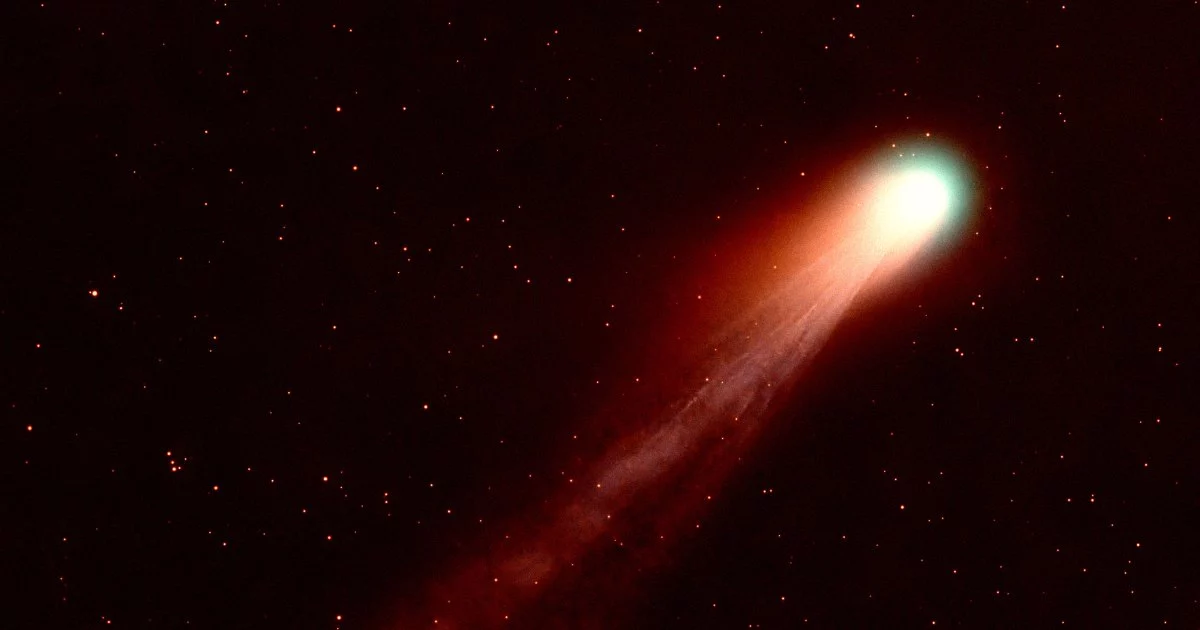
When Harvard astrophysicist Avi Loeb speaks, the world listens—sometimes with skepticism, sometimes with awe. His latest assertion, that the newly discovered interstellar object 3I/ATLAS may be an artificial probe rather than a comet, has reignited a debate that is as much about technology and economics as it is about the cosmos. While NASA and the broader astronomical community continue to lean toward natural explanations, Loeb’s catalog of nine anomalies—ranging from orbital precision to spectral oddities—demands a deeper, more nuanced investigation.
The controversy is more than a scientific squabble. It is a prism through which we glimpse the evolving interplay between astrophysics, artificial intelligence, defense strategy, and the commercialization of space. The 3I/ATLAS episode is a case study in how the search for technosignatures—the telltale fingerprints of alien technology—has become a serious, investable research vector, one with profound implications for resource extraction, national security, and the future of data analytics.
The New Arms Race: Sensors, Data, and the AI Edge
The detection of interstellar objects (ISOs) is no longer the exclusive province of academic astronomers. Today, it is a high-stakes contest among public observatories, private satellite constellations, and defense agencies. The Vera C. Rubin Observatory, the James Webb Space Telescope, and classified Department of Defense assets now operate in a symbiotic, sometimes competitive, ecosystem. Here, the advantage goes to those who can deploy AI-augmented pattern recognition across vast, multi-spectral data streams—spotting the outliers, the improbable, the potentially artificial.
Loeb’s willingness to question established priors is emblematic of a new ethos: in the age of big data, competitive advantage accrues to those who can identify the signal buried in cosmic noise. This is not merely a matter of academic curiosity. Improved ISO situational awareness has direct analogues in ballistic-missile early-warning systems, hinting at future corridors of technology transfer between civilian and defense domains.
Agile Missions and the Lean Startup Model for Space
The trajectory of 3I/ATLAS, threading the corridor between Mars and Jupiter, opens a fleeting window for scientific engagement—one that could be seized by existing probes or opportunistic CubeSat missions. This stresses the strategic value of rapid-response, modular mission architecture. The days of decade-long flagship missions may be numbered; instead, the future belongs to those who can field ad hoc scientific sorties within months, leveraging on-orbit servicing and in-situ manufacturing platforms.
Financially, this agility compresses the cost–discovery cycle, echoing the lean-startup model that has transformed terrestrial tech industries. The implications for capital allocation are profound: venture and philanthropic funds are increasingly drawn to technosignature research, underwriting high-resolution spectrometers and polarization detectors with the same logic that has driven investment in cybersecurity—namely, that the option value of early detection in low-probability, high-impact domains is asymmetric and potentially enormous.
Economic Ripples: Mining, Markets, and Media
The fascination with 3I/ATLAS is not just academic or strategic—it is economic. Loeb’s emphasis on nickel-iron concentrations dovetails with the burgeoning field of asteroid mining, where isotopic anomalies can recalibrate long-term pricing models for critical minerals. The mere possibility of artificiality, however remote, has already begun to shape capital flows, with retail investors and SPACs riding waves of extraterrestrial speculation. Executives would do well to anticipate not only transient valuation spikes, but also the regulatory scrutiny that follows in the wake of sensational claims.
Meanwhile, the gap between the slow cadence of academic peer review and the rapid iteration demanded by venture capital is widening. Hybrid entities that blend university-grade science with Silicon Valley’s appetite for risk and speed—think of a “SpaceX-OpenAI for astronomy”—are poised to define the next era of space exploration.
Strategic Imperatives for the Next Decade
For decision-makers, the lesson is clear: treat interstellar anomalies as strategic signals, not noise. This means:
- Building ISO contingency protocols—establishing clear thresholds for mission green-lighting when unusual orbital parameters are detected.
- Investing in interoperable, AI-ready data infrastructure to process petabyte-scale time-domain astronomy data and flag anomalies automatically.
- Forging cross-sector consortia that bridge defense, commercial, and academic boundaries while navigating regulatory and IP constraints.
- Scenario-planning for resource shifts in response to any confirmation of atypical metallicity or artificiality.
- Cultivating thoughtful public engagement to convert speculative intrigue into sustained policy and funding support.
The discovery of 3I/ATLAS, whether ultimately mundane or miraculous, marks a turning point. It is a vivid reminder that the frontiers of astrophysics, big data, and commercial space are converging with unprecedented speed. Those who recognize the strategic value in cosmic anomalies—and act accordingly—will be best positioned to capture the dividends of this new extraterrestrial economy.


 By
By
 By
By

 By
By