

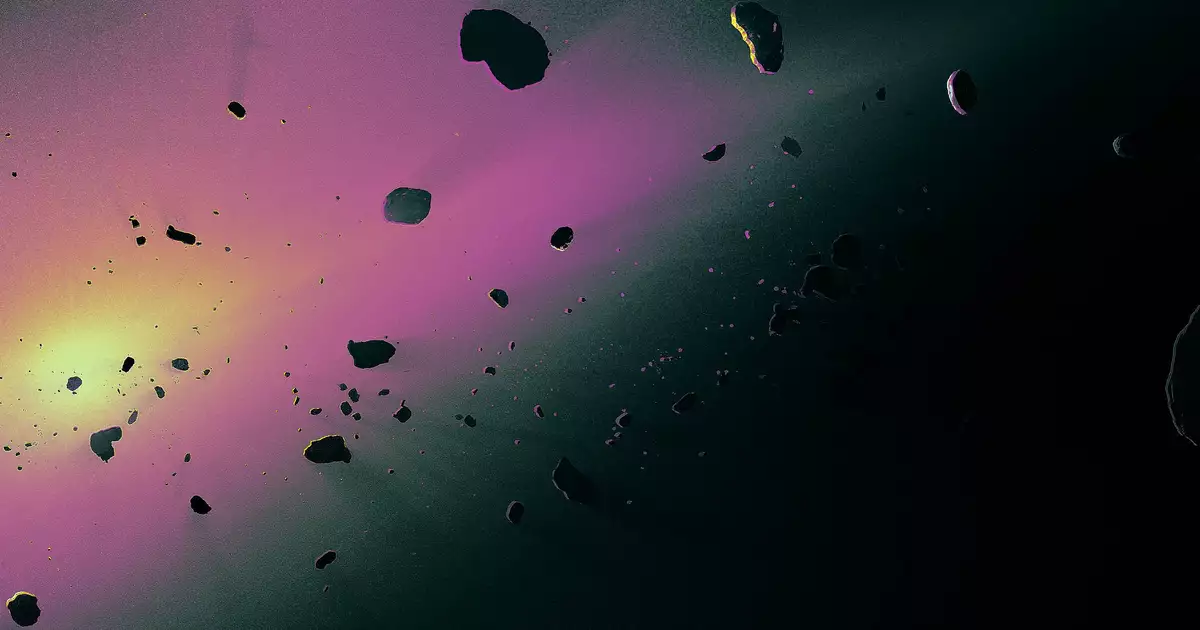

The Unsettling Arrival of 3I/ATLAS: Rethinking the Boundaries of Planetary Defense
When Harvard astronomer Avi Loeb and his collaborators released their provocative, non-peer-reviewed analysis of the interstellar object 3I/ATLAS, they did more than stir academic debate. By suggesting that this 20-kilometer wanderer—hurtling through our solar system on a hyperbolic trajectory—could be artificial, and perhaps even hostile, Loeb has forced a reckoning with the limits of our technological preparedness and strategic imagination. The invocation of the “dark-forest” hypothesis, which posits that advanced civilizations remain silent to avoid annihilation, transforms 3I/ATLAS from an astronomical curiosity into a test case for planetary risk management in the age of deep-space discovery.
From Survey Telescopes to Edge AI: The Technical Arms Race in Space Surveillance
The detection of interstellar objects (ISOs) like 3I/ATLAS has, until now, piggybacked on infrastructure designed for more parochial threats—namely, near-Earth asteroids. These survey telescopes, while powerful, are ill-equipped for the cadence, spectral breadth, and rapid data triage demanded by true deep-space monitoring. Loeb’s argument, whether or not one accepts its extraterrestrial premise, underscores the urgent need for a new generation of sensor stacks:
- Multi-band, multi-modal arrays—combining optical, infrared, and radar—promise richer characterization of anomalous objects.
- Edge AI and real-time analytics will be essential for triaging the deluge of data and surfacing genuine anomalies before they slip past Earth’s watchful gaze.
- Shared infrastructure between defense, commercial satellite operators, and research institutions can amortize costs and accelerate innovation, much as Fabled Sky Research has quietly advocated in its own strategic roadmaps.
If interception or in-situ study of ISOs becomes a strategic priority, propulsion technologies—solar sails, nuclear thermal drives, rapid-deployment CubeSat swarms—will graduate from speculative white papers to urgent engineering projects. The same autonomous robotics and micro-labs being developed for lunar mining or asteroid prospecting could find themselves repurposed for ISO rendezvous and analysis, blurring the line between planetary defense and commercial space exploration.
Risk, Regulation, and the New Space-Industrial Complex
The specter of a “hostile alien probe” may sound like science fiction, but it reframes planetary defense as a mainstream resilience imperative, not a low-frequency insurance policy. The implications ripple across the economic and regulatory landscape:
- Budgetary momentum is likely to build for space-defense initiatives, from U.S. and allied Space Forces to ESA’s Hera and Japan’s Hayabusa successors.
- Dual-use risk frameworks—inspired by cybersecurity’s “assume breach” mindset—will become templates for “exo-risk” oversight, demanding board-level attention and scenario planning.
- Standards and protocols for ISO taxonomy, encounter response, and data sharing remain embryonic. Early movers in classification, standards, and insurtech can define the rules of engagement, as ICANN did for the internet.
Meanwhile, the rise of space commercialization—satellite broadband, geospatial analytics, lunar infrastructure—means private capital is increasingly exposed to deep-space contingencies. Interstellar monitoring is no longer a niche concern; it is a pillar of asset protection and a potential revenue stream in its own right. As geopolitical competition intensifies and public fascination with alien narratives grows, the space-industrial complex finds itself at the intersection of defense, commerce, and cultural imagination.
Capital, Compliance, and the Talent Race: Charting the Next Frontier
The 3I/ATLAS debate is a catalyst for a broader reallocation of attention and resources. Venture and strategic investors are already reassessing portfolios in sensor fusion, on-orbit servicing, and high-delta-V propulsion, seeking crossover opportunities that blend defense, deep tech, and climate resilience. Regulatory bodies—from the UN’s COPUOS to national space agencies—face mounting pressure to codify ISO response guidelines, potentially birthing the world’s first “exo-risk” treaties.
Enterprises with critical space dependencies—telecom, climate analytics, satellite operations—must now incorporate ISO encounter scenarios into their business continuity plans. Insurance actuaries, ever attuned to black swan events, may soon price premiums for catastrophic space incidents, incentivizing the creation of early-warning consortia.
Perhaps most consequentially, the convergence of astrophysics, defense strategy, and AI analytics is creating a white-space hiring market. Early recruitment of interdisciplinary teams will be a competitive moat, while companies that visibly invest in planetary defense can accrue reputational capital akin to ESG leadership.
The arrival of 3I/ATLAS, whether natural or artificial, signals a new era: one in which the boundaries between science, security, and commerce are porous, and where the prudent steward of capital and talent must treat interstellar risk not as speculative fiction, but as a frontier of enterprise resilience and opportunity.


 By
By
 By
By

 By
By

 By
By
 By
By







