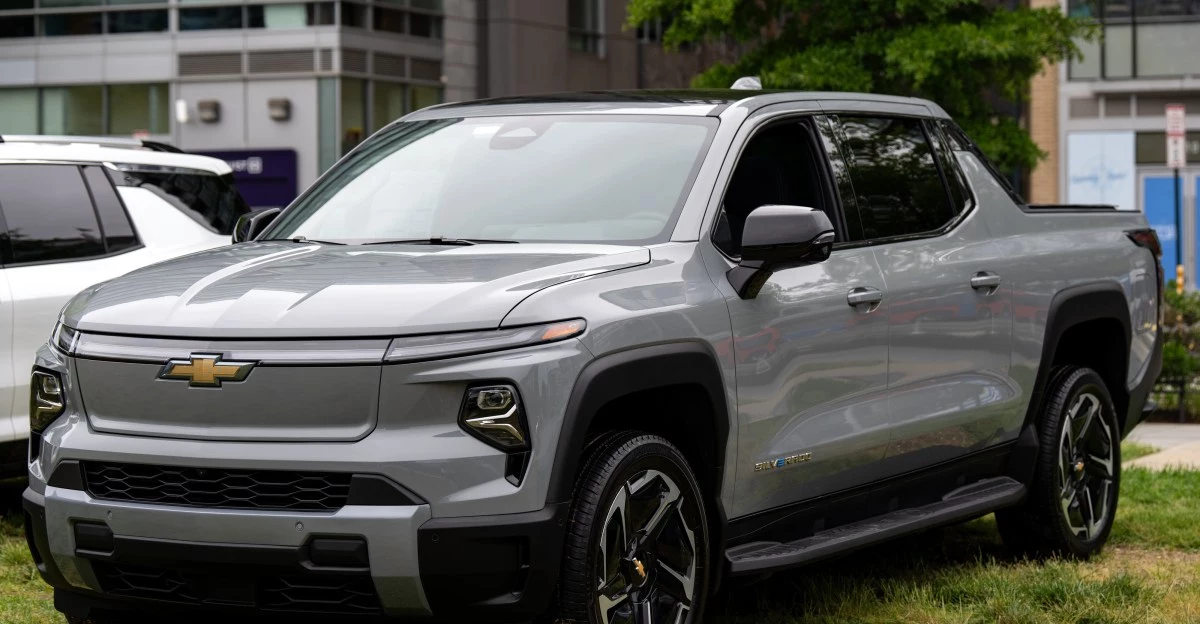

Reimagining Range: The Silverado EV’s Quiet Revolution in Fleet Mobility
General Motors’ recent 1,059-mile, single-charge odyssey with its 2026 Silverado EV Work Truck is a masterclass in understated disruption. Beyond the headline-grabbing number lies a deeper narrative: the slow but steady dismantling of range anxiety in the light-duty truck segment. This isn’t merely a feat of battery brute force—it’s a nuanced demonstration of how layered engineering, software intelligence, and operational discipline can collectively redefine the economics and expectations of commercial electric vehicles.
Engineering Subtlety: Where Hardware Meets Algorithm
The Silverado EV’s achievement is not a story of one breakthrough, but of many. At the heart of this run sits GM’s formidable ~200 kWh Ultium battery pack, a behemoth in the light-truck category. The test did more than stretch the odometer; it validated the reliability of deep discharge cycles—an essential metric for fleet operators who demand relentless uptime.
But the battery is only the beginning. The Silverado’s journey was meticulously curated: summer temperatures, a steady 20–25 mph pace, and a suite of aerodynamic tweaks that included a tonneau cover, repositioned wipers, and the absence of a spare tire. These seemingly small adjustments yielded double-digit efficiency gains, underscoring a truth often overlooked in the EV arms race—aerodynamics remain the most cost-effective source of additional range.
Equally significant is the software layer. The drive doubled as a proving ground for GM’s next-generation eco-algorithms, which will soon underpin autonomous speed governance and route optimization. For municipal and campus fleets—where vehicles rarely exceed 35 mph—these software-defined efficiencies could become a competitive differentiator, delivered seamlessly via over-the-air updates.
Fleet Economics and Strategic Signaling
The implications for fleet owners are profound. Doubling real-world range doesn’t just lengthen the leash; it slashes the frequency of charging events, directly boosting asset uptime—a metric that sits near the top of every vocational fleet manager’s dashboard. When modeled against U.S. average demand charges, an extra 500 miles of range can trim annual operating expenses per truck by as much as 8%. In a sector where margins are measured in basis points, such incremental gains are transformative.
GM’s decision to forgo a Guinness World Record filing is telling. This was not a marketing spectacle, but a deliberate R&D validation. In an era when Wall Street scrutinizes every EV dollar spent by legacy automakers, the message is clear: discipline and substance over sizzle. The timing also dovetails with the evolving landscape of the Inflation Reduction Act’s commercial clean-vehicle credits, giving GM a stronger hand in lobbying for more favorable, kWh-based incentives.
Shifting Competitive Terrain and the Next Industrial Playbook
While Lucid continues to dominate the luxury sedan efficiency narrative, GM’s Silverado EV now stakes a claim in the work-truck domain—a battleground where Ford, Rivian, and Ram are all vying for relevance. The Work Truck’s stripped-down trim is emblematic of a broader OEM pivot: sacrificing infotainment frills to shed weight and reduce semiconductor reliance, thereby enhancing both range and supply-chain resilience.
The test’s low-speed, hyper-efficient methodology mirrors the real-world duty cycles of urban delivery and campus fleets, hinting at cross-pollination opportunities with autonomous delivery pods and, potentially, with GM’s Cruise division. The experiment also highlights the looming need for battery chemistry diversification; while large NCM packs deliver range, their weight penalties suggest a future where lithium iron phosphate (LFP) or manganese-rich chemistries play a larger role in medium-range trims.
Strategic Horizons: From Aero-First Design to Grid Implications
The Silverado’s run portends a new era of aero-first design mandates, even for trucks—a reversal of a decade’s worth of styling-led compromises. Expect to see active aerodynamic features, such as deployable tonneau covers and grille shutters, become standard fare. Meanwhile, software-defined efficiency will be monetized: fleets may soon subscribe to “range-max” drive modes, a SaaS-adjacent revenue stream hiding in plain sight.
Regulatory harmonization is on the horizon. As real-world range tests gain prominence, pressure will mount for unified standards across EPA, WLTP, and regional benchmarks. OEMs would do well to proactively shape these conversations, lest they be caught flat-footed by shifting certification regimes. On the infrastructure front, extended range means fewer charging stops and smoother grid loads—an unheralded boon for utilities and charge point operators alike.
The Silverado EV’s marathon is less a spectacle than a strategic breadcrumb, pointing toward an industry where integrated efficiency—across hardware, software, and operational protocols—will define the next wave of competitive advantage. Those who grasp the nuance behind the numbers will be best positioned to shape the future of electric mobility.

 By
By
 By
By
 By
By
 By
By
 By
By