


When Iconography Meets Instability: The Fall of Brazil’s Liberty and the Winds of Change
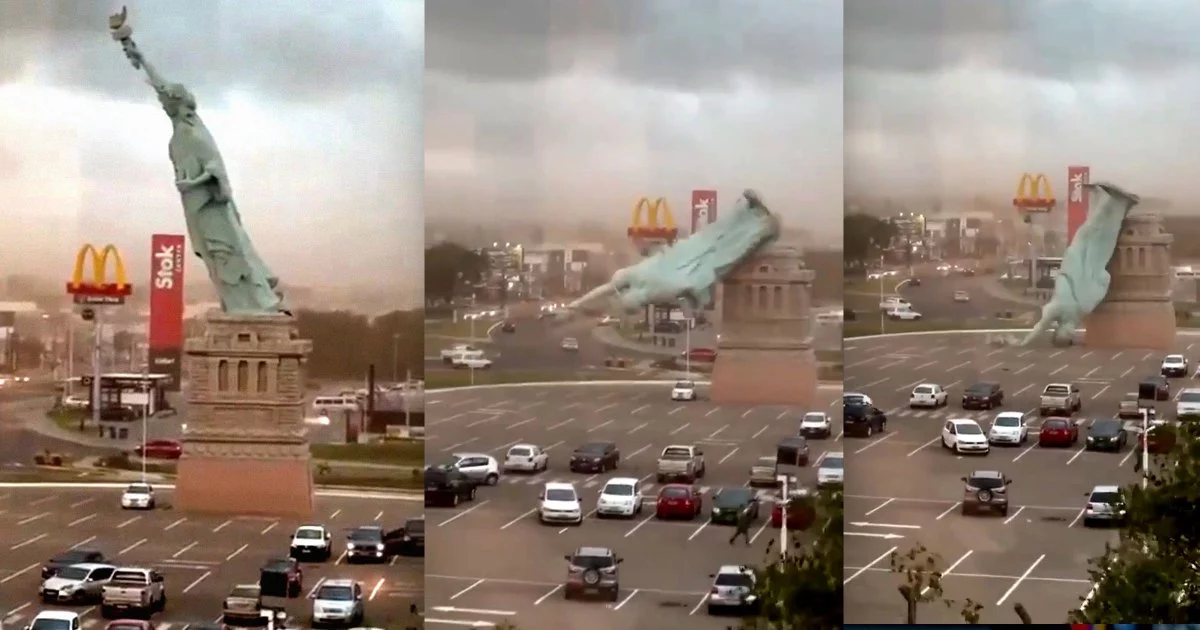
On a windswept afternoon in Guaíba, Brazil, a 110-foot fiberglass-clad replica of the Statue of Liberty—an unmistakable beacon of American aspiration—crashed to earth, felled by gusts exceeding 90 kilometers per hour. The statue, erected by the retail giant Havan as part of its signature Americana branding, became an instant viral spectacle: within half a day, footage of the collapse surged past 25 million views across TikTok, Instagram, and X. The image—a toppled symbol of U.S. liberal capitalism, sprawled beside a glowing McDonald’s sign—was too potent for the world’s meme economy to resist.
Beneath the surface, the incident has become a prism refracting three converging narratives: the shifting fortunes of U.S. soft power, the aftershocks of Brazil’s populist experiment, and the vulnerabilities of experience-driven retail in a climate-volatile, hyper-connected age.
—
The Symbolic Economy: Soft Power and Political Aftershocks
The Statue of Liberty, even in facsimile, is freighted with meaning. Its collapse in Brazil—broadcast globally in seconds—became a Rorschach test for geopolitical sentiment. For some, it was a metaphor for the perceived erosion of American influence; for others, a pointed commentary on the decline of pro-market populism in Brazil, where Havan’s founder, Luciano Hang, has long been a standard-bearer for the entrepreneurial right.
- Soft-Power Optics: The meme-ification of the event—especially juxtaposed with “cheap Americana” brands—underscored how quickly physical symbols can be weaponized in the digital age. The speed and scale of the narrative’s spread revealed the precariousness of U.S. iconography abroad, particularly when untethered from local context or benefit.
- Domestic Political Resonance: Hang’s embrace of patriotic Americana was always more than marketing; it was a coded alignment with the Bolsonaro-era fusion of nationalism and free-market ideology. The statue’s fall, as Bolsonaro himself faces mounting legal challenges, reads as a literal and figurative coda to a political moment now in retreat.
—
Retail’s Architectural Gamble: Experience, Risk, and the Algorithm
Havan’s business model, like many modern retailers, is predicated on spectacle. The company allocates 2–3% of its construction budgets to grand façades and symbolic replicas, betting that physical experience will drive foot traffic and social engagement. The viral collapse, however, exposed the double-edged nature of this strategy.
- Brand ROI vs. Engineering Risk: While the incident delivered global attention, it also tethered Havan’s brand to political polarization and questions of structural integrity. Insurance and compliance costs are now set to rise, with regulators likely to demand more rigorous wind-load certifications—potentially increasing future project costs by up to 20%.
- Consumer Sentiment: Brazilian millennials, increasingly sensitive to overt political branding, have registered a 12-point drop in Havan’s net promoter score since the event. The imagery of failed Americana, amplified across social platforms, feeds into a growing localism—posing new challenges for U.S. franchisors and their Brazilian partners.
- Technology and Resilience Gaps: The statue’s lightweight, fiberglass-over-steel design was optimized for cost, not climate volatility. Had Havan deployed real-time IoT strain sensors or lidar-based monitoring, early warnings might have averted disaster. The missed opportunity highlights a broader lag in retail’s adoption of predictive analytics and digital twins—tools now standard in more asset-intensive sectors.
—
Navigating the New Terrain: Strategic and Geopolitical Imperatives
The collapse of Havan’s Liberty is not merely a cautionary tale of engineering oversight; it is a harbinger of deeper shifts in the intersection of commerce, politics, and climate.
- Populist Retail’s Reckoning: The Bolsonaro era’s blend of nationalist symbolism and free-market rhetoric is yielding to a more pragmatic discourse, as Brazil pivots toward industrial policy, green investment, and multilateral engagement. Retailers must recalibrate, anchoring experiences in local culture and ESG narratives rather than imported icons.
- Soft-Power Flux: Multinationals should heed the fragility of American branding abroad, especially when associated with divisive figures or outdated narratives. Regulators and activists are increasingly scrutinizing U.S. cultural symbols, demanding that they deliver tangible local value.
- Climate Resilience as Table Stakes: International insurers are already pricing a premium on “trophy structures.” The integration of sensor suites and predictive maintenance can not only reduce premiums but also fortify reputational resilience in an era of climate uncertainty.
For companies operating at the nexus of physical infrastructure and digital perception, the lesson is clear: the algorithmic amplification of symbolism is both an opportunity and a risk. The toppling of a fiberglass statue in a suburban parking lot, trivial as it may seem, encapsulates the volatility of our age—where the winds of change are literal, and the stakes, unmistakably real.

 By
By
 By
By
 By
By

 By
By


 By
By







