
The New Economics of Deepfake Authority: When AI Turns Trust Into Arbitrage
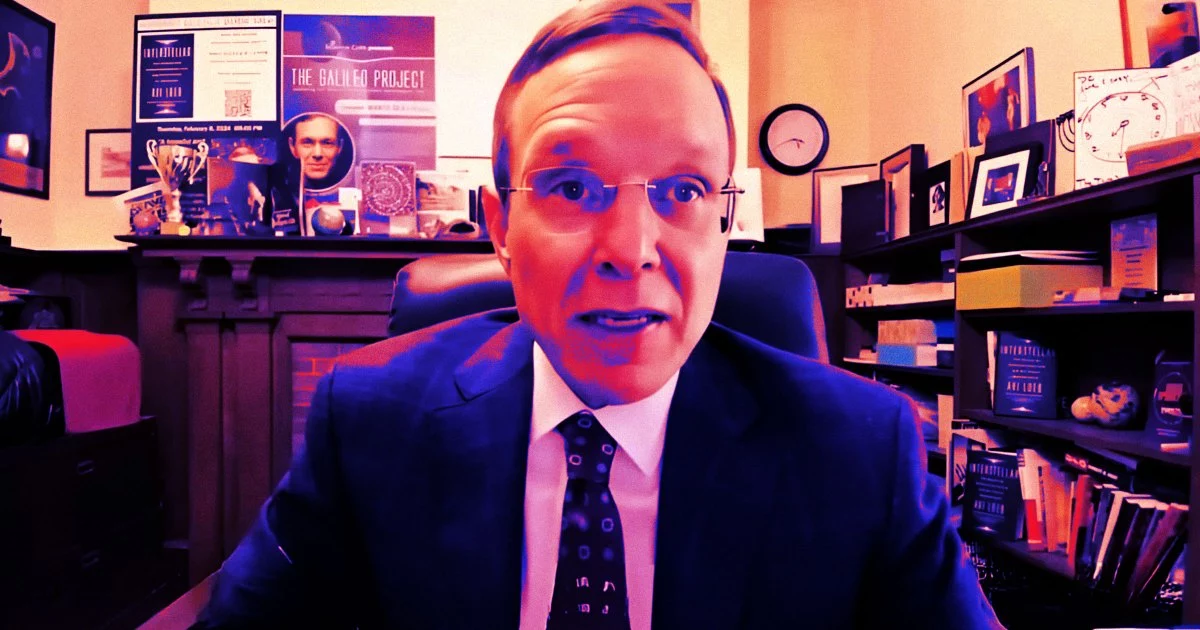
The digital stage has always been rife with impersonation, but a recent episode involving a fraudulent YouTube channel impersonating Harvard astronomer Avi Loeb marks a watershed moment. Here, generative AI tools—once the preserve of elite research labs—have been weaponized by anonymous actors to manufacture credibility at scale. The channel, which previously trafficked in Tagalog-language content, pivoted seamlessly to deepfaked science sensationalism, racking up over 1.4 million views and siphoning advertising revenue, all while platform enforcement mechanisms lagged behind.
This is not merely a story of one scientist’s reputation being misused. It is a cautionary tale about the rapidly collapsing cost of fakery, the economic incentives fueling synthetic misinformation, and the fragile scaffolding of trust that underpins digital society.
—
Generative AI and the Weaponization Half-Life
What makes this episode so alarming is the technological maturity curve that underwrites it:
- Voice synthesis has become commoditized: Open-source models like XTTS-v2 can clone a voice from less than 30 seconds of audio, achieving near-human fidelity.
- Video-lip-sync models, such as Wav2Lip, have democratized multimodal fakery: Now, anyone with a consumer GPU can create convincing talking-head videos in minutes.
- The latency from lab to exploitation is shrinking: Where once it took years for new AI capabilities to be misused, today the “weaponization half-life” is measured in months.
This arms race between generative capability and verification has profound implications. The cost of producing a convincing impersonation is approaching zero, while the cost of verifying authenticity—both in time and resources—remains stubbornly high.
—
Platform Incentives and the Monetization of Misinformation
YouTube’s ad-revenue model, which pays out between $2 and $5 per thousand views for science content, has inadvertently created a micro-cap media market for synthetic authority. For bad actors, the math is simple: with deepfake production costs nearing zero, even modest engagement translates to profit. The result is a new breed of misinformation operator, one who A/B-tests narratives with the same rigor that growth hackers test ad copy.
Meanwhile, the algorithms that govern attention marketplaces are tuned for engagement velocity, not provenance. This means that emotive or controversial deepfakes are algorithmically subsidized, racing to the top of recommendation engines while authentic voices struggle to keep pace.
The episode underscores a deeper inversion: authenticity, once an economic advantage, is now more expensive than fakery. This negative externality echoes the early days of email spam, where the cost of sending junk was negligible, but the cost of filtering it fell on everyone else.
—
Trust as Digital Infrastructure: Strategic and Regulatory Imperatives
The implications for business, governance, and society are far-reaching:
- Trust now carries a latent liability: Public figures, brands, and executives are exposed to “deepfake risk” that can erode equity value and trigger crisis scenarios. Board audit committees will soon need to quantify this exposure, much as they do with cybersecurity threats.
- A market gap for verifiable provenance is emerging: Standards like C2PA content credentials, blockchain-anchored watermarks, and zero-knowledge-proof attestations are coalescing into a nascent authenticity stack. Cloud providers and premium social platforms are poised to consolidate this space.
- Regulatory asymmetry is closing: The EU’s Digital Services Act and proposed U.S. “NO FAKES Act” signal a shift in compliance burden from individuals to platforms and tool vendors, mirroring the GDPR’s impact on privacy. Trust-and-safety engineering is fast becoming a board-level KPI.
These dynamics extend far beyond the media sphere:
- In financial services, synthetic-identity fraud already costs U.S. banks $20 billion annually; deepfake executive impersonations could trigger market-moving rumors.
- In healthcare, doctored telemedicine content could expose providers to malpractice claims.
- In politics, the IMF now lists “information disorder” as a drag on global productivity, as public capital is misallocated in response to synthetic narratives.
—
Building Resilience: From Playbooks to Provenance
The path forward demands a multi-layered response:
- Pilot “trust tech” solutions: Early adoption of cryptographic watermarking and digital signatures for official assets can turn authenticity into a competitive advantage.
- Develop incident-response protocols: Treat deepfake attacks as crisis events, with pre-established escalation channels to major platforms.
- Integrate AI-forensics: Embed real-time deepfake detection at content ingestion points.
- Negotiate for brand safety: Tie advertising budgets to demonstrated enforcement rigor, penalizing partners who monetize impersonations.
- Engage policymakers: Shape emerging legislation to balance innovation with accountability, particularly around platform liability.
The Avi Loeb impersonation saga is not an isolated anomaly—it is a harbinger of a new era in which generative AI collapses the cost of manufacturing credibility, while verification lags behind. Organizations that treat authenticity as a new layer of digital infrastructure, investing in provenance, risk quantification, and cross-sector standards, will be best positioned to preserve trust in a world where seeing—and hearing—is no longer believing.

 By
By
 By
By
 By
By


 By
By
 By
By
 By
By