


Robotaxis’ quiet truth: autonomy still runs on human labor
The U.S. transportation story has already been rewritten once. Traditional taxi employment—once defined by clearer schedules, regulated fares, and more legible career pathways—was steadily displaced by rideshare platforms that reframed driving as flexible “independent work,” often at the expense of wages, benefits, and job security. Now, as Waymo, Tesla, and other autonomous vehicle (AV) leaders push robotaxis toward mainstream adoption, a similar labor model is emerging behind the scenes—less visible than a driver behind the wheel, but no less central to keeping vehicles moving.
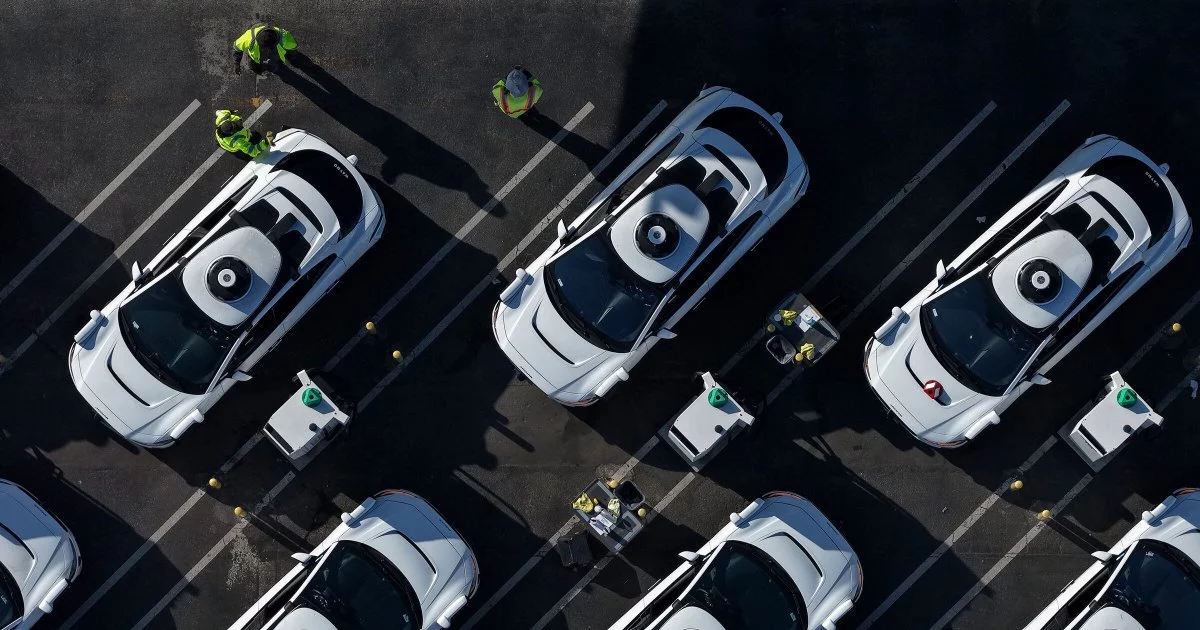
The new frontline role is the robotaxi handler: a human support layer tasked with bridging the gap between impressive Level 4 autonomy demos and the messy reality of urban streets. These workers—frequently hired through third parties such as Transdev US—report a work environment marked by high churn, unpredictable assignments, and degrading cleanup tasks, including dealing with passenger waste and extreme vehicle conditions. The anecdotes are jarring, but they point to a structural issue: robotaxis may reduce the need for drivers, yet they can expand a different kind of labor demand—one that is fragmented, outsourced, and operationally critical.
For the AV industry, this is more than a workforce story. It is a question of whether “autonomy” becomes a durable mobility platform—or a brittle service propped up by precarious human intervention.
The operational reality of Level 4 autonomy: edge cases, resets, and street-level triage
Robotaxi marketing often emphasizes the absence of a driver. Operationally, however, today’s fleets still depend on a distributed human system that handles what software cannot reliably resolve in real time. Even with advanced perception stacks and safety redundancies, dense urban environments generate endless “edge cases”—construction zones, unusual pedestrian behavior, sensor occlusion, unexpected debris, and ambiguous right-of-way interactions.
Handlers reportedly manage tasks that include:
- Sensor cleaning and calibration checks, especially after weather events or heavy road grime
- Software troubleshooting and resets, when vehicles enter degraded modes or fail to proceed
- On-site triage for stranded vehicles, including coordination with remote support teams
- Vehicle condition management, from routine cleaning to biohazard-level incidents
- Operational logistics, such as moving vehicles between facilities and staging areas
This is where the gap between autonomy as a technology and autonomy as a service becomes most visible. A robotaxi fleet is not just an AI system—it is an always-on operations business with uptime targets, incident response requirements, and brand-sensitive customer experiences. If the handler network is unstable—poorly trained, constantly reassigned, or operating without consistent tooling—then mean-time-to-repair rises, vehicle availability drops, and rider trust erodes.
Compounding the issue are reported instructions that discourage certain forms of intervention with stalled vehicles. While such policies may be designed to reduce liability exposure, they can also create a street-level paradox: a robotaxi that blocks traffic or behaves unpredictably becomes a public demonstration not of safety, but of operational fragility—particularly in high-visibility markets like San Francisco.
Outsourcing the “human layer”: cost externalization and control risk for Waymo, Tesla, and peers
From a business perspective, outsourcing handler labor mirrors the rideshare playbook: keep the core platform lean, shift variability outward, and preserve flexibility in scaling. Classifying support roles through contractors or third-party operators can reduce fixed costs and simplify headcount optics. Yet the robotaxi context raises a sharper strategic trade-off: the outsourced workforce is not peripheral. It is part of the product.
Key economic and strategic implications emerge:
- Cost externalization vs. service reliability: Short-term savings can be offset by higher attrition, inconsistent performance, and increased incident frequency.
- Loss of operational control: When critical fleet functions sit with vendors, AV developers risk misaligned incentives—especially around training investment, safety culture, and quality assurance.
- Reputational exposure: Customer-facing failures often originate in back-end operations. A chaotic handler system can translate into visible breakdowns that undermine public confidence in autonomous mobility.
- Institutional knowledge leakage: High churn prevents the accumulation of tacit expertise—exactly the kind of street-level learning that improves uptime and reduces repeat incidents.
For companies racing toward robotaxi profitability, the temptation is clear: push costs down while scaling coverage. But the robotaxi business is unusually sensitive to trust, safety perception, and regulatory tolerance. A single viral incident can trigger scrutiny that reverberates through permitting, city partnerships, and consumer adoption. In that environment, operational excellence is not overhead—it is competitive advantage.
“Gigification 2.0” and the regulatory horizon: the next labor battle may sit behind the dashboard
The handler phenomenon signals a broader macro trend: automation does not eliminate labor so much as reorganize it. The work shifts from driving to maintaining, supervising, cleaning, and exception-handling—often under less stable employment structures. This is “gigification” moving one layer deeper into the stack: not gig driving, but gig operations for automated fleets.
That shift arrives as regulators are already reassessing gig labor classifications, minimum wage standards, and employer obligations. Robotaxi operators may soon face overlapping pressures:
- Worker classification challenges (contractor vs. employee) applied to fleet support roles
- Municipal and state safety expectations tied to incident response and street obstruction
- Public accountability demands when outsourced labor conditions become part of the brand narrative
Against this backdrop, the most durable AV strategies may be the least flashy: investing in the systems that make autonomy operationally boring. Several non-obvious levers stand out as both technology and labor stabilizers:
- Digital twin and predictive maintenance to anticipate failures and reduce emergency dispatches
- Integrated workforce-management platforms to standardize assignments, training, and escalation paths
- Augmented reality (AR) guidance to make field procedures consistent even with higher turnover
- Selective in-sourcing or joint ventures for critical functions where quality and safety culture are differentiators
Robotaxis are often framed as the endpoint of automation in mobility. The more immediate reality is that they are a new kind of service business—one where the customer experience depends on an invisible workforce and the operational discipline wrapped around the AI. The companies that treat that human layer as strategic infrastructure, rather than disposable cost, are the ones most likely to make autonomy scale—and make it last.

 By
By
 By
By

 By
By
 By
By

 By
By
 By
By







