

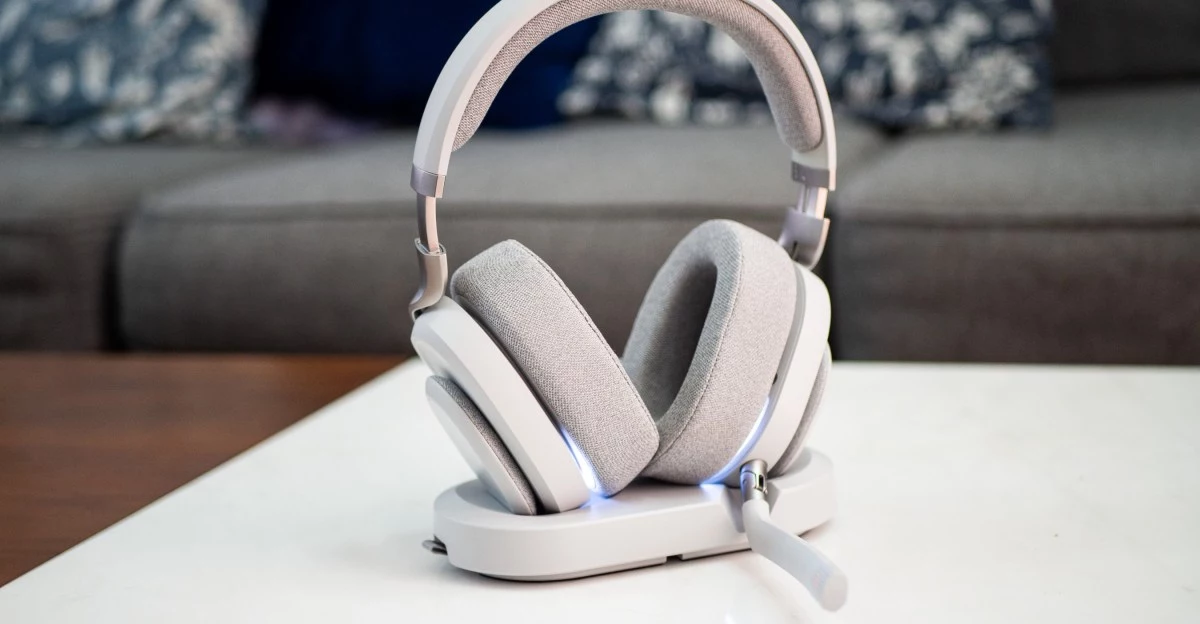

Redefining the Gaming Headset: Fractal Design’s Scape and the Rise of Premium-Minimalist Peripherals
When Fractal Design, the Swedish company revered for its understated PC cases, unveiled the wireless Scape headset, it wasn’t just entering a crowded market—it was making a calculated, almost audacious, bid to redraw the boundaries of gaming accessories. The Scape’s Black Friday price drop from $199.99 to $139.99 is more than a seasonal promotion; it’s a strategic probe into the psyche of the “premium-mainstream” gamer, a demographic that craves both performance and aesthetic restraint.
Industrial Design as Differentiator in a Saturated Market
In an era where gaming peripherals often double as neon-lit declarations of allegiance, the Scape’s Scandinavian minimalism is a quiet act of rebellion. Eschewing the RGB bravado that dominates the segment, Fractal’s headset instead channels the clarity of Nordic design—clean lines, matte finishes, and a tactile rotary control reminiscent of Apple’s digital crown. This is not mere window dressing; it is a deliberate attempt to court professionals whose workspaces straddle productivity and play, and who demand devices that blend seamlessly into both worlds.
- Tactile Innovation: The rotary control, a rarity among gaming headsets, exemplifies a shift toward anthropomorphic, intuitive interfaces—an echo of broader consumer electronics trends now infiltrating the PC gaming sphere.
- Cradle-First Charging: The inclusion of a charging dock and USB-C interface aligns with the latest USB Power Delivery standards, reducing cable clutter and reinforcing the emerging expectation that premium peripherals should be as convenient as they are capable.
Wireless Architecture and Software: Platform-Agnostic Ambitions
At the core of the Scape’s appeal is its dual-mode wireless architecture. The 2.4 GHz dongle ensures the low latency demanded by competitive gamers, while Bluetooth support—though not concurrently enabled—extends its reach to mobile and, crucially, the anticipated Switch 2 console. This cross-platform compatibility is not just a technical feature; it is a market signal, positioning the Scape at the intersection of the PC, console, and handheld renaissance.
- Browser-Based Customization: By leveraging WebUSB and WebHID standards, Fractal sidesteps the bloat and friction of OS-tethered clients. This move hints at a future where hardware profiles are cloud-synced and platform-agnostic, reducing software overhead and opening the door to data-driven product iteration.
- Omission as Strategy: The absence of active noise cancellation and dual-radio concurrency is notable, but not accidental. By forgoing these headline features, Fractal sidesteps the current chip shortages plaguing MEMS mic arrays and complex DSPs, ensuring supply-chain resilience and predictable bill of materials costs.
Economic Calculus and Market Dynamics: Testing the Waters
The gaming headset market, projected to grow at a robust 7–9% CAGR through 2028, is in the throes of transformation. Hybrid work, the resurgence of handheld consoles, and a maturing consumer base are expanding the total addressable market. Fractal’s aggressive $60 launch discount is not just a sales tactic—it is a live experiment in elasticity, a way to gauge price sensitivity and unit velocity in real time.
- Margin Expansion: Headsets typically command gross margins of 35–40%, a significant uptick from the 20–25% margins of PC cases. For Fractal, success in this category could de-risk its business from the volatile DIY-PC cycle, which has been buffeted by inventory overhang and component price swings.
- Channel Strategy: The e-commerce-first approach allows for direct data capture and minimizes channel dilution. Retail expansion will likely hinge on the velocity of early sales, as big-box outlets demand proof of demand before allocating shelf space.
Strategic Implications: Ecosystem, Competition, and the Next Hardware Cycle
Fractal’s push into audio echoes the broader industry logic of ecosystem expansion. Once a brand claims desktop real estate, peripherals become the natural next frontier—incremental revenue without the pain of manufacturing retooling. Yet the competitive landscape remains formidable, with incumbents like Logitech, SteelSeries, and Razer wielding entrenched software ecosystems and esports endorsements.
- Design-Led Positioning: By prioritizing design fidelity and platform neutrality over feature maximalism, Fractal is staking out a distinct flank in the market. Should the Scape achieve its sell-through targets, expect a tiered product ladder to follow—mirroring the “good–better–best” strategy that has served legacy brands so well.
- Potential for Bundling and Monetization: The browser-based configurator could evolve into a subscription model, offering spatial audio presets or cloud-locked premium features. Bundling opportunities—case plus headset, or full “desk makeover” packages—are likely as Fractal seeks to lift customer lifetime value within its direct-to-consumer channel.
- M&A Signals: Peripheral diversification often precedes funding rounds or acquisition talks. If Scape volumes validate the category, Fractal may soon attract the attention of larger conglomerates seeking a foothold in Scandinavian design-led peripherals.
The Scape headset is not merely a product launch or a holiday deal; it is a bellwether for the evolving relationship between hardware specialists and the broader lifestyle-tech ecosystem. As design minimalism, hybrid work, and handheld gaming converge, the lines between PC component makers and aspirational peripheral brands will only blur further—heralding a new era where form, function, and platform fluidity are inseparable.


 By
By
 By
By
 By
By

 By
By

 By
By







