

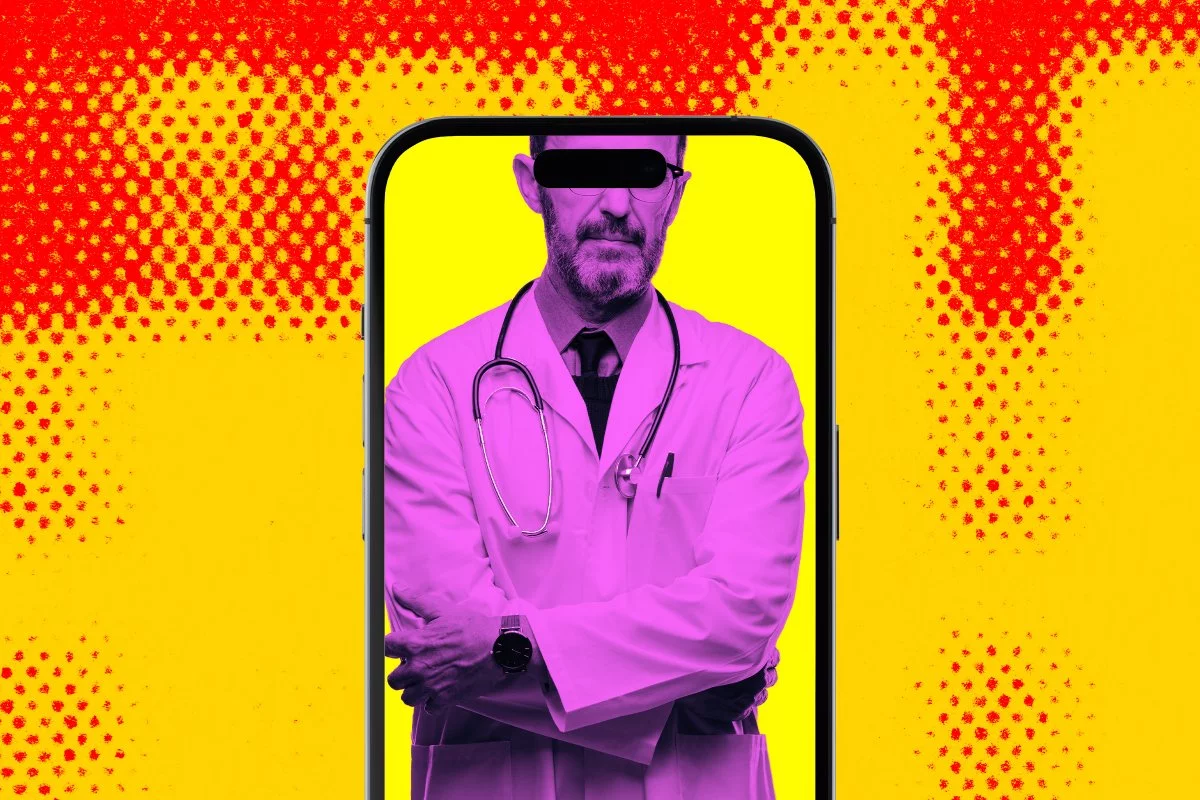

Synthetic clinicians and the new theater of trust on social media
A New York Times investigation spotlights a fast-maturing phenomenon in the digital attention economy: AI-generated “doctors” and health influencers deployed across platforms such as Facebook and Instagram to dispense medical-sounding guidance and sell supplements. What makes this wave distinct is not merely the presence of misinformation—health scams are as old as advertising—but the industrialization of credibility. These avatars borrow the visual grammar of legitimate care: lab coats, calm lighting, domestic backdrops, “patient testimonial” edits, and confident clinical cadence. The result is a persuasive simulation of authority that can be produced at scale and tuned to specific audiences.
One case cited in the reporting—an AI “expert” promoting a supplement called Sculptique as superior to standard kidney-disease treatments—illustrates the core risk: synthetic authority can displace evidence-based care in the minds of consumers, particularly those managing chronic illness or facing high medical costs. The investigation’s human stakes are underscored by a 71-year-old consumer who purchased a contaminated moringa product, a reminder that the harm is not abstract. When health claims move from screen to bloodstream, the margin for error collapses.
At a deeper level, this is a story about trust as a product—manufactured, packaged, and distributed through the same engagement systems that power mainstream creator economies. The avatars are not just “fake people”; they are conversion-optimized interfaces designed to shorten the distance between anxiety and purchase.
The generative AI supply chain: from $10 videos to algorithmic amplification
The investigation describes specialized content farms—reportedly including a Chinese firm producing 1,200 videos per day at roughly $10 per video—that can flood platforms with persuasive health content at a cost structure traditional advertisers can’t match. This is the economics of generative AI at its most disruptive: near-zero marginal cost for convincing media, paired with distribution engines built to maximize engagement.
Several dynamics reinforce one another:
- Democratized deepfake production: Tools that once required VFX expertise now sit behind templates and prompts. The barrier is no longer technical mastery; it’s simply operational scale and marketing know-how.
- Engagement-first recommendation systems: Social algorithms tend to reward emotionally resonant content—fear, hope, outrage, miracle cures—because it drives watch time and shares. Health misinformation is often “sticky” by design, and the platforms’ incentives can unintentionally elevate it.
- Microtargeting and personalization: The same AI techniques used for legitimate marketing can tailor health pitches to age, interests, and browsing behavior. In practice, that means vulnerable groups—older adults, chronic-disease communities, caregivers—can be reached with unnerving precision.
- An arms race in detection: Platforms have pledged labeling and enforcement, but generative models iterate quickly. Bad actors can adjust faces, voices, backgrounds, pacing, and phrasing to evade filters, while policy responses often arrive after distribution has already peaked.
This is not simply a content moderation problem; it is a high-throughput fraud pipeline that treats social platforms as both storefront and sales funnel. The low cost of production encourages experimentation: thousands of variants can be tested, with the winners scaled instantly.
Business and market fallout: distorted competition, rising acquisition costs, and a trust deficit
The commercial implications extend beyond individual scams. When synthetic “medical” content becomes abundant, it can reshape the competitive landscape for legitimate health brands, telemedicine providers, and wellness companies that operate under stricter compliance expectations.
Key economic consequences are emerging:
- Cost-efficient fraud ecosystems: At $10 per video, the risk-reward profile is skewed. Even modest conversion rates can generate meaningful revenue when products carry high markups and distribution is global.
- Market distortion for compliant firms: Legitimate brands may be forced to spend more on advertising, verification, and reputation defense just to maintain visibility—raising customer acquisition costs and potentially reducing innovation budgets.
- Erosion of consumer confidence: As audiences encounter more synthetic experts, skepticism can spill over onto legitimate digital health messaging, including responsible telehealth and evidence-based wellness education.
- Regulatory arbitrage: Traditional media health-claims rules often don’t map cleanly onto influencer-style short-form video. The unevenness creates exploitable gaps, especially when content production, hosting, and payment processing span multiple jurisdictions.
The investigation also hints at a broader structural issue: healthcare affordability and access. Where patients feel underserved, expensive, or dismissed, “alternative” promises—especially those delivered with calm, clinical aesthetics—can appear as relief. Generative AI doesn’t create that vulnerability, but it can monetize it at scale.
What a credible response looks like: provenance, payments, and shared enforcement
A durable response will likely require more than takedowns. The ecosystem spans content creation, platform distribution, e-commerce fulfillment, and payment rails—meaning enforcement at only one layer leaves the rest intact.
Several interventions stand out as both practical and strategically aligned:
- Provenance and labeling standards: Stronger, interoperable approaches to watermarking and content provenance could help platforms and users identify AI-generated medical content. The goal is not to ban synthetic media, but to make origin and intent legible.
- Credential verification for health claims: Platforms could require enhanced verification for accounts presenting as clinicians or offering medical guidance, including clear disclosures when a persona is fictional or AI-generated.
- Payment-network friction: Credit-card processors, marketplaces, and payment gateways can become decisive chokepoints by tightening merchant vetting for health-claims products and monitoring suspicious patterns tied to recurring scam brands.
- Cross-industry threat intelligence: Healthcare providers, insurers, telehealth firms, and platforms can share signals—recurring product names, claim templates, landing pages, and ad accounts—to reduce the time between emergence and enforcement.
- Consumer education that matches the medium: Public guidance must be short-form, visual, and platform-native—teaching users how to verify credentials, recognize manipulative cues, and report suspicious claims without requiring medical expertise.
The investigation’s most unsettling takeaway is not that AI can impersonate a doctor—it’s that the impersonation can be scaled, optimized, and distributed with the efficiency of modern digital advertising. The next phase of digital health trust will be defined by whether platforms, regulators, and industry leaders treat synthetic medical influence as a niche abuse case—or as a systemic integrity challenge embedded in the economics of the feed.

 By
By
 By
By
 By
By

 By
By
 By
By
 By
By
 By
By







