


Fault Lines in the Sky: The Shutdown’s Unmasking of Aviation’s Fragile Core
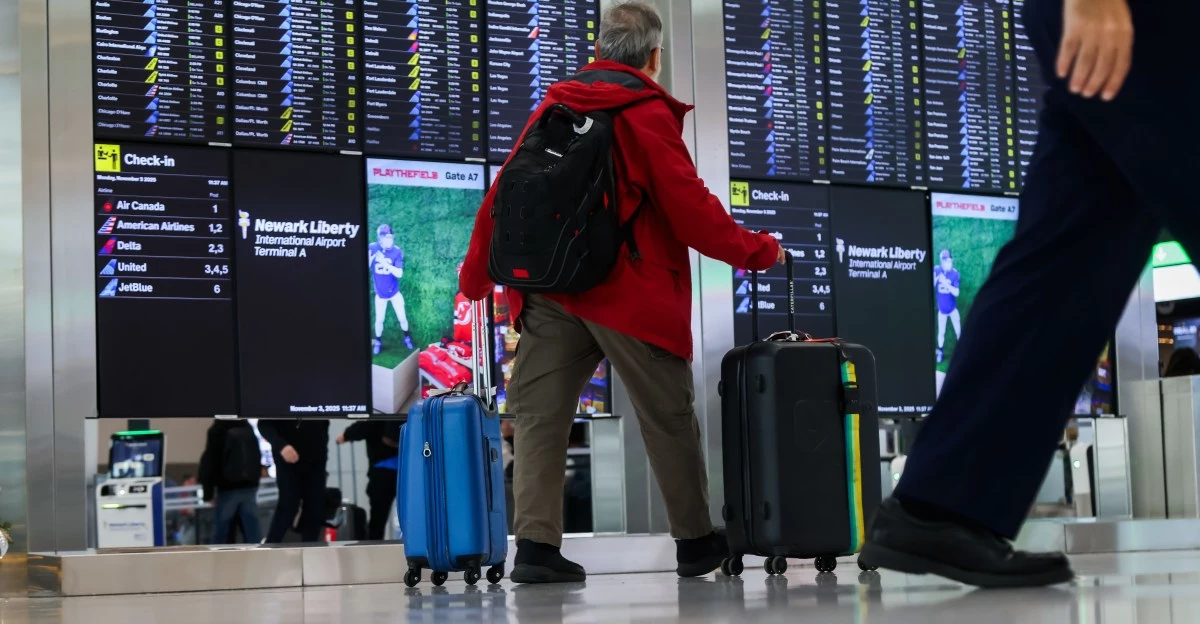
The American airport, long a symbol of seamless mobility and economic dynamism, now finds itself at the epicenter of a slow-motion crisis. The latest U.S. government shutdown has forced the Federal Aviation Administration to preemptively slash flight volumes by 10% across forty of the nation’s busiest hubs—a move that, while couched in the language of safety, reveals the deep fissures running through the country’s civil-aviation infrastructure. With 3,000 to 4,500 daily flights grounded and the specter of further disruptions looming, the shutdown has become not just a logistical headache for travelers, but a clarion call for systemic reform.
Human Limits and the Automation Paradox
At the heart of the crisis is a paradox that has quietly haunted the industry for years: despite two decades of investment in NextGen digital-routing and automation, the U.S. airspace remains stubbornly dependent on human air-traffic controllers. Today, 14,000 controllers and 45,000 TSA agents are working without pay, their morale eroding as sick-outs rise and safety risks mount. The FAA’s decision to curtail capacity is, in effect, an admission of the system’s brittle reliance on a workforce stretched to its limits.
This dependency is not merely a matter of payroll; it is a vulnerability that technology was supposed to solve. The shutdown has exposed the slow pace of adoption for remote-tower operations, AI-assisted sequencing, and satellite-based ADS-B surveillance. With legacy software now shouldering more of the operational load, the risk of cyber-physical incidents grows—especially as patching and maintenance routines falter under skeleton staffing. The result is a system in which both human and digital elements are under unprecedented strain, and where the promise of automation is both more urgent and more elusive than ever.
Yet, necessity may prove the mother of accelerated innovation. Private-sector pilots of advanced traffic-management tools—long stymied by regulatory inertia—are likely to gain new momentum. The business case for biometric and mobile-ID fast lanes, once a futuristic add-on, now feels like a pragmatic response to interminable security queues. As throughput volatility becomes the new normal, the industry’s appetite for digital transformation is poised to sharpen.
Economic Reverberations and Boardroom Calculus
The economic fallout from the shutdown is both immediate and far-reaching. U.S. airlines stand to lose $150–$200 million in weekly revenue, with EBITDAR margins compressing as fixed costs remain stubbornly high against falling capacity. The pain does not stop at the boarding gate: as belly-hold cargo vanishes alongside passenger flights, freight markets—already strained by global supply-chain disruptions—face tightening capacity and rising spot rates. These pressures are likely to ripple through consumer goods pricing, just as macroeconomic forecasters warn that each week of air-travel disruption could shave 0.02 percentage points from quarterly GDP.
For corporate leaders, the shutdown is a crucible for strategic decision-making:
- Capital Allocation: Aerospace investment is bifurcating, with short-cycle bets on automation and remote-tower tech gaining favor, while wide-body aircraft orders face deferral if demand recovery stalls.
- M&A Dynamics: Regional carriers and niche ATC-tech vendors, squeezed by cash-flow pressures, may become attractive acquisition targets for well-capitalized buyers.
- Travel Policy: Enterprises dependent on agile travel must recalibrate, activating dynamic trip-approval protocols and investing in virtual engagement to hedge against unpredictable flight availability.
- Scenario Planning: Finance chiefs are stress-testing liquidity against partial airspace closures, while procurement teams renegotiate contracts to embed force-majeure protections tied to shutdown duration.
Governance, Workforce, and the Road to Reinvention
Beyond the balance sheets and departure boards, the shutdown has ignited a broader debate over the future governance of the nation’s airspace. The notion of privatizing air-traffic management—long a political third rail—now gains fresh currency as stakeholders weigh the stability premium of a user-funded, independent model akin to NAV CANADA. For boards and shareholders, the optics of “essential” federal employees laboring without pay are a social-governance flashpoint, demanding new levels of contingency planning and risk disclosure.
Forward-looking operators are already modeling dual-track staffing strategies, cross-training ground personnel, and piloting AI-driven decision aids to buffer against human-resource shocks. As the shutdown drags on, the prospect of emergency bipartisan legislation to safeguard aviation safety funding becomes more likely—potentially opening the door to fast-tracked unmanned traffic-management frameworks and a new era for drone logistics.
The headlines may dwell on traveler inconvenience, but the deeper signal is unmistakable: America’s commercial aviation system, long taken for granted, is now a material risk vector for business continuity and economic resilience. Those who seize this disruption as a catalyst for structural modernization—rather than a passing storm—will define the next epoch of mobility and aerial commerce. For the rest, the turbulence has only just begun.

 By
By
 By
By
 By
By
 By
By
 By
By


 By
By







