
A restructuring shaped by NFL asset integration—and a shifting sports media balance of power
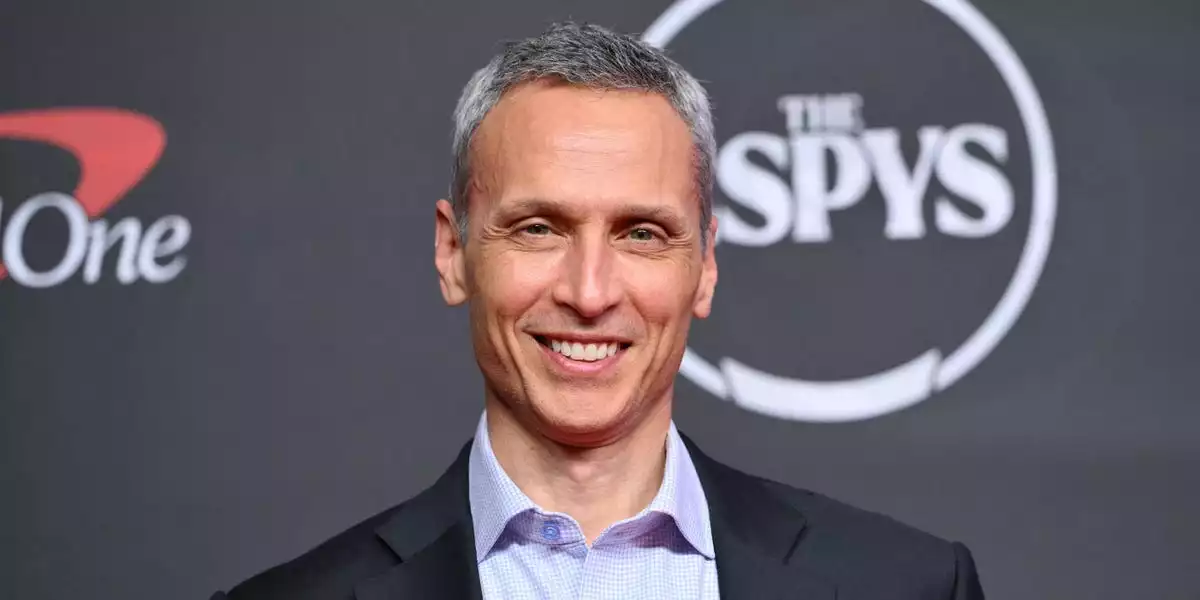
ESPN Chairman Jimmy Pitaro’s confirmation of a new round of staff reductions lands at a moment when the sports media economy is being rewired in real time. The cuts are framed primarily as a consequence of integrating newly acquired NFL assets—notably NFL Network, NFL RedZone, and NFL fantasy football operations—following a late-January transaction that also grants the NFL a 10% equity stake in ESPN. In practical terms, ESPN is consolidating overlapping functions “under one roof,” with additional reductions extending beyond the acquired properties as part of a broader restructuring.
This is not merely a cost story. It is a structural story about how premium sports content is produced, packaged, and monetized when the traditional separation between rights-holder and broadcaster begins to blur. The NFL’s equity position signals a move toward a more vertically integrated governance model, where incentives can align around shared outcomes—audience growth, subscription conversion, and advertising yield—while also introducing new questions about decision rights, strategic priorities, and competitive conduct.
The timing is also symbolically potent: ESPN is preparing to broadcast its first-ever Super Bowl next February, simulcast on ABC. That milestone underscores ESPN’s deepening role in the most valuable live-sports ecosystem in the U.S., even as it rationalizes headcount and retools operations for a digital-first future.
—
Equity, incentives, and governance: when the league becomes a stakeholder
The NFL taking an ownership stake in ESPN represents a meaningful departure from the historical model in which leagues sell rights and broadcasters distribute games. Equity changes the nature of the relationship from transactional to partially co-invested, potentially accelerating collaboration on:
- Content packaging and distribution strategy, including how highlights, shoulder programming, and studio content are sequenced across linear TV and OTT platforms
- Sponsorship and advertising bundles, where integrated inventory can command premium pricing if measurement and targeting improve
- Product roadmap decisions, such as feature development for fantasy, second-screen experiences, and personalization layers
Yet this alignment can also complicate governance. When a league has an ownership interest in a major distributor, the market will watch for how that influence manifests in negotiations, platform access, and competitive positioning. Even absent any improper conduct, the perception of preferential treatment can become a strategic variable—particularly as other media buyers, tech platforms, and distributors assess whether they are competing on a level playing field.
For ESPN, the upside is clear: tighter integration with the NFL can reduce friction that historically limited monetization—especially around digital rights, data usage, and cross-platform product design. For the NFL, equity offers a more direct pathway to participate in the economics of distribution, not just the sale of rights.
—
Data consolidation as a product strategy: fantasy, RedZone, and the rise of sports personalization
The most consequential element of the asset transfer may be less visible than a channel logo: data. NFL fantasy football operations and RedZone are not simply content products; they are behavioral engines that generate high-frequency engagement, granular user signals, and repeat viewing patterns. Combined with ESPN’s existing analytics and platform infrastructure, the integration sets the stage for a more sophisticated, machine-learning-driven sports experience.
Potential capabilities that become more feasible at scale include:
- Personalized viewing and highlights, shaped by fantasy rosters, favorite teams, and player prop interests
- Predictive notifications (injury implications, lineup impacts, win-probability swings) delivered in real time
- More precise ad targeting and measurement, improving CPMs and reducing wasted impressions
- Interactive overlays and augmented experiences, including data-rich alternate feeds and context-aware graphics
Strategically, ESPN can evolve from being “just” a broadcaster into a sports technology platform—one that can expose APIs, build developer toolkits, and create B2B revenue lines through data licensing and product partnerships. That matters because the economics of sports media are increasingly defined by differentiation in digital experience, not only by who owns the rights.
This is also where the staffing story becomes more legible. Consolidation typically reduces duplicative roles in operations, production, and support functions. At the same time, it tends to increase demand for cloud-native streaming engineers, data scientists, product managers, and AI-enabled workflow specialists—talent profiles that map to a platform strategy rather than a linear network strategy.
—
The business backdrop: cord-cutting pressure, rights inflation, and why live sports still dictates the agenda
ESPN’s restructuring sits within a broader industry reality: linear TV margins are under sustained pressure from cord-cutting and shifting ad spend, while the cost of premium sports rights continues to rise. Media companies are being forced into a dual mandate that is inherently tense:
- Reduce legacy cost structures tied to traditional production and distribution
- Invest aggressively in OTT infrastructure, personalization, and measurement to defend long-term growth
Live sports remains one of the few content categories with consistent real-time audiences at scale—an attribute that keeps it resilient even in uncertain macroeconomic conditions. But that resilience does not immunize broadcasters from the arithmetic of escalating rights fees. The result is a playbook built around efficiency through consolidation, technology automation, and partnerships that expand monetization beyond the core broadcast.
Looking forward, the ESPN–NFL configuration creates room to test new revenue models that better match modern consumption:
- Subscription tiers linked to fantasy features, premium highlights, or alternate feeds
- Real-time integrations that intersect with regulated sports betting markets where permitted
- Digital collectibles and loyalty mechanics, designed to deepen engagement and increase ARPU
At the same time, the market should expect heightened attention from regulators and competitors. Equity entanglements between leagues and broadcasters can invite antitrust scrutiny, while technology giants such as Amazon and Apple will study whether deeper league partnerships—potentially including ownership structures—offer a defensible edge in the next round of sports media competition.
ESPN’s layoffs are the human-facing signal of a deeper industrial shift: the center of gravity in sports media is moving toward integrated data, platform economics, and immersive product design, and the organizations that thrive will be those that can turn live rights into continuously adaptive, personalized experiences—at scale, and at a cost structure built for the streaming era.

 By
By
 By
By
 By
By
 By
By
 By
By
 By
By

 By
By