

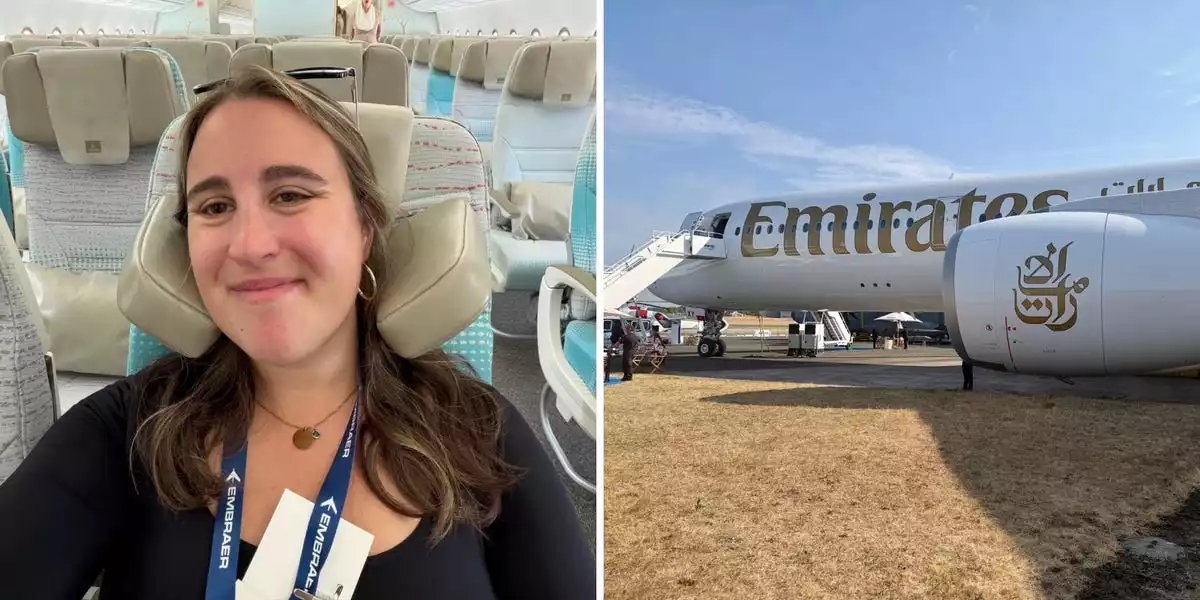

A small cabin component with outsized strategic intent
Emirates’ unveiling of the U-Dream adjustable headrest for Airbus A350-900 economy cabins at the Farnborough Airshow reads, at first glance, like a modest comfort upgrade. Yet the move is better understood as a calculated play in the evolving economics of long-haul travel—where passenger well-being, brand differentiation, and operational efficiency increasingly intersect.
The design targets a universal pain point: neck strain and poor sleep posture in economy class. By using wing-like side cushions that cradle the head, Emirates is effectively bringing a “micro-premium” feature into the highest-volume part of the cabin. That matters because economy travelers—leisure passengers, cost-conscious business travelers, and connecting traffic—are precisely where network airlines defend scale and load factor.
Emirates plans to deploy the headrest across all 25 A350-900 aircraft by year-end, then expand the concept to most Airbus A380 and Boeing 777 aircraft from 2027. The timeline suggests a dual objective: capture near-term marketing and customer-experience gains on a new aircraft type, while building a longer runway for fleet-wide standardization and supply-chain leverage.
Ergonomics meets weight discipline: the technology story behind U-Dream
Airlines rarely adopt comfort features at scale unless they can survive the unforgiving arithmetic of fuel burn, maintenance complexity, and turnaround reliability. The U-Dream headrest’s significance lies in how it appears to reconcile ergonomic engineering with weight and durability constraints.
Key technology and design implications include:
- Adaptive support in a mass-market seat: Adjustable lateral “wings” create variable support zones, approximating the stabilizing effect of a cervical pillow without requiring passengers to carry one. This is a shift away from one-size-fits-all seating toward modular, adjustable interfaces.
- Materials and weight optimization pressures: To avoid eroding fuel efficiency, headrests of this kind typically rely on lightweight synthetic shells and advanced foams. If Emirates scales the feature across A380 and 777 fleets, suppliers will be tested on consistent quality, longevity, and repairability at high utilization rates.
- Cabin ecosystem synergy: Emirates is pairing the A350 economy product with electronic window shades and a 3-3-3 layout with 31–32-inch pitch. Together, these elements create a more controlled “micro-environment” where light, posture, and perceived privacy can be tuned—an approach aligned with broader “well-being travel” expectations.
The more forward-looking question is whether such hardware becomes a platform for software and data. The industry has already moved toward connected cabins; it is not difficult to imagine future iterations that incorporate posture sensing, sleep-friendly lighting cues, or other feedback loops—though that would raise new questions about privacy, certification, and the commercial use of passenger data.
Economy-class differentiation as a revenue and brand lever
Emirates’ decision to invest in economy comfort is also a statement about where competitive advantage is being contested. Premium cabins remain lucrative, but the battleground for loyalty and preference—especially on long-haul connecting itineraries—often hinges on whether economy feels merely tolerable or meaningfully restorative.
From a commercial standpoint, the U-Dream strategy can support multiple levers:
- Perceived value uplift without a full cabin redesign: A headrest is cheaper and faster to deploy than reconfiguring seat tracks, galleys, or lavatories. It can deliver a tangible improvement passengers immediately understand.
- Pricing power and tiering opportunities: Enhanced economy features can justify:
– modest base-fare increases on high-demand routes, or
– new “comfort-plus” bundles that sit between standard economy and premium economy
The risk is overreach: aggressive repricing could weaken Emirates’ value proposition in price-sensitive feeder markets.
- Ancillary revenue potential: Airlines increasingly monetize seat attributes. Emirates could choose to:
– reserve certain rows or zones with the most desirable comfort features, or
– bundle “sleep-friendly” seating with other add-ons
This creates incremental revenue without the capital intensity of a full retrofit—though it requires careful messaging to avoid the perception of paywalling basic comfort.
Just as importantly, the emotional resonance is real. Neck discomfort is a shared long-haul grievance; solving it credibly can generate word-of-mouth amplification and social media visibility that traditional loyalty marketing struggles to buy.
Network resilience in a geopolitically complex travel market
The timing also reflects the external environment. Middle East hub carriers operate amid shifting airspace constraints, regional tensions, and periodic demand shocks. In such conditions, product quality becomes a hedge: when travelers weigh a one-stop itinerary versus a direct flight, the comfort of the connecting experience can influence the decision as much as schedule or price.
For Emirates, strengthening economy class supports the durability of its Dubai hub-and-spoke model in several ways:
- Offsetting the friction of a connection: Better rest and reduced discomfort can make layovers feel less punitive, especially on ultra-long-haul routings.
- Competitive signaling to Gulf peers: Qatar Airways and Etihad have long competed on premium excellence. Emirates’ economy-focused innovation raises the baseline expectation and pressures competitors to respond in the cabin segment that carries the most passengers.
- Operational pragmatism under fuel volatility: Comfort upgrades that are lightweight and modular are easier to defend when jet fuel prices swing. The industry’s lesson is clear: passenger experience investments must increasingly be “weight-aware” to remain sustainable.
Emirates’ U-Dream headrest is, ultimately, a case study in how airlines are rethinking economy class not as a static commodity, but as an engineered product surface—one that can be tuned for wellness, monetized through smarter fare architecture, and deployed as a strategic differentiator when networks and geopolitics make routing advantages less predictable.

 By
By
 By
By

 By
By
 By
By


 By
By







