

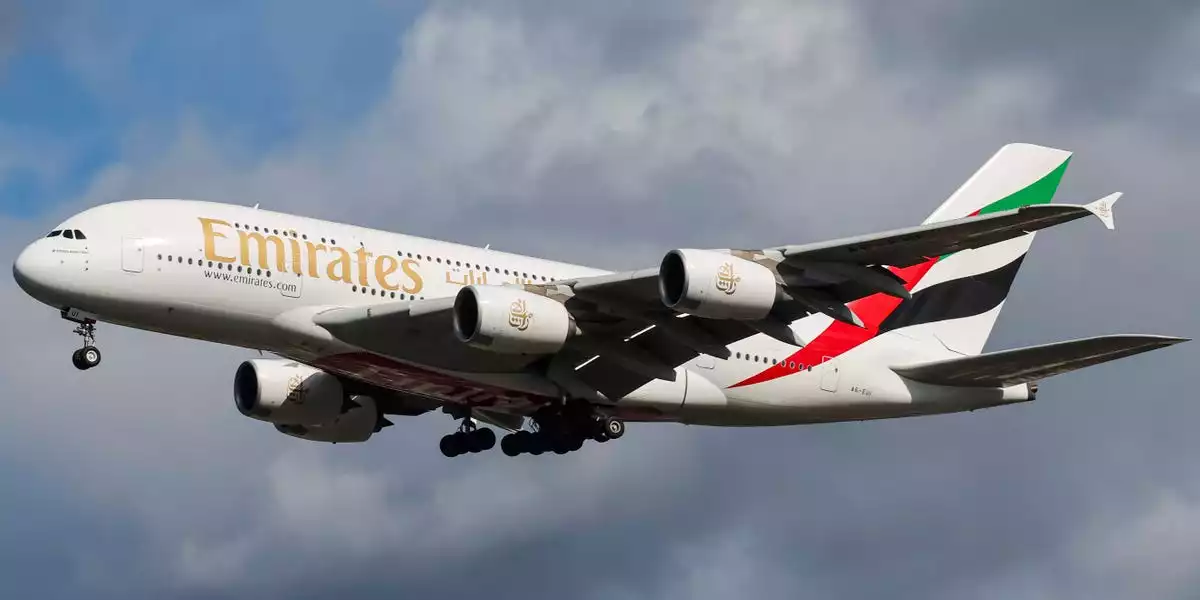

Emirates’ A380 Gambit: Betting Big on the Superjumbo’s Second Act
In an era defined by the relentless pursuit of efficiency and the steady march toward twin-engine dominance, Emirates Airlines’ acquisition of four Airbus A380s—at a price tag of $180 million—reads as both a bold reaffirmation of old certainties and a subtle provocation to the industry’s new orthodoxy. Two years after Airbus shuttered the A380 production line, Emirates has not only doubled down on the superjumbo but positioned it at the heart of its strategy, defying a global tide that has seen most carriers pivot to leaner, more flexible wide-bodies.
Capacity Crunch, Slot Scarcity, and the Power of Scale
The global long-haul market is in the throes of a profound supply squeeze. Backlogs for new-generation aircraft—the Boeing 787, 777X, and Airbus A350—stretch well into the next decade, a bottleneck that leaves airlines scrambling for interim solutions. For hub-and-spoke giants like Emirates, based in slot-constrained Dubai, the calculus is stark: when additional frequencies are out of reach, only larger aircraft can move the needle.
- The A380’s Unique Value Proposition:
– Capable of carrying over 500 passengers per slot, the A380 remains unmatched for high-density trunk routes.
– Emirates’ configuration, with approximately 80 premium-class seats, enables it to extract more than a quarter of total flight revenue from a fraction of its passengers.
– On routes such as London, Sydney, and Jeddah, near-full load factors dilute the notorious four-engine fuel penalty, transforming the A380 from a white elephant into a profit engine.
This purchase is not merely a matter of nostalgia or stubbornness. It is an arbitrage play at scale: the $45 million per aircraft price is a fraction of a new wide-body’s sticker cost, and with lease rates and credit costs climbing, outright ownership hedges Emirates against future volatility.
Engineering Renewal and the Next-Gen Superjumbo Debate
Emirates’ move is not just financial; it is technological and operational. The airline is embarking on a sweeping retrofit of its A380 fleet, with refreshed first-class suites and a planned service life stretching to 2038 and beyond. Such cabin investments typically yield a 3–4% uptick in per-flight revenue, a significant lever in an industry where margins are measured in single digits.
- Signaling to Airbus and Engine Makers:
– Emirates’ leadership, notably Tim Clark, has openly mused about a “neo-A380”—a re-engined, sustainable variant that could leverage higher-bypass engines and sustainable aviation fuels (SAF).
– Even a modest 20–25% improvement in fuel burn could tilt the economics back in favor of the superjumbo on the world’s most congested routes.
Meanwhile, Emirates Engineering is quietly becoming the global center of gravity for A380 maintenance, repair, and overhaul—a lucrative niche as other operators exit, and a case study in how sunk costs can be transformed into new revenue streams.
Competitive Dynamics, Asset Pricing, and the ESG Paradox
The ramifications of this deal ripple far beyond Emirates’ balance sheet. By converting leases to ownership, the airline sets a reference price for the remaining off-lease A380s, stabilizing values for an asset class many had written off. For lessors and secondary-market players, this is a lifeline; for rivals, a gauntlet thrown.
- Gulf Carrier Divergence:
– Qatar Airways has all but abandoned the A380, and Etihad’s token fleet underscores its ambivalence.
– Emirates, by contrast, has built a brand halo around the aircraft—onboard bars, showers, and a level of luxury that smaller airframes simply cannot replicate.
Yet, the A380’s four-engine profile is not without its challenges. Environmental scrutiny is intensifying, with the advent of ICAO’s CORSIA Phase 2 and the expansion of the EU Emissions Trading System threatening to add millions in annual carbon costs. Emirates counters with high passenger-kilometer efficiency and SAF commitments, arguing that a full A380 can, paradoxically, be greener per seat than a half-empty twinjet.
Strategic Signals for the Industry’s Next Chapter
For decision-makers across aviation, finance, and infrastructure, Emirates’ contrarian move is a signal to revisit assumptions about fleet planning, asset management, and network design. The persistent wide-body supply gap, the renaissance of premium leisure travel, and the rise of vertically integrated MRO capabilities all point to a future where owning and operating niche, high-yield assets can confer a durable competitive edge.
As the industry awaits the certification of the Boeing 777X and tracks the evolution of SAF price curves, the question is no longer whether the superjumbo era is over, but whether it is being quietly reborn—at least for those bold enough to seize the opportunity. In this high-stakes environment, Emirates’ wager on the A380 is less a nostalgic indulgence than a masterclass in strategic opportunism.

 By
By
 By
By
 By
By
 By
By
 By
By


 By
By







