
Orbital compute enters the mainstream conversation—via Musk’s integrated SpaceX–xAI play
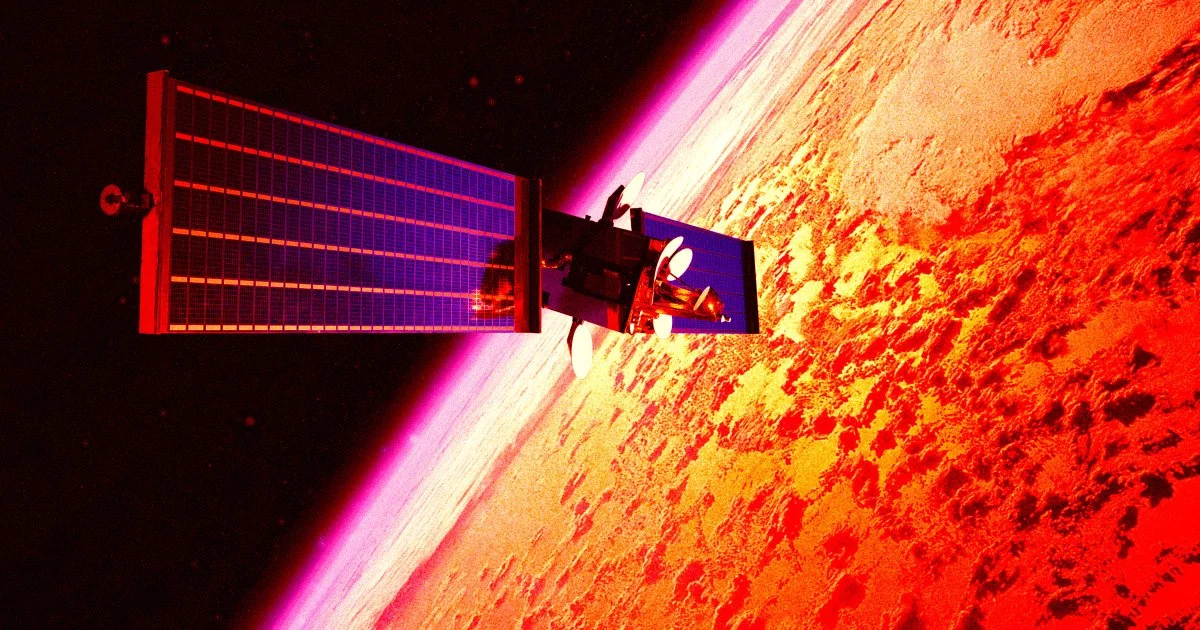
Elon Musk’s latest provocation for the AI infrastructure world is not a new model release or a bigger GPU cluster—it’s geography. A patent filing with the US Federal Communications Commission (FCC), tied to SpaceX (now legally merged with Musk’s xAI), sketches an audacious architecture: a “constellation” of up to one million low Earth orbit (LEO) data-center satellites in sun-synchronous orbits roughly 310 to 1,200 miles above Earth.
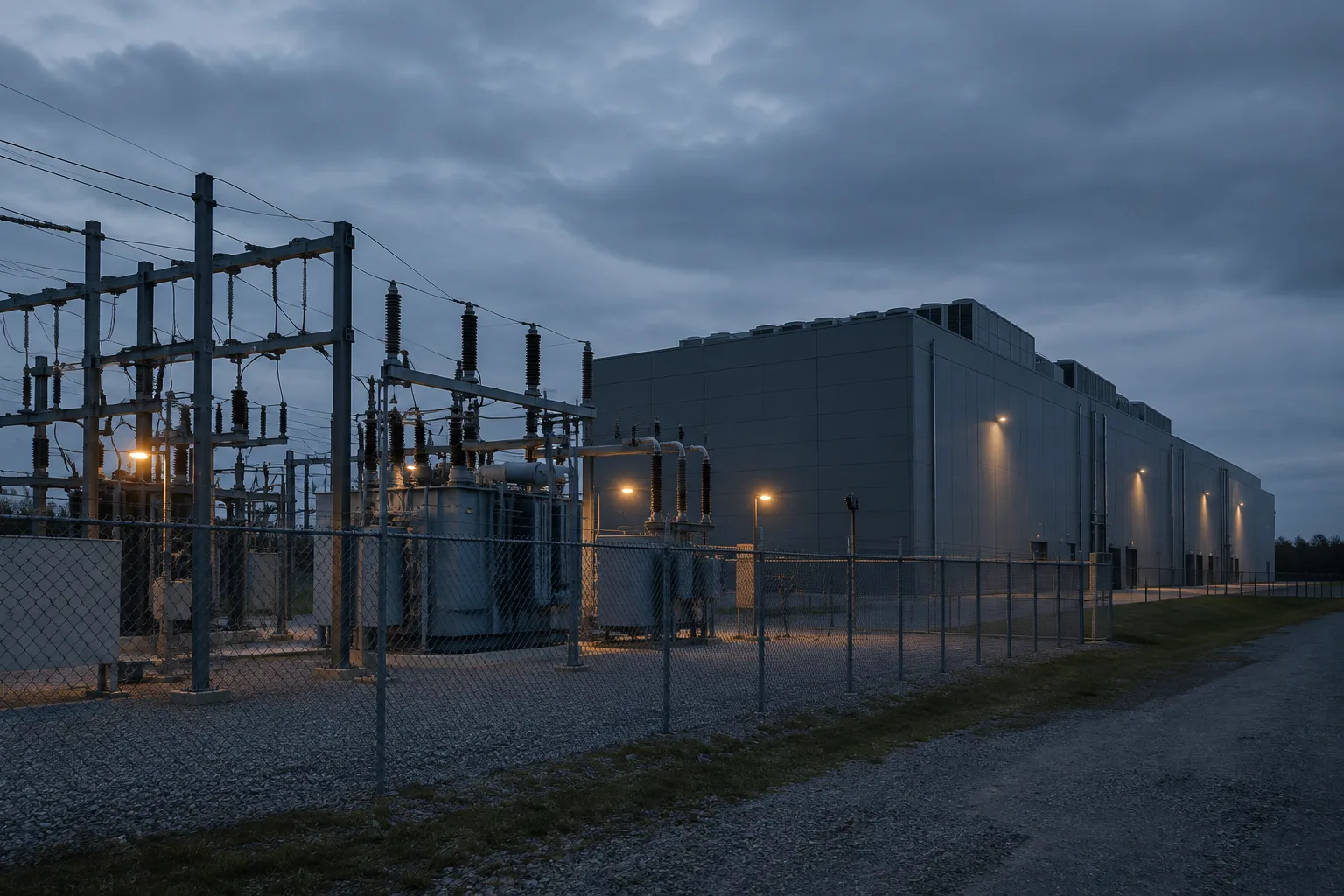
The strategic logic is easy to see, and it aligns with the defining constraint of the AI era: power and space. Terrestrial hyperscale data centers are increasingly limited by grid interconnection queues, local permitting, water availability, and land-use politics—while AI training workloads expand faster than most regions can build generation and transmission. In orbit, the pitch goes, there is abundant solar energy and effectively unbounded “real estate.” Musk has suggested that within three years orbital compute could dramatically undercut Earth-based costs.
Yet the gap between a compelling narrative and a deployable system remains wide. Former NASA associate director Rebekah Reed and other skeptics frame the concept as speculative, pointing to launch economics, servicing realities, debris risk, and lifecycle emissions. The more grounded interpretation is that this filing is less a near-term blueprint than a signal: AI infrastructure is now pushing leaders to consider non-terrestrial options, and SpaceX’s vertical integration makes it one of the few entities capable of testing the premise at scale.
—
The physics of space data centers: solar abundance meets thermal and networking constraints
The appeal of LEO compute begins with energy. Solar panels in orbit can, in principle, access high, consistent insolation compared with many ground locations. But the engineering trade-offs are unforgiving, especially for AI-class power densities.
Key technical realities shaping feasibility include:
- Power generation vs. mass economics
Large solar arrays add mass, deployment complexity, and mechanical failure points. In space systems, every kilogram is a cost multiplier, and power hardware competes directly with payload mass that could otherwise be compute.
- Thermal management is the central bottleneck
Data centers on Earth can move heat with air, water, and evaporative systems. In a vacuum, heat must be rejected through radiation, requiring large radiator surfaces with careful orientation and control. The result is a paradox: space eliminates water-based cooling constraints, but replaces them with radiator mass and attitude-control complexity—a potentially decisive cost and reliability factor.
- High-bandwidth communications are not optional
A data center is only valuable if it can move data. Sustaining terabits-per-second links from orbit implies advanced laser (optical) or millimeter-wave communications, plus dense ground-station networks. Optical links introduce sensitivity to cloud cover and atmospheric conditions, while RF alternatives face spectrum congestion and regulatory constraints.
- Latency is “good enough” for some workloads, unacceptable for others
Sun-synchronous orbits in the 800–1,200 km range can produce round-trip delays around 7–10 ms, comparable to certain intercontinental terrestrial routes. That may be workable for batch training, asynchronous processing, or resilience-oriented compute. It is far less compelling for real-time inference, high-frequency trading, or latency-critical interactive applications.
- Reliability and servicing are unsolved at data-center scale
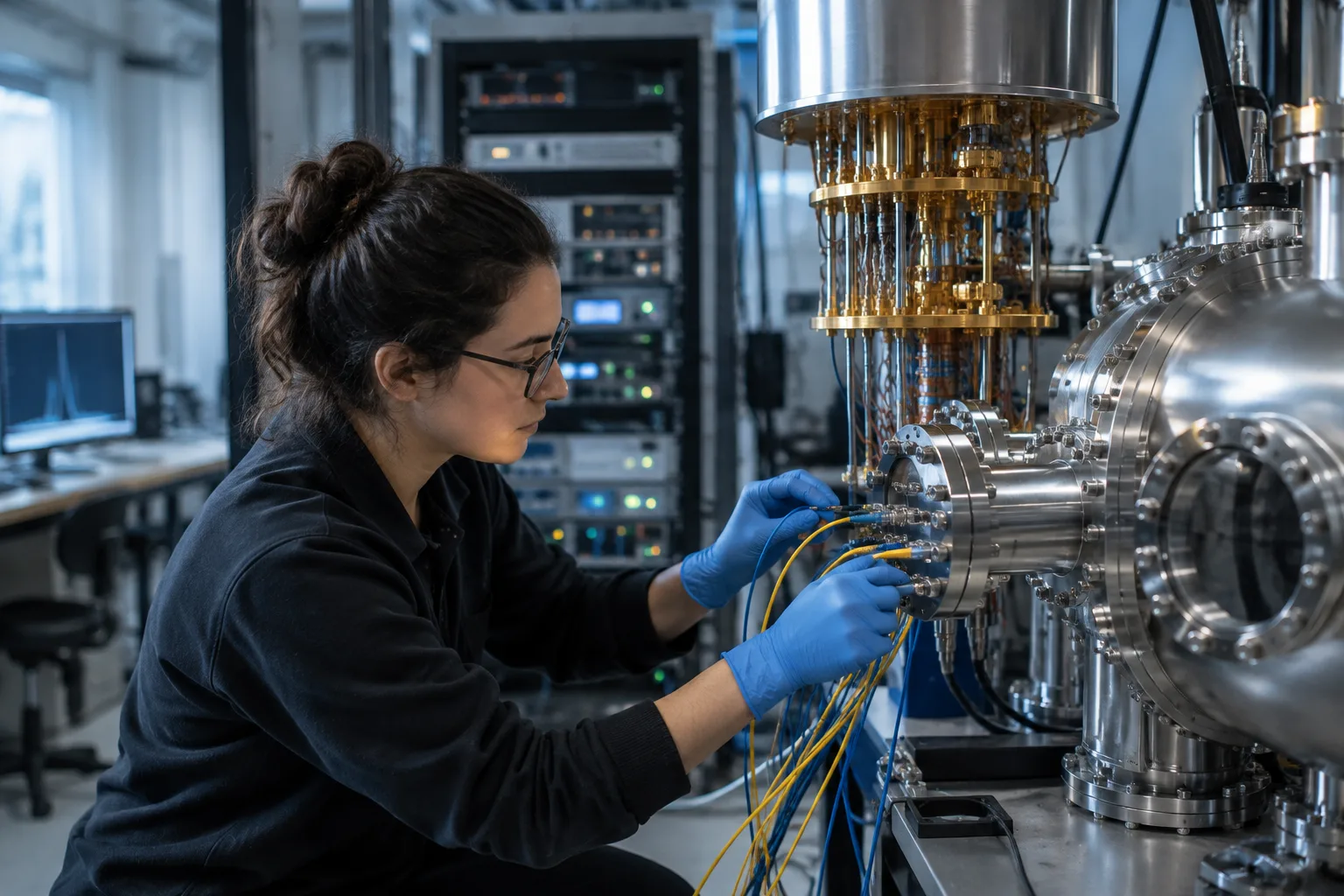
Satellites degrade under radiation, thermal cycling, and micrometeoroid impacts. Today’s on-orbit servicing is limited—refueling and constrained repairs—not routine replacement of compute modules. Without mature robotics and modular architectures, orbital compute risks a harsh trade: accept rapid degradation or pay for frequent replenishment launches.
—
Economics and competitive dynamics: launch cost curves versus hyperscale reality
The economic case for orbital data centers hinges on a single question: can the industry drive launch and satellite manufacturing costs low enough that “free” solar energy offsets everything else?
Several considerations dominate:
- Launch cost thresholds are the gating variable
Analysts often cite sub-$200/kg as a rough threshold for parity with terrestrial hyperscale economics, especially when power can exceed 50% of operating expense in some regions. Even with reusable rockets and Starship ambitions, many forecasts place that level of cost compression closer to 2035–2040 than the next three years.
- CapEx front-loading vs. OpEx reshaping
Orbital infrastructure shifts costs from monthly utility bills to upfront investments: satellite manufacturing, launch cadence, ground stations, mission operations, and end-of-life deorbiting. Energy becomes “embedded” in hardware, but operational costs remain substantial—especially for monitoring, collision avoidance, and network management.
- Scaling to hundreds of thousands of satellites is qualitatively different
SpaceX’s Starlink experience proves mass production of communications satellites. But data-center-class nodes—with high-power compute, thermal radiators, hardened electronics, and high-bandwidth downlinks—are more complex, heavier, and likely more failure-prone. A million-unit constellation magnifies supply-chain constraints across semiconductors, photovoltaics, advanced materials, and launch scheduling.
- Vertical integration could create a durable moat
The SpaceX–Starlink–xAI stack suggests a powerful strategic loop: launch capacity, orbital networking, and internal demand for compute. If executed, it could pressure cloud incumbents—AWS, Microsoft Azure, Google Cloud—to respond via partnerships, accelerated terrestrial clean-energy procurement, or their own space-adjacent experiments.
The most plausible near-term business case is not “replace hyperscale,” but niche deployment: resilient compute for disaster scenarios, remote-region services, or specialized workloads where energy access and physical security outweigh latency and servicing concerns.
—
Governance, sustainability, and the new geopolitics of “off-planet” data sovereignty
If orbital data centers move from concept to pilot, the regulatory and environmental questions may become as determinative as the engineering.
Areas likely to define the debate:
- Orbital congestion and debris externalities
Thousands—let alone hundreds of thousands—of satellites in similar orbital bands increase collision probability and raise the specter of cascading debris events. Regulators could respond with stricter deorbit timelines, active debris removal obligations, higher insurance requirements, and operational constraints that directly affect unit economics.
- Lifecycle carbon accounting may complicate the “green compute” narrative
Research cited from Saarland University suggests embodied emissions from propellant production, composite manufacturing, and repeated launches could yield a higher carbon footprint per kilowatt-hour of compute than many terrestrial grids—unless launch frequency, mass efficiency, and manufacturing processes improve dramatically.
- Jurisdiction, export controls, and compliance become novel and contested
Hosting data “offshore” becomes literally off-planet, raising unresolved questions about GDPR, CFIUS, encryption standards, lawful intercept, and which courts govern disputes. Spectrum allocation and orbital governance—through bodies such as the ITU and UN COPUOS—would become central to competitive positioning.
For enterprise leaders, the signal is clear: orbital compute is not merely a moonshot metaphor. It is a stress test of how far AI’s infrastructure demands can bend energy systems, supply chains, and governance frameworks—and whether the next frontier of competitive advantage is built as much in regulatory forums and launch manifests as it is in silicon.


 By
By
 By
By

 By
By
 By
By
 By
By
 By
By