

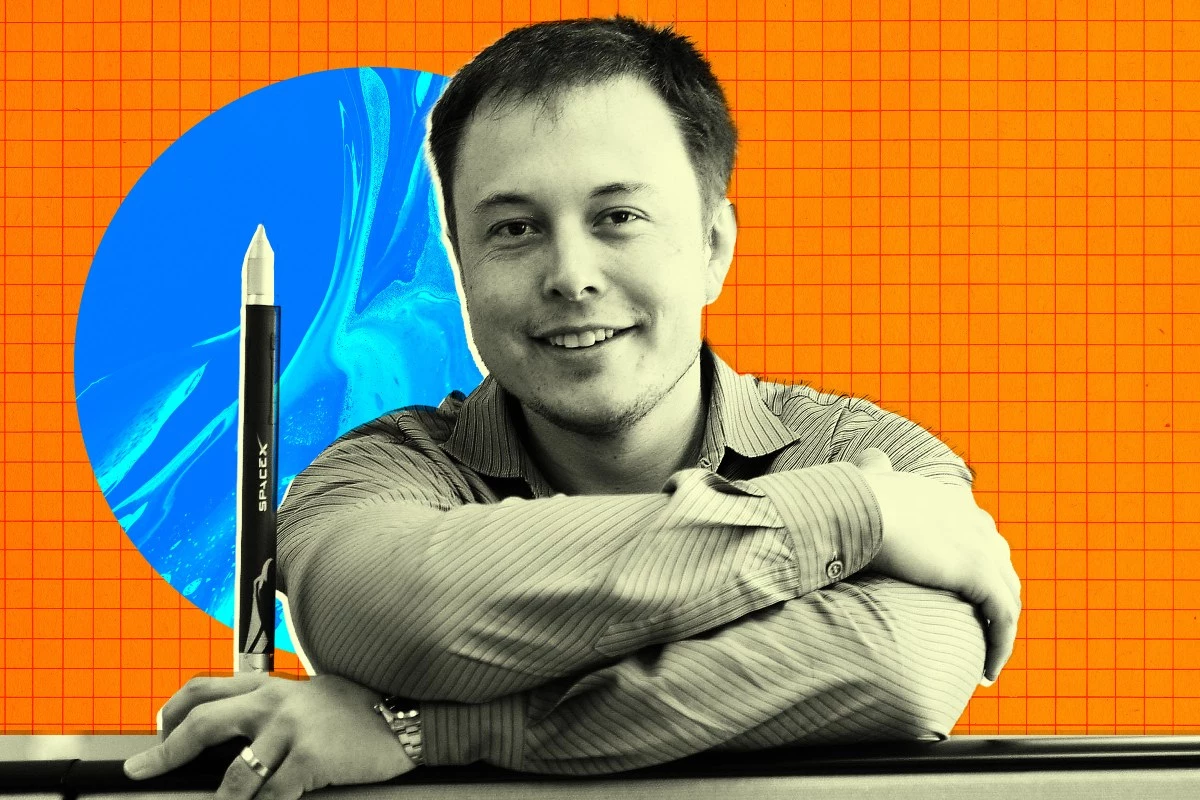

Starship’s Ambition: Between Visionary Leap and Developmental Gravity
Elon Musk’s latest pronouncements around SpaceX’s Starship rocket—delivered with characteristic bravado on a widely followed podcast—have reignited a perennial tension in the commercial space sector: the chasm between transformative rhetoric and the stubborn realities of engineering, regulation, and economics. Musk frames Starship as a civilizational hinge, a machine whose successful deployment would rank alongside the Cambrian explosion or the advent of flight. Yet, this narrative collides with a mixed technical record: fiery test failures, shifting timelines, and NASA’s quiet hedging through alternative lunar-lander suppliers. The stakes are not merely technological, but existential—both for SpaceX and for the broader architecture of humanity’s expansion beyond Earth.
Engineering at the Edge: Reusability, Regulation, and the Iterative Gamble
Starship’s design is nothing if not audacious. By marrying full propulsive return of both rocket stages with an unprecedented payload ceiling—potentially 100 to 150 metric tons to low Earth orbit—SpaceX aims to collapse launch costs by an order of magnitude. This is not the incremental progress of Falcon 9 or Blue Origin’s New Glenn, but a deliberate bid to reset the economics of access to space. The enabling technologies—methane-fueled Raptor engines, stainless-steel cryostructures, and high-volume autogenous pressurization—reflect a vertically integrated strategy reminiscent of Tesla’s battery commoditization, but with the added complexity and risk of orbital flight.
Yet, the path to validation is neither linear nor assured. SpaceX’s “test, fail, learn” cadence, so celebrated in Silicon Valley, is a double-edged sword in aerospace. Rapid iteration accelerates knowledge acquisition, but it also amplifies the visibility of failure, inviting regulatory scrutiny and political risk. The Federal Aviation Administration’s launch licensing and environmental reviews have emerged as more formidable hurdles than propulsion physics—a policy bottleneck that could constrain not only SpaceX, but the entire next generation of heavy-lift platforms.
Economics of Access: Demand Creation and the New Space Value Chain
The economic logic underpinning Starship is as radical as its engineering. Current global launch revenues—hovering around $12 billion—cannot justify Starship’s capital intensity on price competition alone. The real thesis is demand creation: if payload costs plunge below $200 per kilogram, industries once confined to science fiction—orbital data centers, in-space manufacturing, debris removal—suddenly become investable. Starship’s own manifest is buoyed by SpaceX’s Starlink Gen-2 constellation, a form of vertical self-consumption that de-risks early flights and inverts traditional launch economics.
Capital markets, too, are recalibrating. SpaceX’s internal valuation, recently pegged near $180 billion, is a blend of Starlink’s cash flow promise and Starship’s option value for launch dominance. NASA’s move to diversify lunar-lander suppliers, however, introduces a new risk premium, threatening the perceived inevitability of government revenue streams. Meanwhile, sovereign wealth funds from the Gulf and East Asia are circling, keen to secure exposure to heavy-lift capabilities that could shape future geopolitical leverage in cislunar space.
Strategic Ripples: Geopolitics, Terrestrial Spillovers, and Executive Imperatives
Control of affordable heavy lift is not merely a commercial advantage—it is a lever of soft power. The ability to rapidly deploy lunar infrastructure, deep-space telescopes, or national security assets confers strategic autonomy. China’s Long March 9 and the reusable Zhuque family are credible, but lag behind SpaceX in flight-rate learning. NASA’s hedging, through supplier diversification, is less a rebuke of Starship than an embrace of strategic redundancy—insulating Artemis from single-point commercial failure and maintaining bipartisan support.
Beyond the launchpad, Starship’s technological advances may ripple through terrestrial industries. Raptor’s high-throughput, low-cost combustion could inform closed-loop LNG production or maritime propulsion, aligning with global decarbonization mandates. The steel-centric construction methods honed at Boca Chica hint at disruptions in cryogenic storage and hydrogen infrastructure, with implications for the broader energy transition.
For executives, the non-obvious linkages are manifold:
- Supply-chain sovereignty: Starship’s appetite for stainless steel intersects with global nickel and chromium supply, foreshadowing competition with electric vehicle battery demand.
- Insurance and finance: Persistent high-velocity failure rates are forcing underwriters to reprice launch and payload insurance, impacting satellite project finance.
- Workforce dynamics: The public spectacle of Starship’s iterative failures paradoxically attracts elite engineering talent, accelerating the talent drain from legacy aerospace primes.
The next 24 months will be decisive. Should Starship achieve a successful orbital launch, reentry, and reuse cycle, expect a surge of private capital into lunar logistics, in-orbit servicing, and even hypersonic terrestrial cargo. Regulatory scrutiny will intensify, and the FAA’s capacity to process launches may become the new bottleneck. Conversely, prolonged delays would embolden Blue Origin and international consortia, while investors pivot to nearer-term medium-lift entrants.
For those charting strategy in this uncertain landscape, the imperative is clear: diversify exposure across launch classes, cultivate industrial partnerships as second-tier suppliers, and engage proactively with policymakers to shape the regulatory frameworks that will define the next era of space commerce. Starship is not merely a rocket—it is a binary variable for the future of orbital access, with the power to reorder entire value chains or, through failure, recalibrate but not extinguish the commercial momentum toward deep space. The window to secure optionality is open, but it will not remain so for long.

 By
By
 By
By

 By
By
 By
By

 By
By
 By
By







