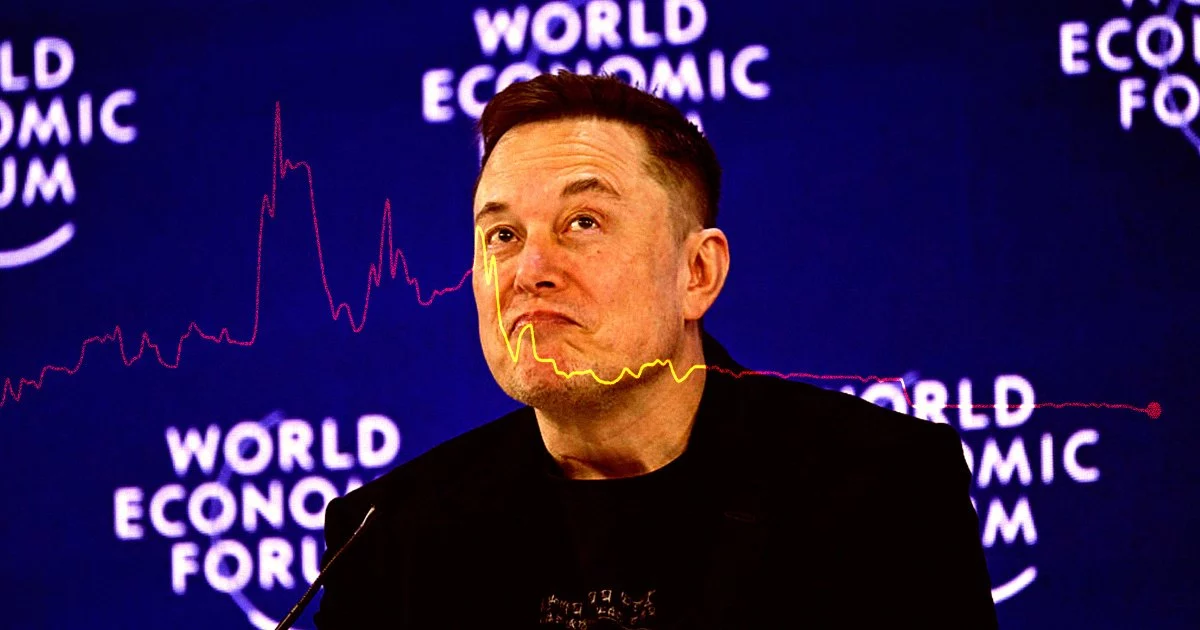

The Tradable Gap: How Elon Musk’s Timelines Became a Market Phenomenon
Elon Musk’s audacious forecasts—whether predicting artificial general intelligence by 2025, promising robotaxis within a year, or vowing a Mars landing before the decade’s close—have always commanded headlines. Now, they command something more: liquidity. The rise of online prediction markets such as Kalshi and Polymarket has transformed Musk’s public statements into investable events. Sophisticated bettors, armed with skepticism and data, are arbitraging the delta between Musk’s rhetoric and the realities of engineering, creating a new financial theater where optimism, execution, and speculation collide.
Arbitrage as Insight: The New Metrics of Technological Credibility
For years, Musk’s timelines have served as both inspiration and provocation. Yet, beneath the surface, the gap between vision and realization has widened. Tesla’s “Full Self-Driving” remains firmly at SAE Level 2, requiring vigilant human oversight—a far cry from the unsupervised autonomy Musk touts as imminent. The leap he promises would require a tenfold acceleration over the industry’s historical progress, a pace prediction markets are increasingly pricing as improbable.
SpaceX’s Starship, meanwhile, continues its iterative dance with regulators and the hard limits of material science. The notion of a Mars landing within months, though captivating, is met with skepticism not only by aerospace insiders but also by retail traders, who are short-selling Musk’s deadlines and, in some cases, reaping substantial profits. One such bettor reportedly netted $36,000 by wagering against a specific Musk forecast—a microcosm of a broader trend.
These markets do not merely reflect cynicism; they synthesize a spectrum of alternative data, expert opinion, and crowd sentiment. Their odds often align more closely with the cautious tones of frontier AI researchers and aerospace engineers than with Musk’s own pronouncements. In this way, prediction markets have emerged as a real-time barometer of technological credibility, one that is increasingly difficult for institutional investors and boardrooms to ignore.
The Financialization of Narrative: Retail Access, Regulatory Tension, and Strategic Feedback
The institutionalization of event-driven derivatives marks a profound shift in how markets process—and price—visionary claims. Tesla’s equity valuation, buoyed by the promise of autonomy and new business lines, now faces a counterweight: liquid, retail-accessible hedges that allow investors to offset narrative-driven volatility without abandoning their core positions. These event contracts, akin to zero-day options in their leverage and speed, have democratized speculation, accelerating the feedback loop between public sentiment, capital flows, and corporate strategy.
Yet, this innovation is not without friction. Regulators, particularly the CFTC, are scrutinizing the boundaries of “event contracts,” wary of insider trading and the potential for market manipulation. The paradox is heightened by Musk’s own public embrace of prediction markets—a rare instance of a CEO amplifying platforms that profit from the perceived fallibility of his statements. This dynamic introduces reputational risk and may, over time, force boards to reconsider the tone and substance of forward-looking communications.
The second-order effects are already rippling outward:
- Information symmetry is shifting: Corporate communications are now tradable data, with boards under pressure to clarify or temper projections lest they fuel speculative arbitrage.
- Capital allocation is evolving: Persistent under-delivery, as signaled by bearish prediction-market odds, could raise Tesla’s cost of capital and influence institutional models.
- Competitive benchmarking is recalibrated: Rivals can leverage Musk’s missed deadlines to stake their own credibility, differentiating themselves through measured, empirically validated milestones.
- Political and regulatory optics are sharpening: Executive endorsements of thinly regulated markets may invite scrutiny, especially in sectors with national security implications.
Beyond the Obvious: Governance, Talent, and the Insurance Frontier
The implications of this new market reality extend beyond balance sheets and headlines. Governance-focused investors are beginning to equate timeline realism with board oversight quality, and it is not inconceivable that event-market signals will soon inform ESG scoring algorithms, subtly influencing index inclusion and passive capital flows.
Talent, too, is in play. The persistent gap between promise and delivery—now amplified by public betting against those very promises—risks eroding the “mission premium” that has long attracted elite engineers to Musk’s ventures. As the narrative becomes tradable, the allure of working on the bleeding edge may give way to a preference for organizations where credibility is as prized as ambition.
Even the insurance sector is watching. Actuarial models for autonomous vehicles and space launches are beginning to incorporate prediction-market odds as forward indicators, tightening underwriting standards and recalibrating risk for projects at the frontier of technology.
The monetization of optimism, once the province of speculative equity, has become a complex, multidimensional ecosystem. For strategists, investors, and policymakers alike, integrating the signals from these emergent markets is no longer optional—it is essential for navigating the volatile intersection of vision, execution, and capital in the age of tradable narratives.

 By
By
 By
By

 By
By
 By
By
 By
By

 By
By