


A viral Macau moment that exposes real-world friction in humanoid robotics
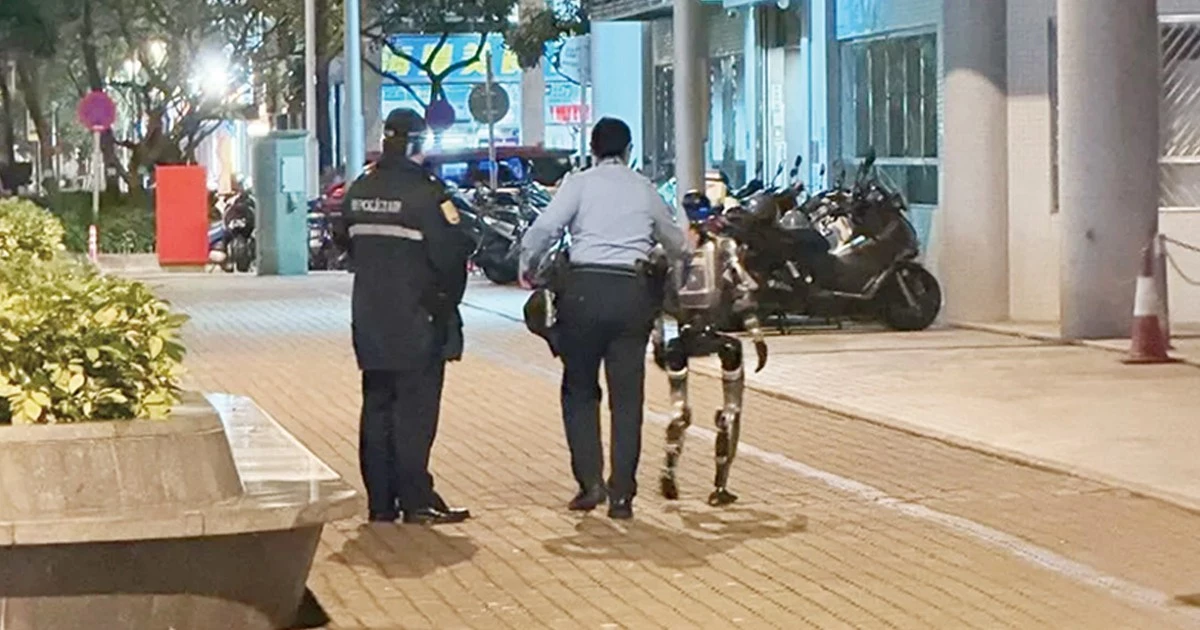
On a Thursday evening in Patane, Macau, a Unitree G1 humanoid robot—deployed by a local educational center as a promotional attraction—became the unlikely catalyst for a public debate about robot safety, ethics, and readiness for everyday life. A 70-year-old woman, absorbed in her phone and walking in low light, was startled when the robot approached unexpectedly. The shock triggered acute distress; she was briefly hospitalized and later discharged. No physical contact occurred, and she chose not to press charges.
The incident might have remained a local mishap if not for the video that circulated widely across Greater China. Online reactions split in familiar directions: humor at the spectacle of police intervening—an officer placing a hand on the robot’s shoulder in a moment that looked like an “arrest”—and more serious concern about what happens when autonomous machines share space with pedestrians who are distracted, elderly, or otherwise vulnerable.
For business and technology leaders, the Macau episode is not merely a quirky headline. It is a compact case study in how public-space robotics can collide with human expectations, and how quickly a brand moment can become a governance question.
The Unitree G1 and the widening gap between capability and contextual awareness
The Unitree G1 represents the momentum of China’s fast-advancing robotics ecosystem: improving locomotion, increasingly capable perception stacks (including lidar-based navigation), and on-board AI designed for basic human-robot interaction (HRI). Just as importantly, it reflects a market shift: robots are no longer confined to factories and labs. Falling hardware costs and modular software platforms have made humanoids viable for:
- Marketing activations and street-level promotions
- Educational demonstrations
- Early-stage trials in hospitality, retail, and service environments
Yet Macau underscores a persistent weakness in real-world HRI: robots can “work” technically while still failing socially. Many navigation and path-planning systems implicitly assume a cooperative environment—people notice the robot, interpret its intent, and adjust. In practice, pedestrians often do the opposite: they look down at phones, move unpredictably, or freeze when startled. Low-light conditions amplify the problem by reducing visibility and increasing ambiguity about distance and intent.
This is where the next frontier of robotics shifts from raw mobility to contextual competence—the ability to modulate approach speed, maintain conservative personal-space buffers, and recognize when a human is unaware, anxious, or at risk of panic. Without that layer, even a non-contact encounter can become a safety incident in the eyes of the public.
Commercial upside meets liability, privacy, and regulatory uncertainty
From a business perspective, public-facing robots offer a compelling mix of novelty and efficiency. For a tourism-heavy economy like Macau—where hotels, casinos, and retail venues constantly seek differentiation—robots can signal modernity, reduce staffing pressure, and create “shareable” experiences.
But the same virality that makes robots attractive for promotion also increases exposure. A minor scare can quickly become a reputational event, raising questions that executives and operators must treat as operational, not theoretical:
- Brand risk: A robot meant to delight can be reframed as threatening, especially when the affected party is elderly.
- Liability and insurance: Even without contact, distress and hospitalization introduce potential claims, higher premiums, and stricter underwriting for future deployments.
- Regulatory fragmentation: Local jurisdictions may respond with ad hoc rules governing where robots can operate, at what times, and under what supervision—creating compliance costs and rollout delays.
- Data privacy and sensor ethics: Robots in public spaces may capture video, audio, and potentially biometric signals. Without clear disclosure, retention limits, and anonymization practices, operators invite scrutiny over consent and surveillance norms.
The Macau incident also highlights an adoption paradox: the demographics that could benefit most from service robotics—older adults needing assistance, guidance, or mobility support—may also be the most sensitive to unexpected proximity and unfamiliar machine behavior. In tourism and hospitality, trust is the product as much as the service itself.
What “responsible deployment” looks like as humanoids enter daily life
The strategic lesson is not that humanoid robots should be kept out of public spaces, but that deployment maturity must catch up with technical ambition. The most credible path forward blends engineering safeguards, operational discipline, and policy engagement.
Key moves that technology leaders and operators are increasingly expected to implement include:
- Designing for edge cases, not averages:
– Conservative approach distances in low light or crowded settings
– Stand-down behaviors when humans appear startled (sudden movement, vocal alarm)
– Remote-operator takeover for ambiguous situations
- Human factors as a core R&D track:
– Multi-generational comfort modeling (older adults, children, tourists)
– Social signaling (clear intent cues, slower turns, non-threatening posture)
– Affective computing that prioritizes de-escalation over task completion
- Clear public notification and governance:
– Visible signage indicating robotic operation and sensor use
– Data minimization, anonymization, and retention controls
– Incident reporting protocols aligned with municipal expectations
- Standards and cross-sector collaboration:
Industry consortia, city regulators, consumer advocates, and academic labs can define baseline safe-operation norms—reducing the chance that each incident produces a patchwork of reactive rules.
Regulation is likely to evolve toward tiered licensing: low-risk indoor deployments on one end, and higher-risk outdoor public-space operation on the other, potentially requiring supervision, certification, or time-and-place restrictions. Companies that engage early can help shape workable standards—and avoid being shaped by the next viral clip.
Macau’s brief encounter between a pedestrian and a humanoid robot shows how the robotics economy is entering a new phase: not just building machines that can walk, but building systems that can coexist—quietly, safely, and predictably—with the full complexity of human life.


 By
By

 By
By
 By
By
 By
By
 By
By
 By
By







