
A high-confidence El Niño signal—and why the probability math matters to markets
The Japanese Meteorological Agency (JMA) has formally declared the onset of El Niño in the tropical Pacific, a call quickly echoed by the U.S. National Oceanic and Atmospheric Administration (NOAA). That alignment between two leading forecasting authorities is more than a scientific footnote: it is a risk signal that many industries now treat as an actionable input, akin to an earnings revision or a supply shock indicator.
The World Meteorological Organization (WMO) had already placed the likelihood of El Niño formation this summer at 80%, but NOAA’s latest outlook adds a sharper edge: a 63% probability that sea-surface temperature anomalies in key monitoring zones will exceed 3.6°F by autumn—a threshold that could challenge the intensity of the most extreme historical events, including the often-cited 1877 episode.
For business and technology leaders, the significance lies in what El Niño tends to do next: it rearranges global atmospheric circulation, strengthening and shifting the Pacific jet stream and redistributing rainfall and heat. The early consensus view points to:
- Drought stress risk in the U.S. Midwest, with implications for row crops and inland logistics
- Heavier rainfall potential in the southern United States, elevating flood and infrastructure strain
- Higher wildfire risk across Canada and the northern U.S., affecting insurance losses, air quality, and energy reliability
El Niño is never a carbon copy of prior events, but the probabilistic framing—and the speed with which it is now delivered—has become central to how modern enterprises price uncertainty.
The forecasting stack is evolving: satellites, buoys, AI, and climate “digital twins”
The most consequential shift in El Niño preparedness is not the phenomenon itself, but the technology stack used to observe and model it. Today’s Earth-observation ecosystem blends public infrastructure with commercial innovation, producing near–real time signals that increasingly feed into operational decisions.
Key technological enablers include:
- Expanded satellite coverage (geostationary and low-Earth orbit) delivering persistent monitoring of sea-surface temperature (SST), cloud dynamics, and atmospheric moisture
- High-density buoy arrays capturing not only surface conditions but subsurface heat content, a critical predictor of how long and how strongly El Niño may persist
- Private-sector sensors and analytics, where commercial providers fuse proprietary telemetry with public datasets to improve anomaly detection and localized risk scoring
On the modeling side, the frontier is defined by petascale computing, improved data assimilation, and the integration of machine learning into physical climate models. Neural-network augmentation does not replace physics; it often improves pattern recognition, bias correction, and ensemble weighting—reducing uncertainty bands that once limited seasonal forecasts.
A particularly business-relevant development is the rise of climate “digital twin” methodologies: iterative simulation environments that allow governments and companies to run “what-if” scenarios against plausible El Niño trajectories. For supply chain leaders, this is the difference between generic seasonal guidance and decision-grade stress testing—for example, modeling how simultaneous Midwest drought and Canadian wildfire smoke could affect agricultural yields, rail throughput, and labor productivity.
Sector-by-sector exposure: agriculture, energy systems, and the pricing of catastrophe risk
El Niño’s economic footprint tends to emerge through commodity supply, energy demand and generation, and insured losses—channels that transmit quickly into prices, margins, and capital allocation.
Agriculture and commodities are often first to react. If drought conditions materialize in the U.S. Midwest, the market impact could include:
- Downside pressure on corn, soybean, and wheat yields, tightening global grain balances
- Increased volatility in futures curves as traders reprice weather risk and revise harvest expectations
- Spillover into food input costs, with implications for consumer staples and emerging-market inflation sensitivity
Beyond North America, rainfall anomalies can reshape production cycles for coffee, palm oil, and sugarcane, particularly across parts of Southeast Asia and South America. Even modest shifts in timing—planting windows, flowering periods, harvest conditions—can amplify price swings in soft commodities, where supply elasticity is limited.
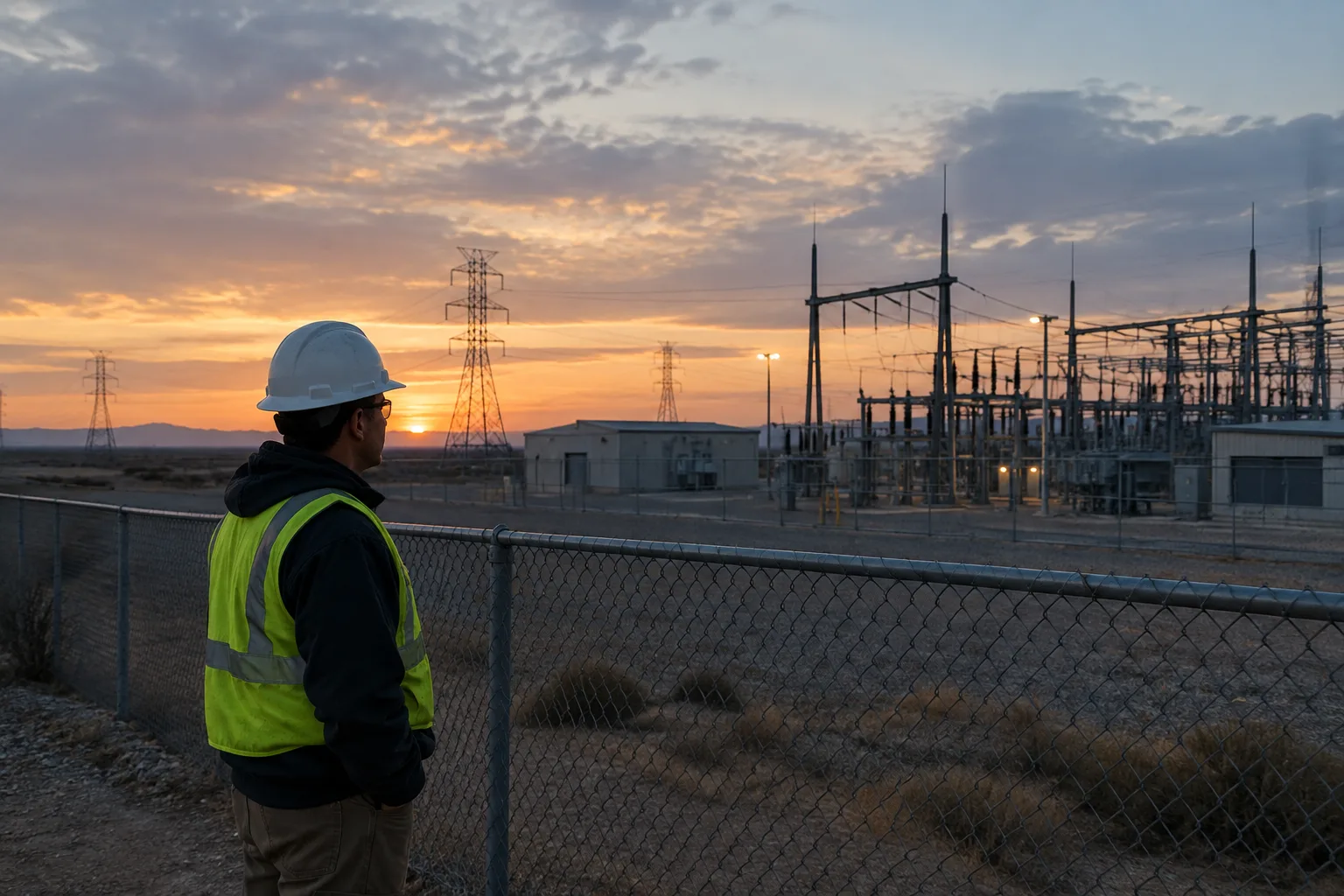
Energy and utilities face a more complex map of risks and offsets. Reduced reservoir inflows in parts of the Pacific Northwest and Canada could constrain hydropower output, pushing utilities toward incremental generation procurement—often at higher marginal cost, especially if gas-fired plants set the clearing price. Meanwhile, heavier precipitation in the southern U.S. may temporarily dampen cooling demand in some periods, but warmer northern winters can introduce broader load volatility and complicate hedging strategies.
For insurance, reinsurance, and structured risk markets, the anticipated rise in wildfire exposure across boreal and midlatitude forests is a direct balance-sheet concern. Expect heightened attention to:
- Updated wildfire frequency and severity assumptions in catastrophe models
- Adjustments to capital reserves and pricing in property-casualty lines
- Increased use of weather derivatives and catastrophe bonds linked to El Niño indices, as corporates hedge revenue sensitivity tied to yields, energy consumption, and tourism flows
The common thread is that El Niño increasingly functions as a financial variable, not merely a meteorological one.
Strategic posture: resilience as a competitive capability, not a compliance exercise
The practical question for executives is not whether El Niño will “cause” a specific event, but how to operate when probability-weighted disruption becomes more likely across multiple regions at once. The most resilient organizations treat this as a planning discipline—linking climate intelligence to procurement, operations, and capital strategy.
Priority actions many firms are now considering include:
- Supply-chain stress tests that incorporate region-specific climate hazards, including dual-sourcing and adaptive inventory buffers
- Accelerated adoption of agritech and water-management tools such as precision irrigation, drought-resistant seed varieties, and real-time soil moisture monitoring
- Tighter integration between forecasting outputs and enterprise risk management (ERM), so that scenario probabilities translate into triggers for procurement, staffing, and logistics
Public-sector pressure is also likely to rise. Flood defenses in the South, wildfire mitigation in northern jurisdictions, and drought-resilient water systems in the Midwest are not abstract infrastructure debates when seasonal outlooks harden into high-confidence signals. This is where public–private collaboration becomes economically material: shared data standards, joint R&D, and faster pathways from forecast to field response.
Capital markets are already moving in parallel. Institutional investors and credit-rating agencies increasingly incorporate near-term climate event probabilities into valuation and sovereign risk perspectives, elevating the importance of credible climate-risk disclosure and operational readiness. If this El Niño develops toward the upper end of projected intensity, it will test not only infrastructure and ecosystems, but also the maturity of the world’s climate analytics—revealing which organizations can convert early warning into durable advantage, and which are left reacting to weather as if it were still a surprise.

 By
By
 By
By
 By
By
 By
By
 By
By


 By
By