
Musk’s Kardashev-Scale Narrative Meets the Balance Sheet
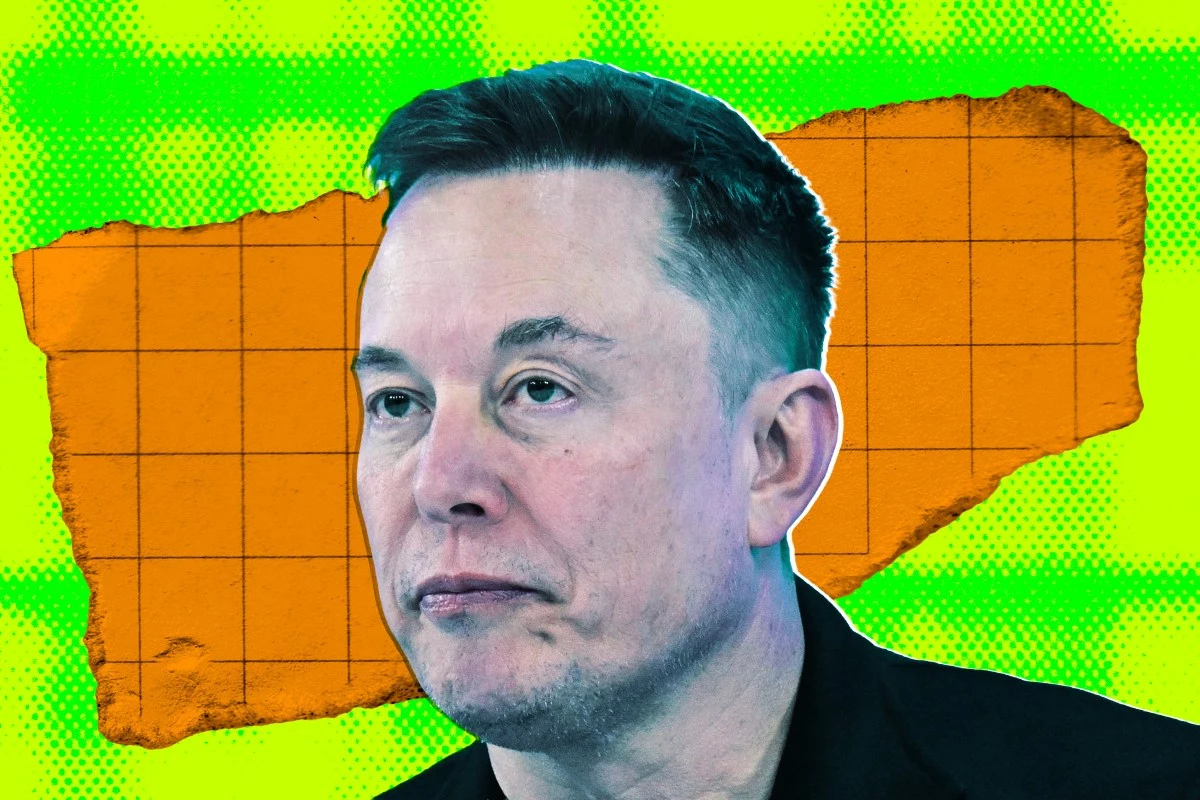
Elon Musk’s latest assertion—that SpaceX-led space industries could one day exceed the entire value of Earth’s economy—is more than a provocative soundbite. It is a deliberate reframing of SpaceX not merely as a launch provider, but as a future platform company for off-world energy, compute, and industrial production. By invoking the Kardashev scale, Musk is effectively asking investors and policymakers to evaluate SpaceX on a timeline and market size that dwarfs conventional valuation frameworks.
Yet the immediate backdrop is less mythic: reported losses near $5 billion, heightened scrutiny around capital intensity, and a more skeptical market environment that increasingly demands credible unit economics, not just technological spectacle. The tension is familiar in frontier industries: the long arc of transformative infrastructure versus the short runway of cash flow, governance expectations, and competitive pressure.
This gap is also amplified by adjacent disappointments in Musk’s broader ecosystem—most notably the slower-than-promised progress in Level 5 autonomy and humanoid robotics. Those delays matter because the most ambitious off-world visions implicitly rely on robust autonomy: building, maintaining, and scaling infrastructure where humans are scarce, expensive, and at risk.
—
The Real Engineering Frontiers: Space-Based Solar and Orbital Compute
Among the concepts Musk highlights, space-based solar power (SBSP) is arguably the most grounded in physical reality and long-term demand. The appeal is straightforward: continuous solar exposure, no weather, and potentially fewer land-use constraints than terrestrial renewables. But the practical barriers remain formidable, and they are not merely “engineering details”—they define whether SBSP becomes a scalable industry or a perpetual prototype.
Key technical constraints shaping SBSP feasibility include:
- Launch and assembly economics: Even with reusable rockets, SBSP requires moving and assembling large mass in orbit. The cost curve must fall dramatically, and reliability must rise.
- Power transmission efficiency and safety: Beaming power to Earth (microwave or laser) demands high conversion efficiency, precise targeting, and regulatory acceptance.
- Satellite lifespan and servicing: Radiation, micrometeoroids, and thermal cycling degrade systems; without routine servicing, replacement costs could erase any advantage.
Musk’s parallel emphasis on data centers in orbit taps a different macro trend: the relentless growth of AI compute demand and the fragility of terrestrial infrastructure under climate stress, geopolitical risk, and cyber threats. Orbital compute is often pitched as resilient and globally distributed, but it faces its own hard constraints:
- Thermal management: Data centers generate heat; in space, shedding heat is non-trivial and radiator mass is costly.
- Radiation hardening: Commodity GPUs and accelerators are not designed for high-radiation environments, raising cost and performance tradeoffs.
- Latency and networking realities: While orbital nodes may reduce latency in certain routes, the broader advantage over well-connected terrestrial hyperscale facilities is not yet decisive.
The reported AI compute agreement involving Anthropic underscores a strategic undercurrent: compute is becoming a supply chain, and partnerships can look counterintuitive when viewed through a purely competitive lens. For SpaceX, the question is whether it aims to be a neutral infrastructure layer—akin to a cloud provider—or a vertically integrated ecosystem where compute, connectivity (Starlink), and launch reinforce one another.
—
Capital Markets, Competitive Gravity, and the New Space Economy’s Price of Admission
SpaceX’s long-term thesis depends on a simple proposition: lower the cost of access to space, then let new markets emerge. That logic has already proven partially true—Starlink is a tangible example of demand unlocked by capability. But the next wave (SBSP, orbital manufacturing, lunar logistics, Martian settlement) is far more capital-intensive and far less proven.
In today’s macro environment—characterized by tighter monetary policy and a more disciplined risk appetite—investors are increasingly focused on:
- Valuation versus free cash flow: High private-market valuations are harder to defend when losses persist and timelines stretch.
- Milestone-based credibility: Markets reward demonstrable progress—payload cadence, reuse rates, cost per kilogram, and contract backlog—more than aspirational total addressable market claims.
- Revenue diversity: Government contracts, defense applications, and commercial services can stabilize cash flows, but each brings governance and regulatory complexity.
Competition is also no longer theoretical. China’s accelerating launch cadence and state-backed industrial strategy introduce a different kind of rival—one less constrained by near-term profitability and more aligned with national objectives. The likely outcome is a bifurcated space economy, where supply chains, standards, and customer choices increasingly reflect geopolitical alignment. For multinational enterprises, that raises practical questions about component sourcing, export controls, and long-term service continuity.
—
What Executives Should Watch: Sequencing, Governance, and Measurable ROI
The most consequential strategic variable for SpaceX may not be the ambition of its end-state, but the sequencing of intermediate steps. Markets tend to fund visions when they are paired with credible, revenue-linked milestones. For space-based solar, orbital compute, and off-world industry, that implies a roadmap built around demonstrations that reduce uncertainty and attract partners.
Signals that would meaningfully de-risk the narrative include:
- Operational proof points in in-orbit assembly, servicing, and debris-aware operations—capabilities that underpin any scalable orbital industry.
- Incremental commercial products, such as specialized orbital platforms, edge networking nodes, or defense-adjacent services that monetize resilience.
- Partnership structures that share capex and validation risk with energy majors, satellite operators, and government agencies.
Governance and disclosure discipline also matter. Bold forward-looking statements can inspire talent and shape policy attention, but they can also invite scrutiny—from spectrum regulators to securities watchdogs—if expectations are perceived as untethered from operational reality.
Musk’s grand vision is not inherently incompatible with investor discipline; it simply demands a different kind of proof. In the next phase of the New Space era, the winners are likely to be those who can translate cosmic-scale narratives into auditable engineering progress, financeable milestones, and defensible competitive moats—one launch, one contract, and one validated system at a time.

 By
By


 By
By

 By
By
 By
By
 By
By