

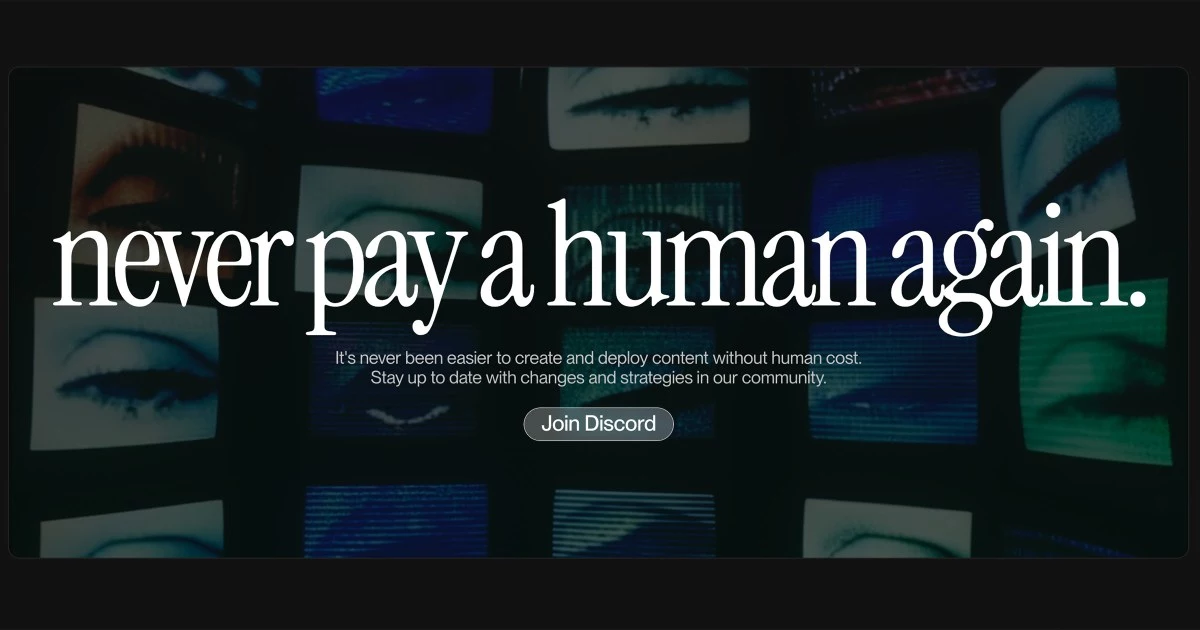

The Rise of Automated Influence: Doublespeed’s Disruption of Digital Authenticity
In a digital landscape already rife with questions of trust and authenticity, the emergence of Doublespeed—a startup with backing from Andreessen Horowitz—marks a new inflection point. By commercializing a large-scale, AI-driven “phone farm” capable of orchestrating thousands of social-media accounts, Doublespeed has not just automated content creation, but industrialized it. This is not the old gray-market hustle of click-farms and static bots; it is a sophisticated, subscription-based engine that promises clients “bulk content creation” and “instrumented human action” at a scale and realism that blurs the line between organic engagement and algorithmic manipulation.
Generative AI as the Engine of Platform Decay
Doublespeed’s hybrid automation stack fuses physical device farms with generative AI scripting, enabling dynamic, context-aware content that adapts cadence and tone to evade detection. The company’s boast that AI is its “third co-founder” is more than branding; it signals a world where code-writing AI can deploy adversarial tactics at a velocity that outpaces even the most adaptive detection algorithms. The result is a new breed of “offensive automation”—transformer-powered, endlessly variable, and increasingly indistinguishable from legitimate user activity.
This technological leap has profound implications. AI-generated spam now pollutes engagement metrics, contaminates the training data for future models, and degrades the very recommendation engines that platforms depend on. The feedback loop is vicious: as platforms deploy more moderation AI, those systems themselves learn from already-tainted data, accelerating what technologist Cory Doctorow has dubbed “platform decay.” The recursive risk here is rarely accounted for in platform financials, yet it is already shaping the user experience in subtle, corrosive ways.
Venture Capital, Economic Incentives, and the Attention Arbitrage
The imprimatur of Andreessen Horowitz is more than a funding milestone—it is a signal to the market. In this calculus, growth routinely trumps governance. The playbook is familiar from the early days of crypto and peer-to-peer streaming: capture value at speed, externalize compliance risk, and exit before regulatory headwinds catch up. For the venture portfolio, it’s a hedge on the volatility of the attention economy—if authenticity becomes a scarce commodity, the same backers can pivot to funding “anti-spam” startups, arbitraging both sides of the problem.
Doublespeed’s economics are striking. With monthly subscriptions ranging from $1,500 to $7,500 and gross margins north of 80% once the infrastructure is amortized, the model outpaces traditional digital agencies. As brands confront softer ad markets and seek cost-effective reach, the temptation to replace human creatives with scalable AI-generated content will only intensify, even as the value of genuine engagement is quietly eroded.
Strategic Fault Lines: Regulation, Platform Incentives, and the Coming Authenticity Arms Race
Regulatory scrutiny is sharpening. The EU’s Digital Services Act and anticipated US FTC guidelines on manipulative interfaces directly target the kind of deceptive engagement Doublespeed enables. With civil fines that can reach 6% of global turnover, the calculus of “cheap acquisition” is shifting—what looks like a growth hack today could become an existential liability tomorrow. The precedent set by YouTube’s $170 million COPPA fine underscores regulators’ willingness to treat platforms, advertisers, and enabling vendors as co-responsible for ecosystem harms.
Yet the platforms themselves—Meta, X (formerly Twitter), TikTok—walk a delicate line. While their terms of service are unequivocal, the business incentives are not. Inflated engagement metrics prop up ad rates and investor confidence. The likely outcome is a cycle of periodic enforcement: headline-making takedowns to appease critics, followed by tacit tolerance that preserves the illusion of growth.
For executives, the non-obvious risks are mounting:
- Synthetic Influencer Risk: As bot populations swell, the bargaining power of real influencers diminishes, compressing sponsorship prices and destabilizing the creator economy.
- ESG and Valuation: Institutional investors may soon discount platform valuations for unchecked bot proliferation, much as data privacy lapses now increase the cost of capital.
- Content Provenance: Blockchain-anchored authenticity certificates and cryptographic watermarks are poised to become strategic differentiators, especially for cloud and CDN providers.
Navigating the New Reality: Strategic Imperatives for Stakeholders
The path forward demands proactive adaptation:
- Brands and Agencies: Adopt bot-adjusted ROI metrics and require third-party validation of engagement. Early adoption of “authenticity charters” can build trust as consumer skepticism rises.
- Platform Operators: Shift from reactive moderation to proactive identity verification—think government-ID KYC or hardware attestation. Differential pricing for verified human audiences could create an economic moat against spam.
- Enterprise Security Teams: Treat large-scale synthetic engagement as a reputational risk on par with data breaches. Map exposure and prepare for cross-jurisdictional regulation.
- Investors: Integrate bot-resilience into due diligence and consider strategic positions in content authenticity infrastructure as the next wave of value creation.
Doublespeed’s model is not a fringe anomaly but a harbinger of a rapidly evolving digital arms race. The interplay of generative AI, venture capital incentives, and regulatory lag is reshaping the foundations of online trust. In this new cycle of the attention economy, the winners will be those who can tether authenticity to measurable business outcomes, transforming digital integrity from a compliance burden into a strategic asset.

 By
By
 By
By
 By
By

 By
By
 By
By
 By
By








