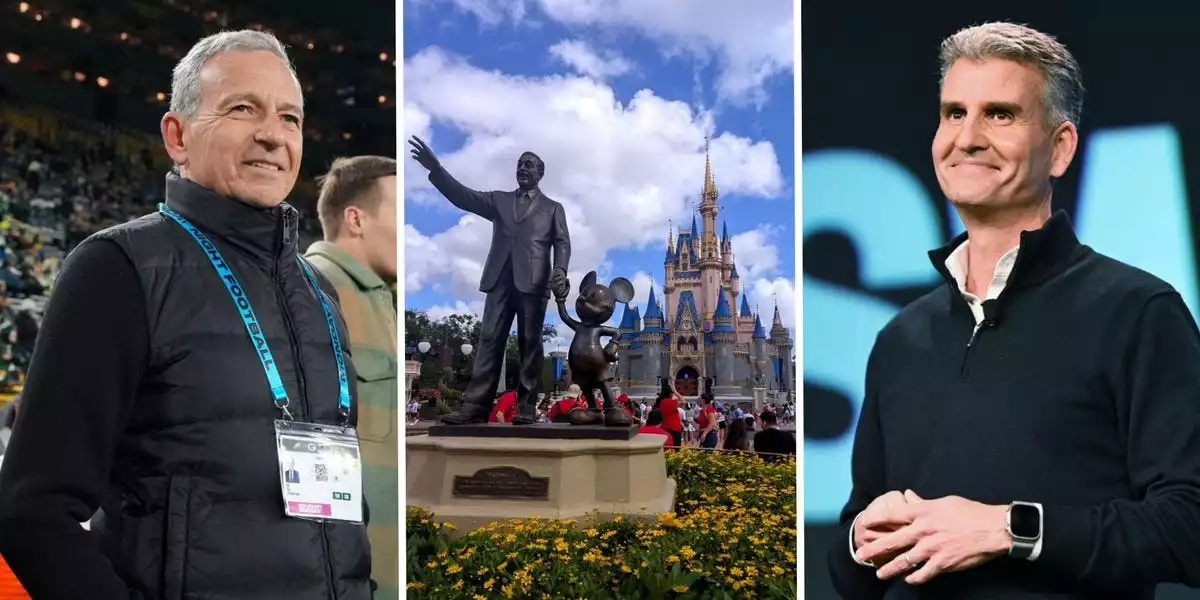

A New Chapter at Disney: Operational Mastery Meets Creative Stewardship
The Walt Disney Company, a global lodestar in entertainment, is once again at a strategic crossroads. The board’s unanimous decision to appoint Josh D’Amaro—current Chairman of Experiences—as Chief Executive Officer, with Dana Walden elevated to President & Chief Creative Officer, signals a deliberate recalibration of leadership priorities and corporate governance. This bifurcation, reminiscent of the Eisner–Wells era, is more than a nod to nostalgia; it is a calculated hedge against the pitfalls of creative disenfranchisement and operational drift that have haunted Disney’s recent history.
D’Amaro’s ascent is not merely a succession but a statement. In a landscape where streaming subscriber counts have lost their luster as the sole metric of success, Disney’s board is privileging operational acumen and capital discipline over pure creative pedigree. Walden’s creative stewardship, meanwhile, ensures that the company’s storytelling DNA remains intact, providing a vital counterweight to the metrics-driven ethos now steering the ship.
The Revenue Engine: Parks, Pricing, and the Paradox of Affinity
Disney’s “Experiences” division—encompassing theme parks, cruise lines, and consumer products—has emerged as the company’s financial backbone, generating nearly 80% of operating income in fiscal 2023. Dynamic pricing strategies, aggressive capital investment, and capacity management have transformed the parks into a yield-management laboratory, with revenue growth outpacing inflation and demonstrating remarkable price inelasticity at the premium end of the leisure market.
Yet, this very success harbors a latent risk: the erosion of brand affinity among the middle-income families that fuel Disney’s streaming ambitions. As ticket prices soar, the contradiction between park exclusivity and mass-market streaming becomes harder to reconcile. The challenge for D’Amaro and Walden is to harmonize these divergent audiences—preserving the parks’ aura of magic while ensuring Disney+ remains accessible and indispensable to a broad demographic.
AI, Personalization, and the Streaming Frontier
The company’s renewed emphasis on AI-enabled personalization, short-form video experimentation, and a high-profile collaboration with OpenAI marks a strategic pivot toward technology as a margin enhancer rather than a growth panacea. Disney’s AI ambitions are pragmatic and grounded:
- Personalized itinerary and queue management within parks, optimizing guest flow and experience.
- Algorithmic content curation for Disney+, Hulu, and ESPN+, driving engagement without ballooning content spend.
- Synthetic localization of intellectual property, opening new markets with minimal incremental cost.
These initiatives reflect a sober recognition that the global total addressable market for family streaming is flattening. The focus is shifting from subscriber acquisition to extracting more value per user—through personalization, cross-selling, and operational efficiency. For technology leaders and competitors, Disney’s approach is instructive: AI’s most immediate ROI lies in back-office automation and cost take-out, not in headline-grabbing consumer features.
ESPN’s Digital Migration and the High-Stakes Sports Gambit
Perhaps the most consequential move on the horizon is ESPN’s migration to a streaming-centric bundle. As live sports rights continue their relentless inflation—outpacing 10% CAGR—Disney’s strategy is to unbundle ESPN from the declining linear pay-TV ecosystem while preserving the premium CPMs that advertisers covet. The potential integration of sports-betting rails, echoing moves by DAZN and Amazon, could position ESPN+ as a Trojan horse for vertical integration between media rights and wagering data.
This is not without risk. Rights costs are escalating, and activist investors are watching Disney’s balance sheet with hawk-like vigilance. The company must walk a tightrope between funding ambitious park expansions, investing in technology, and maintaining financial discipline. Wall Street’s patience is finite: visible deleveraging and the resumption of dividends by fiscal 2026 are now non-negotiable expectations.
Navigating the Next Act: Lessons for the Industry
Disney’s latest pivot offers a blueprint for content-rich conglomerates navigating the digital transition:
- Operational sophistication and diversified cash engines now trump pure subscriber growth.
- AI deployment is shifting from consumer novelty to enterprise profit optimization.
- Live sports bundling and interactive betting represent the next competitive frontier—those who hesitate risk irrelevance.
- Leadership dyads—pairing operators with creative leads—may become the new standard for de-risking transformation in legacy media.
As D’Amaro steps into the CEO role, he inherits a company that is both financially resilient and strategically stretched. His legacy will hinge on the delicate synthesis of park-driven cash flow, AI-enabled efficiency, and sports-centric digital innovation. The stakes are high—not just for Disney, but for the entire ecosystem of entertainment, technology, and consumer experience. The coming years will reveal whether this new leadership architecture can conjure a growth narrative compelling enough to enchant both Wall Street and Main Street.


 By
By

 By
By
 By
By
 By
By

 By
By