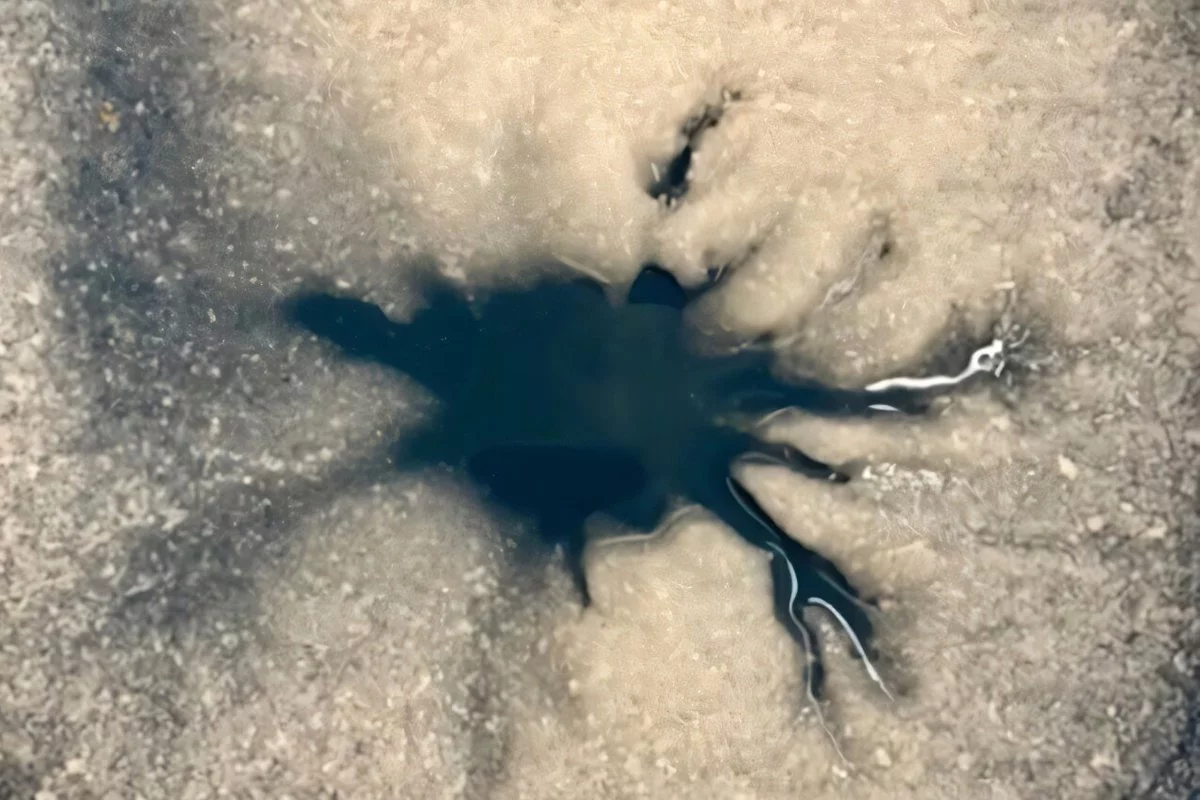

Europa’s Spider: A Fracture in the Ice, a Catalyst in the Space Economy
The icy surface of Jupiter’s moon Europa, long the subject of scientific intrigue, has yielded a new enigma: a one-kilometre, spider-shaped fracture system, christened “Damhán Alla” by Irish planetary scientists. This discovery, subtle in its geometry but seismic in implication, signals more than the restless tectonics of an alien world. It is a harbinger of active hydrology—subsurface brine surging upward, carving dendritic paths through ancient ice. For the planetary science community and the C-suites of the world’s advanced industries, Damhán Alla is a clarion call: the era of speculative astrobiology is giving way to actionable opportunity.
The Science Behind Damhán Alla: Patterns, Parallels, and the Promise of Water
Damhán Alla’s morphology, reminiscent of “lake-star” patterns observed on Earth’s frozen lakes, is not merely a curiosity for planetary geologists. The spider-like fractures are compelling evidence that liquid water—briny, pressurized, and dynamic—lurks just beneath Europa’s brittle shell. These patterns suggest that Europa’s suspected global ocean is not a static abyss, but a restless, interconnected reservoir with the potential for near-surface eruptions.
This revelation arrives at a pivotal moment. NASA’s €5 billion Europa Clipper, poised for launch, will soon sweep the moon with a suite of high-resolution imagers, spectrometers, and radar. The mission’s scientific return profile—already robust—now appears poised to expand, promising petabytes of data that could transform our understanding of planetary hydrology and, by extension, the conditions necessary for life beyond Earth.
Strategic Ripples: Technology, Capital, and the New Space Economy
The implications of Damhán Alla’s discovery extend far beyond the realm of planetary science. For business leaders and technology strategists, Europa’s fractured ice is a crucible of innovation, catalyzing advances across multiple vectors:
- Capital Formation and Investment: The intensifying scientific rationale for Europa missions is crowding in private capital, not just for flagship exploration but for ancillary technologies—radiation-hardened sensors, cryogenic drilling systems, and AI-driven navigation platforms. These investments, initially space-bound, have a well-documented history of spinning back into terrestrial markets, from LNG infrastructure to quantum computing hardware.
- Data as a Strategic Asset: Europa Clipper’s anticipated deluge of imaging and spectroscopic data—up to one petabyte—positions data-processing firms at the heart of a new asset class. Companies specializing in edge analytics, compression, and secure cross-agency data sharing are poised for multi-cycle revenue streams as planetary science becomes a proving ground for next-generation information infrastructure.
- Biomimetic and Materials Innovation: The spider-like fracture patterns offer a natural laboratory for modeling crack propagation and fluid migration—insights directly applicable to subsurface CO₂ sequestration and geothermal energy extraction on Earth. Meanwhile, the extreme cold of Europa’s surface is accelerating the development of electronics and materials capable of withstanding punishing environments, from polar telecom networks to quantum cryostats.
Policy, Geopolitics, and the Emergence of a Multipolar Space Order
The naming of Damhán Alla, with its Gaelic roots, is more than a nod to Ireland’s scientific prowess; it is a signal of the shifting dynamics in global space exploration. Smaller nations, through scientific discovery and nomenclature, are leveraging soft power and shaping the narrative of space as a domain of pluralistic collaboration. This pluralism is mirrored in the rise of pre-competitive R&D models, where alliances with nimble research institutions can accelerate high-risk, high-reward innovation while distributing geopolitical and financial risk.
At the regulatory level, the presence of near-surface water on Europa will necessitate stricter planetary protection protocols, raising mission costs but also setting new standards for sterilization and operational technology hardening. The high-bandwidth demands of Europa missions are likely to open regulatory windows for commercial relay providers, further blurring the lines between public and private sector space infrastructure.
The strategic echoes extend to resource policy: as the Artemis Accords frame lunar resource rights, early scientific footholds on Europa may presage future claims over extraterrestrial water—a commodity with profound implications for in-space propellant and life-support systems.
Leadership in the Age of Planetary Discovery
For forward-looking executives, Damhán Alla is not just a geological feature but a strategic waypoint. The questions now facing leadership teams are urgent and actionable:
- Are R&D budgets aligned with the sensor, materials, and AI subsystems that icy-moon missions will soon validate?
- How can partnerships with smaller research institutions accelerate IP development and mitigate geopolitical risk?
- Is the knowledge-transfer loop from space science to climate resilience technologies fully integrated into ESG narratives?
The identification of Damhán Alla marks a turning point, where the convergence of fundamental science, frontier technology, and capital markets is no longer theoretical. Europa’s spider is a signal: the space economy is maturing, and those who translate planetary discoveries into actionable strategies will define the pace and direction of the next technological era.

 By
By


 By
By
 By
By

 By
By
 By
By