

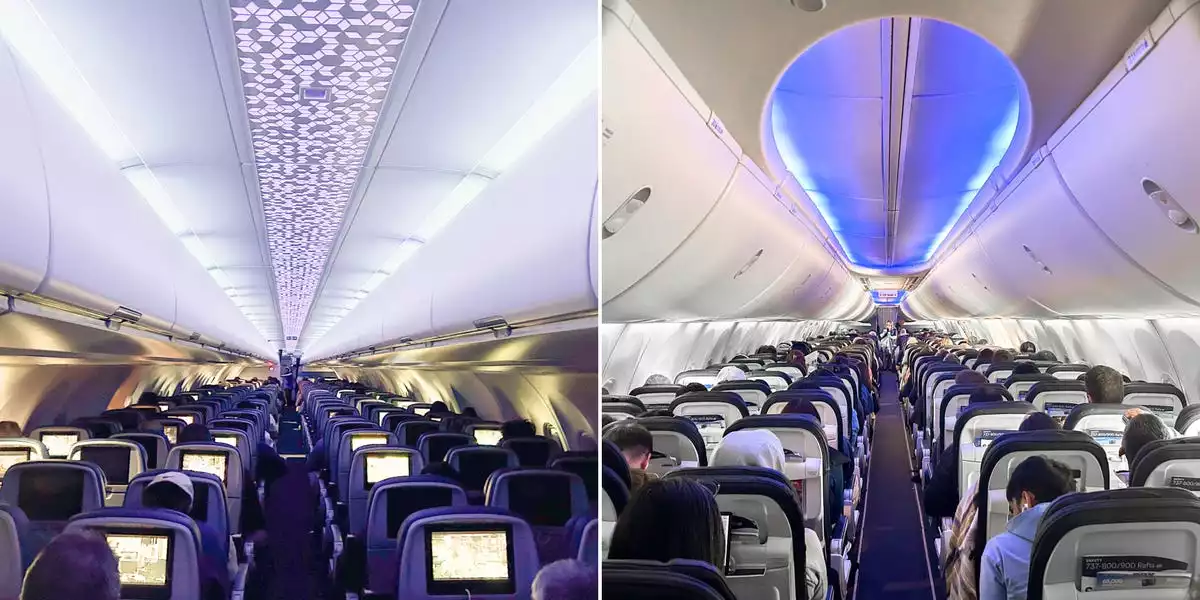

The New Shape of Basic Economy: Where Technology, Comfort, and Strategy Collide
In the theater of commercial aviation, the basic economy cabin has long been cast as the “cheap seats”—a defensive bulwark against the encroachment of ultra-low-cost carriers (ULCCs). Yet, a recent field comparison between Delta Air Lines and Alaska Airlines reveals a profound transformation underway. What was once a race to the bottom is morphing into a sophisticated contest of micro-segmentation, technological prowess, and nuanced customer experience. The stakes are nothing less than the future of airline profitability and brand equity in an era defined by inflation, digital disruption, and shifting consumer expectations.
Key Takeaways:
- Delta’s A321neo basic economy outperforms Alaska’s 737-900 in comfort, amenities, and perceived value—even at a lower fare.
- Technological investments, especially in seat-back entertainment, are redefining passenger engagement and data monetization.
- Cabin architecture and operational execution are emerging as critical differentiators in the most price-sensitive market segment.
Cabin Comfort and Digital Amenities: The New Battleground
Delta’s A321neo, with its wider fuselage and 18-inch seats, delivers a tangible comfort advantage over Alaska’s narrower 737-900. For passengers, that extra inch is not trivial—it’s the difference between tolerable and tedious on transcontinental hauls. But the sensory upgrade doesn’t stop at physical space.
Delta’s seat-back screens—once a luxury reserved for premium cabins—now serve as both an entertainment hub and a data-capture engine. These embedded systems are not merely about movies or maps; they are the front lines of a “parallel internet” strategy, funneling passengers into loyalty programs, curated retail experiences, and targeted advertising. In contrast, Alaska’s bring-your-own-device (BYOD) approach, while lighter on capital expenditure, cedes control of the digital canvas and limits first-party data collection—an increasingly costly trade-off as privacy regulations and cookie deprecation reshape the digital advertising landscape.
Accessibility and inclusivity are also coming to the fore. Seat-back screens offer ADA-compliant controls and future-proof airlines against the vagaries of passenger device batteries—a subtle but significant edge as regulators intensify scrutiny of in-flight accessibility standards.
Operational Execution and Revenue Architecture: Small Details, Big Impact
The comparison exposes how operational nuances cascade into both passenger experience and bottom-line performance. Alaska’s overhead-bin constraints, for instance, forced free gate-checks—a seemingly minor inconvenience that actually erodes ancillary revenue and extends turn times, with ripple effects on network reliability and profitability. Delta’s pivot-style Space Bins, by contrast, minimize friction and protect on-time performance, reinforcing the brand’s reputation for reliability.
Dynamic load balancing—enabled by machine learning-powered re-accommodation engines—allowed Delta to offer passengers the option of switching to less-filled flights, amplifying perceptions of generosity and flexibility. Such stealth service enhancements, delivered at negligible incremental cost, are fast becoming the new currency of customer loyalty.
Upsell architecture is another emerging lever. By making basic economy just comfortable enough, Delta subtly nudges passengers toward higher fare classes on future trips, boosting Customer Lifetime Value (CLV) without resorting to heavy-handed sales tactics. Airlines that lack these “stepping stones” risk binary churn, losing customers either to ULCCs or to more full-service competitors.
Strategic Implications: The Next Frontier for Airlines, OEMs, and Tech Providers
The Delta-Alaska contrast is more than a tale of two cabins; it is a microcosm of the strategic choices facing airlines, aircraft manufacturers, and technology providers.
- For airlines: The move toward comfort-lite, data-rich basic economy cabins offers a path to margin expansion without diluting premium segmentation. Seat-back IFE is re-emerging as a powerful platform for retail media networks, with potential joint ventures on the horizon involving streaming giants and ad-tech firms.
- For OEMs and suppliers: Airbus’s A321neo, with its comfort edge, is rewriting the upsell narrative. Boeing faces mounting pressure to enhance 737 cabin width or accelerate the launch of a New-Mid-Market Aircraft. Meanwhile, modular, lightweight seat-back displays with AR/VR integration represent a lucrative new addressable market.
- For technology providers: Real-time analytics—tracking overhead bin occupancy, predicting seat swaps—present high-ROI opportunities for computer vision and edge processing. Airline retail media networks will demand ad-tech stacks optimized for low-latency, airplane-localized environments, a niche ripe for specialized SaaS innovation.
Investors and policymakers should take note: as airlines double down on seat-level data capture, the share of non-ticket revenue could climb from today’s ~15% to the mid-20s by 2030. ESG and accessibility mandates may further tilt the scales toward hardware-rich cabins, promising energy efficiency and greater inclusivity.
The End of “Race to the Bottom”: Innovation as Strategic Dividend
The head-to-head between Delta and Alaska signals a decisive shift: basic economy is no longer a static, stripped-down product. It is a sandbox for innovation, where technology, fleet strategy, and customer experience converge to create new sources of margin resilience. As the commercial aviation cycle enters its next expansionary phase, those who treat the lowest fare class as a laboratory for differentiation—rather than a cost-containment afterthought—will secure an outsized strategic dividend. In this new era, the battle for the budget traveler is anything but basic.

 By
By
 By
By

 By
By
 By
By

 By
By
 By
By







