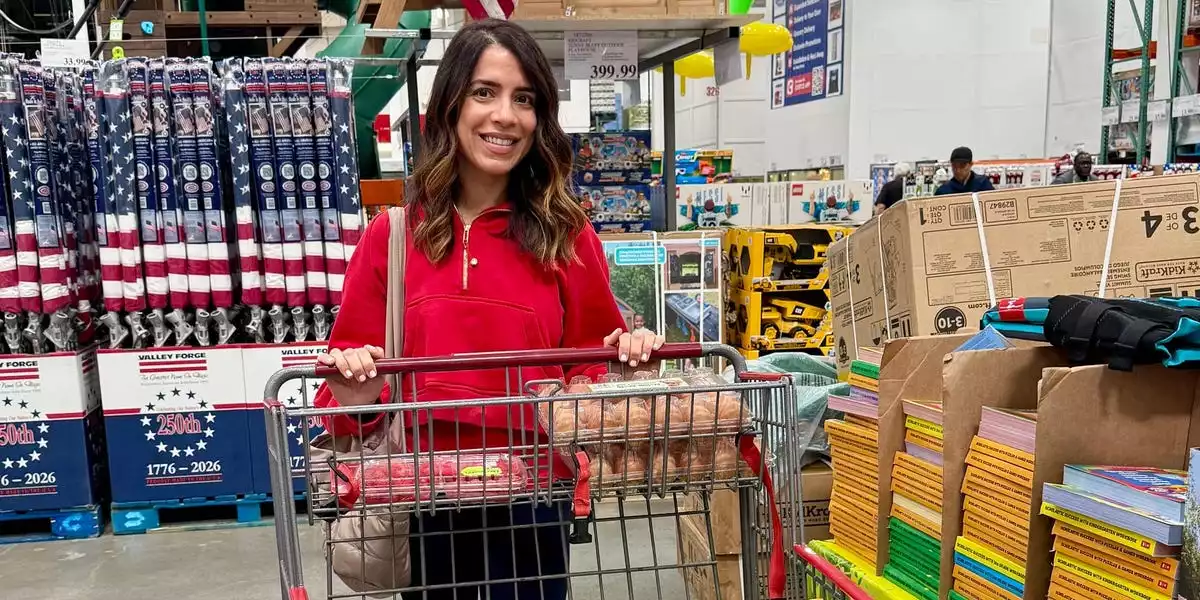

A budget-conscious nutrition playbook that mirrors the modern grocery economy
Samina Kalloo’s Costco cart reads like a practical manifesto for today’s inflation-era consumer: high-protein, fiber-forward staples purchased in bulk, optimized for versatility, and chosen with a clinician’s eye for nutritional density. As a registered dietitian and busy mother, her approach is not simply “buy more to save more.” It is a disciplined form of value engineering applied to food—balancing unit economics, time constraints, and health outcomes.
Her core items—organic ground turkey, Kirkland Signature eggs and nuts, Chobani Greek yogurt, One Degree Organic oats, and frozen fruits and vegetables—signal a broader shift in consumer behavior: households are increasingly treating grocery shopping as a strategic system rather than a routine errand. These products share three traits that matter in a high-cost environment:
- Meal flexibility: Each item can anchor multiple meals (breakfast bowls, smoothies, sheet-pan dinners, salads, snacks).
- Nutritional efficiency: Protein and fiber help sustain satiety, reducing reliance on more expensive convenience foods.
- Shelf-life resilience: Frozen produce and freezer-stored nuts reduce spoilage risk—an often-overlooked driver of “real” grocery inflation at home.
For retailers and consumer packaged goods (CPG) brands, this is a revealing snapshot of the new mainstream: shoppers are not abandoning wellness; they are demanding that wellness justify itself economically.
Costco’s bulk model as a real-world hedge against food inflation
Costco’s membership-based warehouse format has long been associated with scale and savings, but the current environment has sharpened its value proposition. When grocery prices rise, consumers tend to shift from brand experimentation to predictable, repeatable baskets—and Costco’s model is designed to reward exactly that behavior.
Kalloo’s choices illustrate how the warehouse equation works at the household level:
- Lower per-unit costs through larger pack sizes and high-volume turnover
- Reduced shopping frequency, which saves time and limits impulse purchases
- Waste mitigation via frozen and long-lasting staples, improving the effective cost per edible serving
From an industry perspective, this reflects a broader “value-optimization” trend: consumers are not necessarily trading down across the board; they are re-allocating spend toward items that deliver measurable utility—nutrition, convenience, and predictability.
This is also where Costco’s operational strengths become strategically visible. A bulk retailer can only win if it can move perishables at speed and maintain quality across thousands of SKUs. Costco’s ability to do so depends on a sophisticated cold chain and inventory discipline—capabilities that become more valuable as consumers prioritize fresh and frozen staples over shelf-stable processed foods.
Cold-chain scale, shrink reduction, and the quiet power of operational technology
Behind the simplicity of a bag of frozen berries or a multi-pack of yogurt sits a complex logistics machine. Costco’s advantage is not merely buying power; it is the ability to distribute refrigerated and frozen goods at scale while keeping unit costs low. That advantage compounds when shoppers, like Kalloo, build routines around cold-chain products that are both nutritious and time-saving.
Several operational dynamics stand out:
- Cold-chain resilience as a competitive moat: High-volume movement lowers distribution cost per unit, while real-time temperature monitoring reduces quality risk.
- Shrink control through shelf-life strategy: Frozen fruits and vegetables, nuts stored in freezers, and durable staples like oats reduce spoilage—benefiting both consumers and retailers.
- Assortment discipline driven by velocity: Membership retailers thrive on a tighter SKU set with high turnover, which improves forecasting accuracy and reduces inventory drag.
Technology is increasingly the connective tissue here. Retailers are investing in automated warehousing, IoT-enabled monitoring, and data-driven replenishment not as futuristic add-ons, but as practical tools to protect margins while meeting consumer expectations for freshness and availability. In this context, “healthy staples” are not just a wellness story—they are a supply chain story, too.
Private label strategy and the next phase of AI-enabled grocery loyalty
Kirkland Signature’s presence in Kalloo’s basket is more than a brand preference; it is a signal of how private label has evolved. Today’s private label is not solely about cheaper alternatives—it is increasingly about quality parity, trust, and margin control. Organic eggs, nuts, and frozen vegetables under a retailer-owned brand demonstrate how Costco can capture more value while reinforcing the perception of consistent standards.
At the same time, Costco’s hybrid approach—mixing Kirkland with third-party partners such as Plainville Farms, One Degree, and established national brands like Chobani—suggests a pragmatic strategy: maintain variety and category expertise while keeping the economics of the basket favorable.
Looking forward, the most consequential opportunity may be how membership retailers translate purchasing patterns into smarter personalization—without undermining the simplicity that defines the warehouse experience. The building blocks are already present:
- Member-purchase data that identifies repeatable “staple baskets”
- Expanding e-commerce and click-to-ship options for time-pressed households
- Potential for AI-driven recommendations that nudge shoppers toward high-retention, high-satisfaction bundles (protein + produce + breakfast foundations)
For business and technology leaders, the deeper takeaway is that grocery’s next wave of innovation is not limited to flashy interfaces. It is rooted in the convergence of membership economics, private-label sophistication, and operational technology—all aligned to serve a consumer who wants health, value, and convenience in the same cart. Costco’s model, reflected through Kalloo’s disciplined shopping list, shows how that convergence can be executed at scale—and why it is likely to shape competitive strategy across food retail for years to come.


 By
By

 By
By
 By
By

 By
By
 By
By