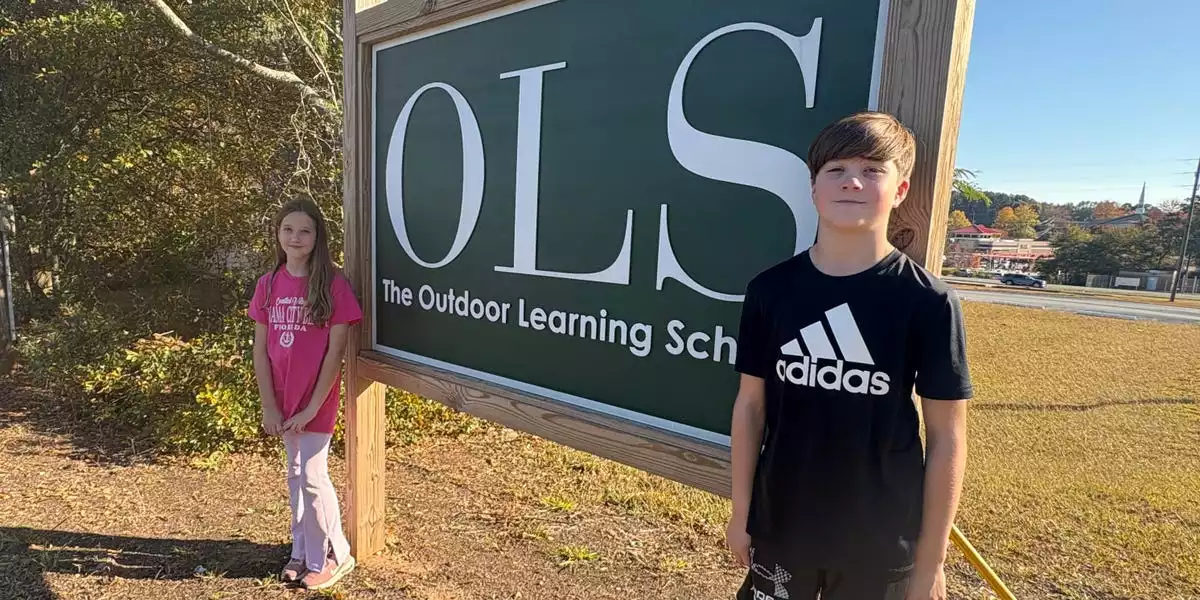

The Micro-School Movement: From Pandemic Patchwork to Permanent Fixture
When the Hills family withdrew from their local public school and enrolled their children in an outdoor micro-school, they were not simply reacting to pandemic-era anxieties. Their journey—culminating in a return to the traditional classroom—mirrors a seismic shift in the American K-12 landscape, one that is redrawing the boundaries between public, private, and alternative education. What began as an emergency workaround is fast becoming a durable market segment, reshaping everything from classroom pedagogy to district funding models.
Personalized Learning as the New Consumer Standard
At the heart of this transformation is a profound change in parental expectations. Families like the Hills are no longer passive recipients of district offerings; they are active consumers, benchmarking educational options with the discernment once reserved for healthcare or financial products. The rise of micro-schools and learning pods—many of which saw waitlists triple between 2020 and 2022—reflects a mounting demand for:
- Highly personalized, experience-rich education
- Reduced class sizes and greater student autonomy
- Curricula that emphasize creativity, resilience, and collaborative problem-solving
This consumerization of K-12 education is not merely a matter of preference. It is a response to perceived gaps in traditional schools: rigid structures, large class sizes, and an overreliance on digital instruction. The micro-school model, with its project-based outdoor learning and deliberate reduction in screen time, offers a compelling counter-narrative—one that resonates with both parents and employers seeking future-ready skills.
The Paradox of Low-Tech Learning in a High-Tech World
Yet, beneath the surface of these “low-tech” havens lies a sophisticated technological backbone. Micro-schools, while championing analog experiences, are quietly adopting enterprise-grade SaaS platforms for everything from scheduling to compliance. This duality is reshaping the ed-tech market:
- Lightweight LMS and mobile communication tools are prioritized over full-stack virtual instruction, enabling seamless parent-school interaction and skill-badge documentation.
- AI-enabled assessment tools unobtrusively track competency acquisition, providing actionable data without increasing screen time.
- IoT solutions—wearables and geofencing— ensure safety and regulatory compliance, particularly in outdoor and mobile learning environments.
This paradox—nature-based pedagogy supported by digital infrastructure—creates fertile ground for innovation. Ed-tech providers are now optimizing modular stacks for micro-schools serving fewer than 100 students, a segment once overlooked by legacy vendors.
Systemic Ripples: District Economics, Policy Shifts, and Corporate Interest
The micro-school surge is not without consequence for traditional districts. Even modest enrollment declines—3-5%—can destabilize district finances, as costs remain largely fixed. The Hills’ temporary exit, extrapolated across communities, intensifies per-pupil funding pressures and may hasten school consolidations or service reductions. This dynamic is opening white space for public-private partnerships and hybrid campus models, where districts leverage outdoor satellite sites and flexible scheduling to reclaim lost ground.
Policy is also evolving. States like Arizona and Florida are expanding Education Savings Accounts (ESAs), channeling public funds directly to families and lowering barriers to micro-school adoption. Meanwhile, teacher burnout and labor shortages are making alternative work environments more attractive, even as they offer lower salaries but greater mission alignment.
Corporations, too, are taking note. Outdoor, project-based curricula map closely to competencies prized in the modern workforce—leadership, adaptability, and creative problem-solving. Sponsorship of micro-schools or in-house educational programs is emerging as a novel employee benefit, particularly for distributed or rural teams. This echoes the rise of on-site childcare as a talent retention strategy in previous decades.
Uncharted Territory: Sustainability, Resilience, and the Future of Learning
The micro-school movement is intersecting with broader societal trends in unexpected ways:
- ESG and sustainability narratives: Outdoor learning dovetails with corporate environmental agendas, creating new sponsorship and co-branding opportunities.
- Climate resilience: Mobile and multi-site micro-schools offer a hedge against infrastructure disruptions, suggesting new insurance products and risk management strategies.
- Digital detox as a premium feature: In an era of screen fatigue, intentional unplugging is becoming a marketable differentiator, spawning ancillary markets for analog educational materials and experiential curriculum design.
As micro-schools evolve, expect a bifurcation between venture-backed networks scaling via franchising and boutique programs forming federations to pool resources. State-mandated data interoperability will likely follow, catalyzing standards bodies and API ecosystems reminiscent of the electronic health record revolution.
The Hills’ experience, far from an isolated anecdote, signals a structural realignment in education. Modality, location, and technology are now fluid variables, not fixed constraints. For innovators across the business and technology value chain, the micro-school phenomenon is both a challenge to incumbents and a canvas for new opportunity—one that Fabled Sky Research and its peers are watching with keen interest. The future of learning, it seems, will be as diverse and dynamic as the families who demand it.

 By
By
 By
By
 By
By
 By
By



 By
By