
China’s Autonomous Delivery Vans: Urban Robotics at Scale and the Friction of Reality
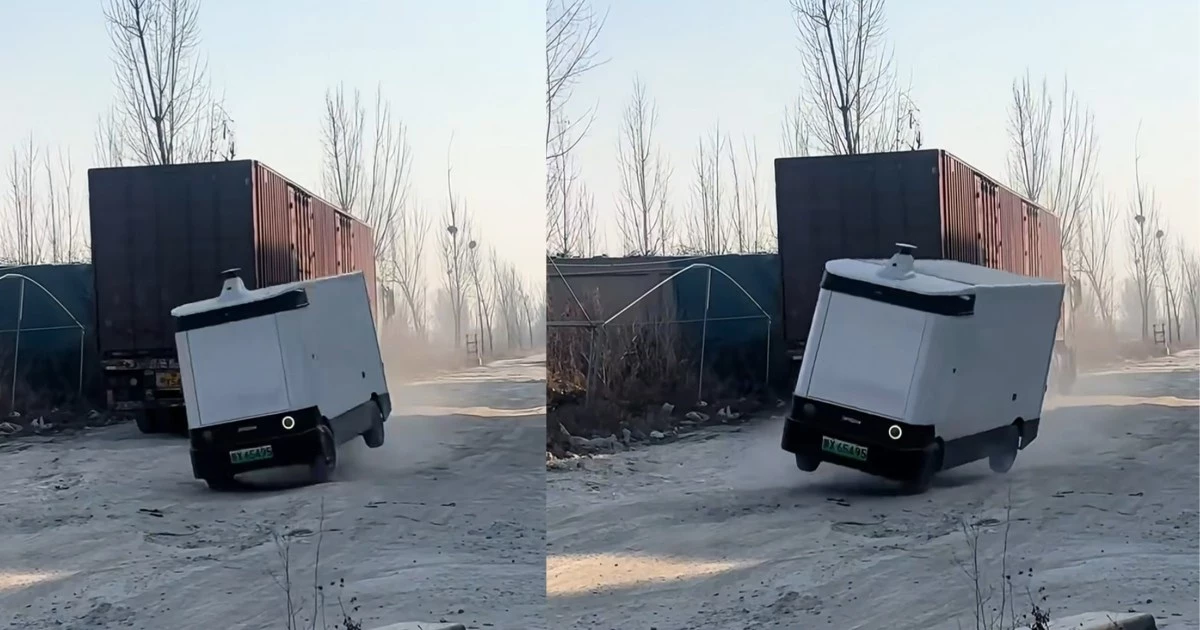
On the bustling arteries of more than 300 Chinese cities, a new kind of urban choreography is unfolding. Battery-electric delivery vans, led by Neolix’s X3 platform, have quietly transitioned from novelty pilots to mass deployment, logging an astonishing 31 million miles. These robovans—sometimes seen on viral videos stuck in gravel, bemused by corn cobs, or entangled in drying vegetables—embody both China’s technological ambition and the stubborn friction of real-world complexity. The spectacle is not merely one of technological prowess, but of a society stress-testing the very boundaries of urban automation.
The Anatomy of Scaling: Data, Design, and Infrastructure
Autonomous vehicles, for all their algorithmic sophistication, are only as robust as the environments they navigate and the hardware they inhabit. The Neolix fleet’s edge-case failures—vehicles immobilized by construction debris or thrown off by wet cement—underscore the fragility of perception stacks in semi-structured urban terrain. Here, the physical world is not a controlled test track but a living, unpredictable organism. The marriage of heavy lithium-iron-phosphate batteries and light-duty suspensions, for example, introduces vibration artifacts that can degrade sensor calibration and object detection, revealing that mechanical design is as critical as the AI codebase itself.
Yet, it is precisely this relentless exposure to chaos that fuels China’s data flywheel. With over 10,000 units deployed, each equipped for continuous over-the-air updates, Neolix and its peers are amassing a trove of rare, real-world data—corner cases that Western rivals, hamstrung by regulatory inertia, can only dream of. This scale accelerates transfer learning and model retraining, compressing innovation cycles from years to mere weeks. Meanwhile, these fleets are quietly stress-testing the nation’s 5G and edge-compute infrastructure, catalyzing the development of sovereign AI chipsets and vertically integrated hardware-software stacks. In the shadow of global supply chain tensions, this push for technological self-reliance is as much about resilience as it is about progress.
Economic Signals: Labor, Monetization, and the Cost of Error
The business case for autonomous delivery in China is as much demographic as it is technological. With a shrinking working-age population and courier wages up 24% since 2019, the economics of automation are compelling. Break-even calculations suggest a four-to-five-year payback—provided that each van is utilized for more than 16 hours per day. This imperative is driving the rise of multi-tenant routing platforms, maximizing asset productivity in a market where every hour counts.
But the calculus is not without risk. Today’s viral mishaps are fodder for amusement, but a single major incident could upend public trust and invite regulatory backlash. Insurance carriers, sensing the stakes, are experimenting with usage-based premiums tied to real-time risk scoring—a harbinger of the new risk models that will define the sector.
Meanwhile, the robovans themselves are evolving into platforms for ancillary revenue. Idle vehicle surfaces are being transformed into digital out-of-home advertising screens, converting logistical capex into media assets. The data exhaust—high-definition maps, traffic flows, environmental sensing—offers further licensing opportunities for urban planners and property developers. In this ecosystem, autonomy is not merely a cost-out tactic, but a springboard for new business models.
Policy, Global Influence, and the Unanswered Questions
China’s regulatory architecture—structured as a tiered permit system—provides a predictable scaling ladder for urban robotics, a stark contrast to the patchwork approaches seen in most OECD markets. This regulatory clarity, aligned with national priorities like dual-carbon goals and “New Infrastructure” stimulus, ensures both policy tailwinds and preferential financing. The result is a competitive moat: domestic firms can validate at scale, shaping the standards that may one day govern international markets.
Yet, unresolved questions persist. Urban infrastructure—riddled with informal curbside usage and construction variability—remains a stubborn constraint, one that software alone cannot overcome. The mass collection of urban sensor data raises cybersecurity and data sovereignty concerns, especially as fleets begin to cross borders. Standards fragmentation looms, threatening to inflate costs for multinational platforms as local regulations diverge.
Looking forward, the landscape is primed for consolidation. Sensor suppliers and high-definition mapping firms are likely targets as capital intensity rises. The robovan chassis itself is evolving, morphing from delivery van to mobile retail platform, threatening the economics of traditional storefronts. For Western retailers and parcel carriers, China’s 31 million real-world miles now set a new performance baseline—anything less will appear technologically conservative to investors and consumers alike.
The robovan surge in China is more than a technological spectacle; it is a living laboratory where the promise of autonomy collides with the grit of urban life. Those who can extract and act on these lessons today will not merely keep pace—they will define the next era of urban logistics.

 By
By
 By
By
 By
By

 By
By


 By
By