
Canva’s “Creative Operating System”: A New Blueprint for AI-Driven Marketing
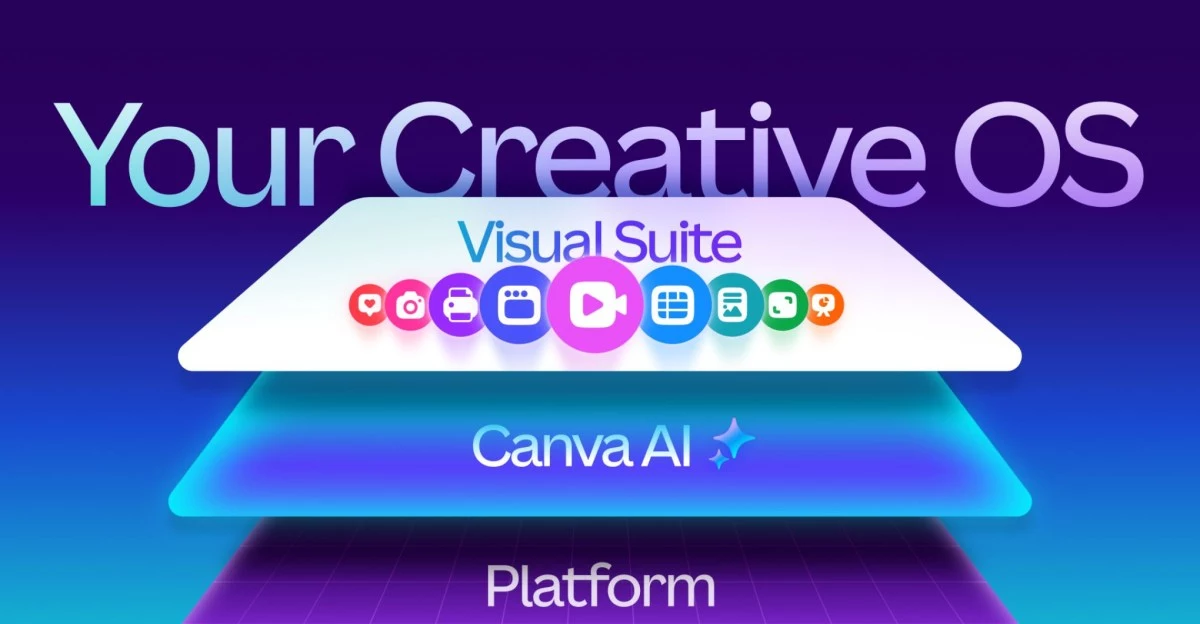
Canva’s latest unveiling—a sweeping overhaul of its Visual Suite—marks a pivotal moment in the evolution of marketing technology. By reimagining its platform as a “Creative Operating System,” Canva is not simply adding features, but fundamentally redefining the boundaries between design, campaign management, and analytics. This move is more than a product refresh; it is a strategic gambit aimed at capturing the increasingly fluid intersection of creativity and data-driven execution.
Specialist AI: The Rise of Verticalized Intelligence in Design
At the heart of Canva’s reinvention lies a domain-specific, in-house AI foundation model. Unlike the broad, internet-trained large language models that have dominated headlines, Canva’s model is steeped in the nuances of design: layout composition, color theory, and the ever-elusive art of brand compliance. This verticalized approach is a direct response to the limitations of generic AI, which often falter when confronted with the subtleties of real-world creative work.
- Design-trained AI: By ingesting millions of branded templates and campaign assets, Canva’s model learns not just what is possible, but what is effective—a distinction that is quickly becoming the new battleground in AI-driven productivity.
- Reinforcement learning in action: The integration of Canva Grow, an end-to-end campaign builder, creates a feedback loop where campaign performance data is fed back into the creative process. Every impression served becomes a data point, tightening Canva’s proprietary “data moat” and ensuring that its AI recommendations grow more precise with time.
This specialist AI, fueled by a continuous stream of user-supplied, permissioned data, forms a defensible moat that generic competitors will find difficult to breach. The operational scale—millions of branded assets in constant circulation—gives Canva a unique edge in the escalating vertical AI arms race.
The Unified Stack: Consolidation, Integration, and the New MarTech Playbook
Canva’s suite now encompasses a simplified video editor, a no-code email design tool, integrated forms and sheets, and a campaign builder—all bundled under a single premium subscription. This consolidation is not merely a convenience play; it is a direct challenge to the fragmented toolchains that have long dominated the marketing stack.
- Integration as differentiation: Each new module inherits persistent style guides and asset libraries, ensuring brand governance is enforced across every channel without manual intervention.
- Bundled economics: By locking the full stack behind one subscription, Canva raises switching costs and reduces churn, but also risks alienating customers who might prefer à-la-carte flexibility. The tension between bundle value and subscription elasticity will be a key dynamic to watch, particularly as economic scrutiny of SaaS pricing intensifies.
For small and mid-market brands—those most acutely feeling the pain of rising customer acquisition costs and tool fragmentation—Canva’s value proposition is clear: a unified, AI-augmented platform that promises both cost savings and operational agility.
Strategic Ripples: Data, Competition, and the Future of Marketing Infrastructure
Canva’s ambitions extend beyond creative tooling. By absorbing campaign telemetry and user behavior, the platform edges toward the territory of lightweight customer data platforms (CDPs), raising the stakes for incumbents like HubSpot, Braze, and Iterable. The transformation from point solution to marketing infrastructure is not just rhetorical; it is a bid for strategic relevance in IT portfolios and a justification for suite-level pricing.
- Data as the new creative asset: Every campaign run through Canva becomes a living experiment, informing not just future creative output but also the evolution of the underlying AI model.
- Competitive encroachment: The suite’s breadth now puts Canva in direct competition with stalwarts across video editing, email marketing, spreadsheets, and ad orchestration—undercutting integration friction and threatening to displace legacy workflows.
- M&A on the horizon: The logic of consolidation suggests a coming wave of mergers and acquisitions, as both incumbents and upstarts seek to shore up their positions in an increasingly integrated landscape.
For decision-makers, the implications are profound. CIOs and CMOs must now weigh the total cost of ownership for a Canva-centric stack against the functional depth of traditional point solutions. Data governance will become paramount, as enterprises scrutinize how their creative assets and campaign data are used to train third-party AI models.
The democratization of multimedia campaign execution—enabling non-designers to operate at a professional level—signals a shift in both talent strategy and agency relationships. Budgets will migrate from external creative agencies to in-house, AI-augmented teams, reshaping the very structure of marketing organizations.
As the boundaries between content creation, campaign execution, and analytics dissolve, Canva’s “Creative Operating System” stands as both a tactical opportunity and a harbinger of a new era. The next 12 to 24 months will reveal whether this verticalized, feedback-rich approach becomes the new standard—or simply the opening salvo in a broader transformation of the software landscape.

 By
By
 By
By
 By
By


 By
By
 By
By
 By
By