


A Q2 scoreboard that signals a deeper reset in U.S. fast food
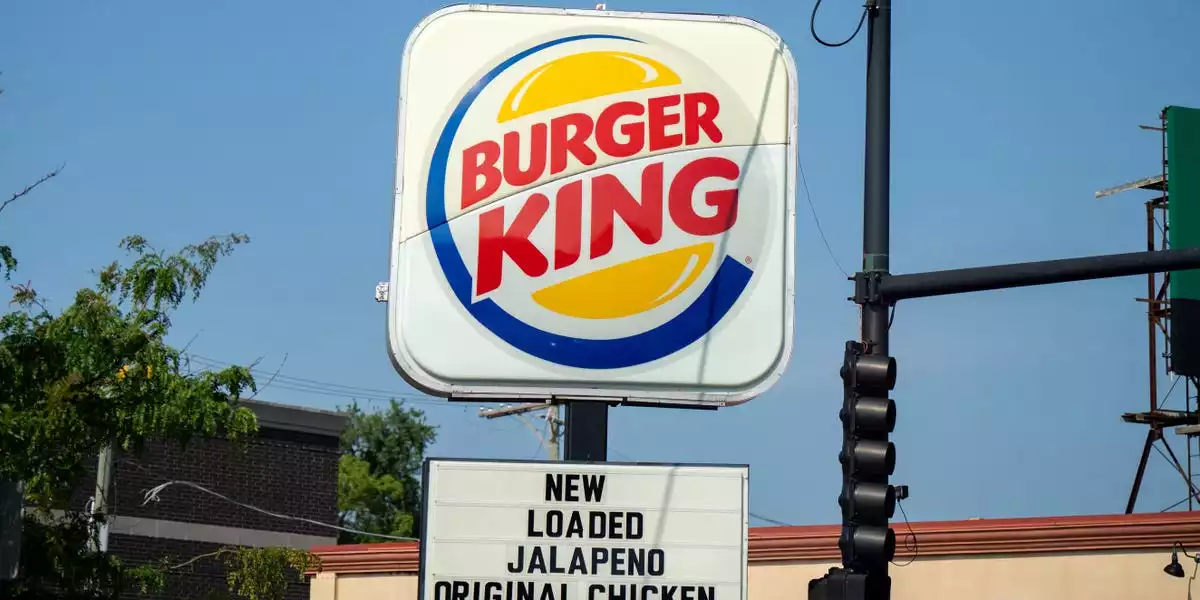
Burger King’s 8.5% U.S. same-store sales growth in Q2 is more than a quarterly win; it is a data point that captures how quickly the quick-service restaurant (QSR) landscape is being re-ranked. In the same period, McDonald’s posted 0.8% and Wendy’s declined –7%, underscoring that the category’s traditional leaders are no longer insulated by scale, legacy value platforms, or habitual traffic.
What makes Burger King’s outperformance especially notable is that it arrives amid a consumer environment that is not merely “price sensitive,” but value re-literate. After sustained inflation—particularly in everyday food categories—customers are recalibrating what they consider a fair exchange. The old logic of the dollar menu era (cheap, discrete items) is giving way to a more holistic judgment: portion, satisfaction, consistency, convenience, and perceived quality per dollar.
This is the context in which Burger King’s recent moves—marketing, product engineering, and operational focus—should be read. The chain is not simply discounting its way to traffic; it is attempting to redefine what “worth it” feels like at the counter, in the drive-thru, and on delivery apps.
Inflation changed “value” from a price tag into a unit-economics decision
Inflationary pressures—paired with higher menu prices across the industry—have altered consumer behavior in ways that are now visible in competitive share shifts. With food-at-home inflation running at elevated levels (roughly ~10% year-over-year in the cited backdrop), households are applying a more analytical lens to eating out. The question is less “What’s cheapest?” and more:
- What delivers the most satisfaction for the spend?
- What feels reliably good, not just acceptable?
- What reduces friction—time, travel, ordering complexity?
That shift helps explain why QSRs are increasingly competing with players that used to sit outside the category’s threat model. Convenience stores and gas stations, for example, have been upgrading food programs with better cold-chain logistics, fresher assembly, and tighter SKU discipline. Their advantage is structural: many already own the trip mission (fuel, snacks, commuting), and food becomes an incremental attachment sale supported by leaner, faster supply chains.
At the same time, consumers are also rediscovering casual dining—not as a special occasion, but as a value arbitrage. When a sit-down meal can match or undercut a fast-food check, the QSR proposition must be defended with something beyond speed. In practical terms, inflation has turned the market into a contest of unit economics and experience design, not just promotional cadence.
When Chili’s sells a “Quarter Pounder,” category boundaries stop mattering
One of the most consequential developments is segment convergence: casual-dining operators are borrowing QSR playbooks—streamlined menus, faster ticket times, and simplified kitchen execution—while using their dining-room footprint as an experiential differentiator. The reported example of Chili’s replicating signature fast-food items at comparable price points is emblematic of a broader trend: the product itself is no longer a protected moat.
As the lines blur, competitive advantage shifts toward operational adaptability:
- Modular kitchens and flexible prep flows that can support multiple menu architectures
- Cross-trained labor models that reduce bottlenecks and improve throughput
- Localized pricing and promotion that reflect neighborhood-level competition, not national averages
- Menu engineering that protects margin while sustaining perceived value (bundles, add-ons, limited-time offers)
For QSR incumbents, this convergence raises a strategic risk: if speed is matched by convenience-store food and price is matched by casual dining, then differentiation must come from brand relevance, product integrity, and a frictionless omnichannel journey.
Burger King’s play: radical transparency marketing plus “invisible” product engineering
Burger King’s response has been notable for its dual focus: cultural relevance and customer experience mechanics. The Oscar’s campaign—characterized as self-aware and self-deprecating—fits a growing pattern in modern brand strategy: radical transparency branding, where humor and humility are used to rebuild trust and attention in a fragmented media environment. For a legacy chain, this approach can function as a reset button, signaling that the brand understands the consumer’s skepticism and is willing to meet it head-on.
Yet the more durable lever may be product and experience redesign—particularly the revamped Whopper, which early indicators suggest delivered a 20% sales bump. Importantly, the redesign is not framed as a radical reinvention; it is closer to experiential engineering—small, targeted improvements that protect food quality from the moment it leaves the kitchen to the moment it is eaten.
The Whopper’s new containment sleeve illustrates a broader business and technology lesson: packaging is product. Across industries, companies are increasingly using materials science and human factors thinking to create “invisible” upgrades—temperature retention, structural stability, reduced mess—that translate directly into satisfaction, repeat purchase, and better delivery performance.
Underpinning both marketing and product changes is a modern analytics stack: real-time campaign measurement, social sentiment monitoring, and increasingly dynamic promotion logic. In a market where “value” is situational and local, the winners are likely to be those that can sense demand shifts quickly and respond with precision, rather than relying on blunt national promotions.
Burger King’s Q2 surge does not settle the fast-food value debate—it intensifies it. The more the market converges, the more advantage accrues to brands that can combine cultural agility, operational flexibility, and engineered consistency, turning the everyday meal into a decision that feels rational, satisfying, and easy to repeat.


 By
By

 By
By
 By
By

 By
By
 By
By







