

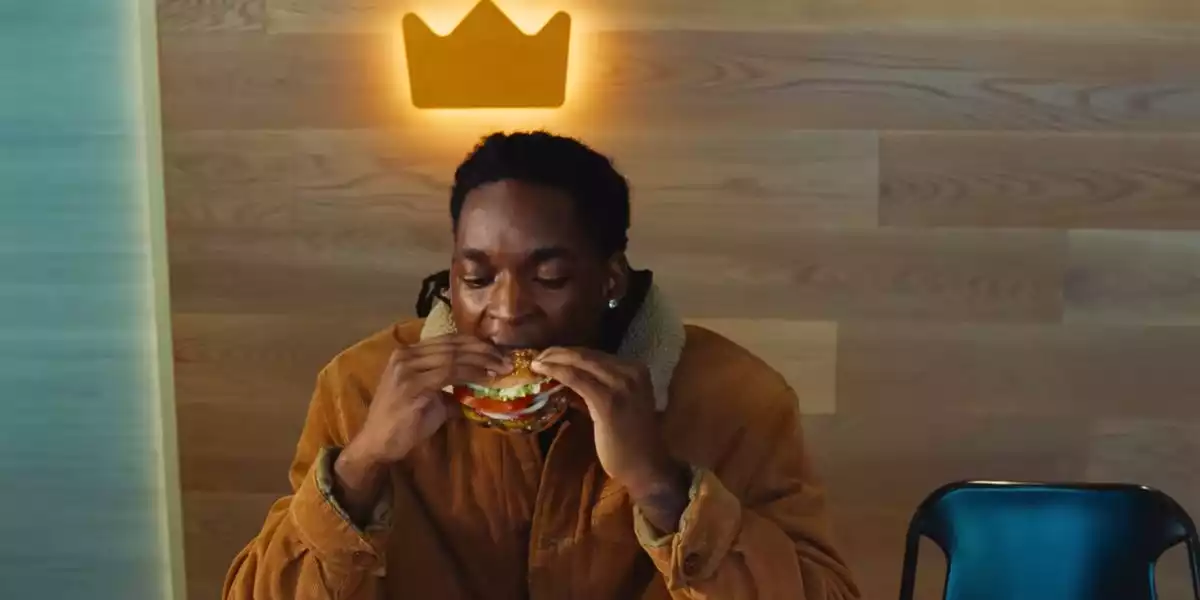

A prime-time brand reset: Burger King turns the Oscars into a credibility test
Burger King’s decision to stage a major brand statement during the 2026 Academy Awards signals more than a splashy media buy—it reads as a deliberate attempt to convert cultural attention into operational permission. The 90-second spot, “There’s a New King, and It’s You,” paired with host-read mentions, positions the company’s four-year “Reclaim the Flame” strategy as a public-facing turnaround narrative rather than an internal modernization plan.
What makes the campaign notable is its willingness to name past shortcomings—service inconsistency and packaging issues—while simultaneously announcing symbolic and tangible change, including the retirement of the King mascot and a pledge to upgrade both restaurants and the core Whopper product. In a category where marketing often glosses over execution gaps, Burger King is effectively telling consumers: *we heard you, we agree, and we’re rebuilding.*
The Oscars platform—approaching 20 million viewers—also reflects a calculated bet on mass reach at a time when quick-service restaurant (QSR) marketing is increasingly fragmented across connected TV, short-form video, and loyalty-app ecosystems. Burger King is using a legacy broadcast moment to reassert relevance, but the real question is whether the message can translate into repeatable, store-level improvements across a franchise-heavy footprint.
—
The hotline as product management: turning customer frustration into an operating system
The campaign’s most strategically modern element may be its simplest: a direct customer feedback hotline, framed not as a token gesture but as a core mechanism of change—personally handled by Tom Curtis, President of Burger King US & Canada, who has reportedly fielded tens of thousands of messages. In technology terms, Burger King is attempting to build a real-time feedback loop akin to agile development: ship improvements, listen, iterate, and ship again.
If institutionalized, this approach can evolve from a publicity hook into a durable competitive asset:
- Faster diagnosis of service failures (e.g., chronic drive-thru delays, order accuracy issues, staffing bottlenecks) using high-volume qualitative data
- Localized operational fixes by identifying patterns tied to specific regions, franchise groups, or dayparts
- Menu and packaging iteration informed by real customer language, not just survey abstractions
- Brand trust rebuilding through visible responsiveness—especially important after publicly acknowledging missteps
The risk is scalability. A hotline handled by a senior executive is powerful symbolism, but it is not a long-term system unless Burger King translates it into an omnichannel insights engine—integrating voice, app feedback, social listening, and customer care—supported by NLP-driven triage and sentiment analysis. Without that infrastructure, the initiative could stall under its own volume, turning a transparency play into a responsiveness liability.
—
Capex, IoT, and the “new Whopper”: modernization as a margin strategy, not just a facelift
Burger King’s operational commitments are substantial. Since 2022, the company has allocated $400 million toward modernizing kitchen equipment and dining environments, with plans to lift total capital expenditures to $700 million by 2028. This is not merely aesthetic refurbishment; it is a bid to improve the economics of consistency—speed, quality, uptime, and waste reduction.
Modern QSR performance increasingly depends on instrumentation and data. Upgraded fryers, grills, and POS systems can become the foundation for IoT-enabled monitoring, unlocking:
- Predictive maintenance to reduce downtime and stabilize throughput
- Temperature and hold-time compliance to improve food quality consistency
- Waste and energy analytics to lower costs amid input-price volatility
- Store-level demand forecasting to optimize prep cycles and labor allocation
This matters because Burger King is simultaneously leaning into premiumization—repositioning the Whopper as a higher-value, upgraded flagship. Premiumization can lift average check, but it also raises expectations: consumers will pay more only if the product arrives hot, intact, and consistent. That brings packaging back into focus. By publicly acknowledging packaging failures, Burger King is implicitly recognizing an industry-wide tension: packaging must protect product integrity while meeting ESG and regulatory pressures around single-use materials. Next-generation packaging is no longer a design detail; it is a quality system and a sustainability signal.
The economic constraint is clear. Wage inflation, commodity swings, and competitive discounting mean margin expansion will depend on supply-chain discipline (forward-priced inputs, logistics optimization, distribution efficiency) and on whether modernization investments deliver measurable ROI in throughput and repeat visits—not just brand lift.
—
Competitive pressure and narrative durability: self-deprecation works—until it doesn’t
Early indicators suggest Burger King’s self-aware tone is resonating, in part because it breaks from the category’s usual certainty. Yet marketing experts are right to warn about fatigue risk. Self-deprecation is a high-impact tool, but it is not a long-term identity unless it evolves into a broader narrative of progress.
The competitive backdrop is unforgiving. Burger King is contending with rivals that have moved faster on:
- Plant-based and health-forward menu options aligned with shifting preferences around quality and wellness
- Loyalty-driven mobile ordering that locks in frequency and personalization
- Drive-thru automation and digital operations that improve speed and consistency
Retiring the King mascot and admitting past failures are bold moves, but they also underline urgency: Burger King is not simply refreshing creative—it is attempting to reset consumer trust while operating within a franchise model where execution can vary widely. That variability is where brand promises go to die.
For “Reclaim the Flame” to become more than a moment, Burger King will need to connect its high-profile contrition to visible proof points: remodeled stores that feel meaningfully better, a Whopper that tastes demonstrably upgraded, packaging that performs, and digital experiences that match modern expectations. The Oscars may have delivered attention; the next phase will be judged in the drive-thru line, on the receipt, and in whether customers feel the brand’s new “king” status is earned rather than declared.

 By
By

 By
By
 By
By
 By
By


 By
By







