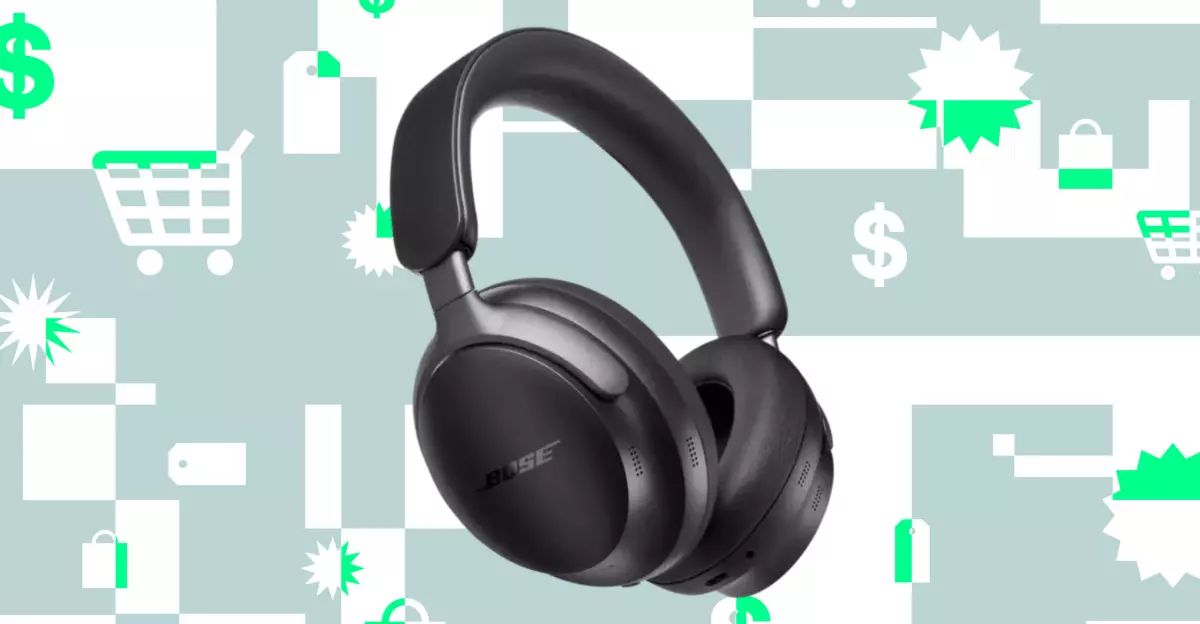

The Refurbished Renaissance: Bose’s Calculated Bet on Circular Audio
Bose’s latest Prime Day maneuver—a striking 25% “SUMMER25” discount stacked atop existing deals for certified-refurbished QuietComfort Ultra Headphones and Earbuds—signals more than a fleeting promotional flourish. It is a meticulously orchestrated move, emblematic of a broader recalibration in the premium personal audio market, where the refurbished channel is no longer an afterthought but a strategic front line.
Shifting Market Currents: From Feature Wars to Channel Innovation
The $15 billion global personal audio market, once defined by relentless innovation in form and function, is now shaped by more subtle forces. As inflation-adjusted disposable income stagnates across North America and Europe, the locus of competition has shifted. Brands like Apple, Sony, Samsung, and Bose—commanding over two-thirds of the market—are increasingly reliant on feature refreshes rather than radical hardware leaps. Spatial audio and adaptive noise cancellation, once headline-grabbing differentiators, have become mere prerequisites for relevance.
Against this backdrop, the certified-refurbished channel has emerged from the shadows. No longer relegated to the digital clearance bin, refurbished offerings now occupy prime real estate on brand websites and e-commerce giants alike. This mainstreaming is not accidental. Consumer attitudes have evolved: “like-new” is no longer a euphemism for compromise, especially when underpinned by robust OEM warranties and the allure of flagship features at unprecedented prices.
Technological Stakes: The New Table Stakes in Audio
Bose’s repositioning of its QuietComfort line—anchored by the Ultra series—underscores a pivotal arms race in acoustic technology. The brand’s signature microphone array-based active noise cancellation (ANC) remains a core competency, but the integration of spatial audio upmixing is a direct counter to Apple’s head-tracked spatialization narrative. As streaming platforms normalize Dolby Atmos and MPEG-H mastering, the ability to virtualize immersive soundscapes is rapidly becoming non-negotiable. Products lacking these capabilities risk obsolescence within a two-year horizon.
Equally telling is Bose’s quiet rollout of “Aware Mode,” a feature that leverages on-device digital signal processing to dynamically equalize pass-through audio. While marketed as a comfort enhancement, the underlying machine-learning pipeline hints at a future where headphones become intelligent intermediaries—capable of contextual audio overlays, language translation, or real-time safety alerts. Such groundwork lays the foundation for subscription-based service layers, transforming hardware into recurring revenue streams.
Economics and Strategy: Refurbished as a Margin Engine
The economics of the refurbished channel are compelling. Gross margins on premium refurbished audio can reach up to 45%, only slightly trailing new units, thanks to amortized component costs. Refurbishment also transforms product returns—typically an 8-10% write-off—into revenue, smoothing inventory cycles in a demand-volatile landscape. Regulatory and sustainability currents further reinforce this shift: the European Union’s impending Right-to-Repair directive and rising ESG scrutiny make robust refurb programs a de facto requirement for brand credibility and public procurement.
Prime Day, with its high-velocity promotional architecture, serves as a real-time laboratory for price elasticity. Bose’s aggressive discounting allows the company to test conversion rates at various price points, gathering telemetry without undermining the MSRP of new inventory sold through traditional channels. This strategy erects a three-tiered product staircase: refurbished Ultras as the entry premium, new QC Ultras as the mid-tier, and future “Pro” lines reserved for the upper echelon—expanding total addressable market while shielding average selling prices.
Industry Signals: Circularity, Convergence, and the Next Competitive Battleground
Bose’s approach is not an isolated case but a harbinger of a maturing circular economy in consumer electronics. The mainstreaming of refurb programs by Tier-1 brands validates the economics of circular hardware and foreshadows adjacent innovations: subscription models, component harvesting, and certified-preowned marketplaces reminiscent of the automotive sector.
Feature convergence is accelerating. Active noise cancellation, spatial audio, and adaptive transparency are now baseline expectations. The next competitive front will be defined by AI-driven personalization—hearing-profile adaptive audio, seamless integration with AR/VR ecosystems, and device-optimized content rendering. For investors and industry watchers, the mix of refurbished sales is becoming a leading indicator: a sustained shift above 20% may signal both consumer down-trading and the enduring strength of brand-driven ecosystems.
Bose’s Prime Day gambit, then, is more than a tactical promotion. It is a strategic recalibration—one that aligns with the imperatives of sustainability, data-driven margin optimization, and evolving consumer value perceptions. As the refurbished channel cements its role as a permanent pillar in go-to-market strategies, the industry’s future will be shaped not just by what’s new, but by how skillfully brands can reimagine and recirculate the best of what’s already been built.

 By
By
 By
By

 By
By
 By
By

 By
By
 By
By