


Smartphones as Broadcast Engines: The New Era of Mobile-Centric Production
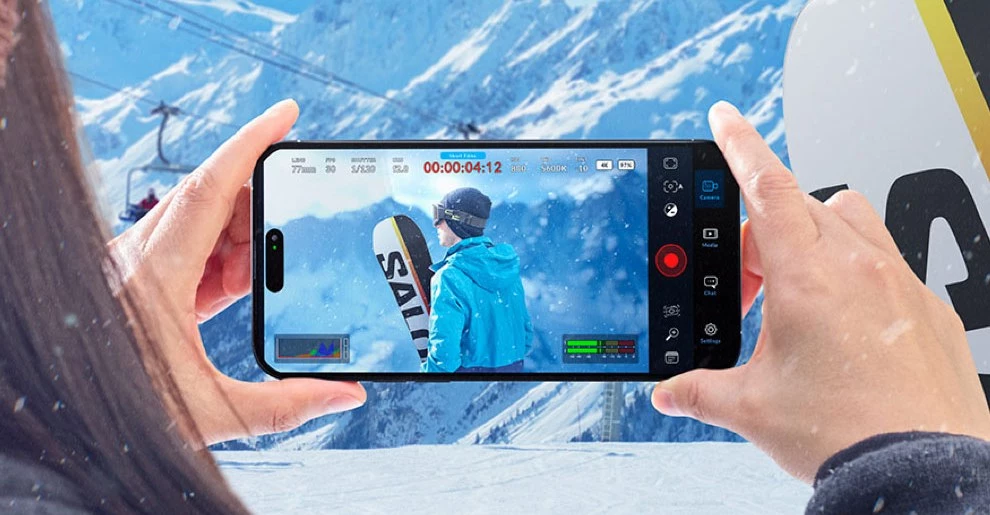
In a move that reverberates far beyond the realm of hobbyist videography, Blackmagic Design’s latest upgrade to its free Camera App for Android and iOS signals a tectonic shift in the architecture of live video production. What was once the exclusive province of satellite trucks, rack-mounted encoders, and labyrinthine workflows is now being distilled into the palm of your hand. With native, one-tap streaming to platforms like YouTube, Twitch, and Vimeo, direct SRT protocol support, and the ability to connect to custom RTMP/SRT servers, the smartphone is no longer a mere backup camera—it is becoming the broadcast studio itself.
The implications are profound. By embedding SRT—a protocol prized for its low latency and resilience against packet loss—directly into consumer devices, Blackmagic has collapsed the traditional boundaries between professional and personal production tools. Persistent camera controls, from ISO to focus peaking and false color, remain accessible even mid-broadcast, bridging the gap between ENG cameras and smartphones. The need for dedicated H.264/H.265 encoders evaporates, as the phone’s own imaging signal processor takes on the heavy lifting, shrinking both the physical and energy footprint of remote production kits.
Workflow Automation and Data Integrity: The New Backbone of Field Production
The technological leap is not merely about streaming. It is about trust and reliability in the field. Real-time external-drive disconnect alerts are now built in—a subtle but critical feature for those capturing lossless ProRes footage on location. A single missed alert can mean the difference between a successful shoot and a lost day’s work. Meanwhile, multi-view monitoring layouts, customizable on the fly, extend the semantics of Blackmagic’s cloud and ATEM switcher ecosystem to tablets and laptops. This hints at a broader play: distributed, cloud-based production management, where every device is a node in a seamless, collaborative network.
The result is a workflow that is both robust and flexible, offering:
- Real-time, professional-grade camera controls during live streams
- Critical data integrity safeguards for external storage
- Configurable multi-view layouts for complex productions
- Direct integration with cloud-based collaboration and editing tools
These features collectively transform the smartphone into a near-broadcast-class field camera, eliminating the need for expensive, specialized hardware and middleware.
Market Disruption and Strategic Ecosystem Expansion
The economic ripples are already being felt. By removing the $500–$2,000 cost of standalone encoder boxes and the recurring fees of middleware subscriptions, Blackmagic is compressing the marginal cost of multi-camera live production. For independent studios, esports organizations, and houses of worship—segments where every dollar matters—this democratization of access is nothing short of revolutionary. The total addressable market for ancillary hardware and cloud services expands, even as the entry point for professional-grade production drops to the cost of a smartphone.
This is not merely a product update; it is a strategic gambit. The free app serves as a frictionless funnel into Blackmagic’s broader, higher-margin ecosystem: ATEM Mini switchers, Cloud Store, DaVinci Resolve Studio, and the coming wave of AI-assisted post-production tools. The freemium model is familiar—dominate the workflow, monetize the peripherals—but its execution here is particularly elegant, leveraging platform-agnostic support (Android and iOS) to maximize reach.
Legacy vendors—Haivision, Teradek, LiveU—now face existential pressure at the entry level, forced to pivot toward ultra-high-end contribution links or risk irrelevance. Meanwhile, the creator economy, driven by platforms like TikTok and YouTube Shorts, is poised to benefit from a new baseline of production value, raising expectations and CPMs across the board.
Industry Trends and the Road Ahead: Edge Capture Meets Cloud Intelligence
The reverberations extend well beyond the broadcast booth. Smartphone-centric workflows slash the carbon footprint of remote production, aligning with ESG mandates and corporate sustainability goals. High-quality, on-device capture feeds directly into AI-powered editing pipelines, enabling automated reframing, denoising, and even virtual studio integration with platforms like Unreal Engine and Vizrt. The convergence of edge capture and cloud intelligence is no longer a distant vision—it is unfolding in real time.
For decision-makers across the media and technology landscape, the message is clear. Broadcast networks must pilot smartphone-based contingency workflows and reassess their encoder fleets. Telcos have an opportunity to bundle SRT-optimized data plans and co-market with device makers to monetize uplink-heavy users. Streaming SaaS platforms need to ensure their ingestion pipelines can handle a surge in SRT traffic, while investors should watch for M&A activity in mobile-first production tools and potential vertical integration by camera OEMs seeking software IP.
Blackmagic’s update is more than a feature release—it is a directional signal for the entire industry. Professional media capture is migrating to the edge, and the next wave of winners will be those who pair cloud-native intelligence with frictionless, mobile-first acquisition. The studio, it seems, is now wherever you are.

 By
By


 By
By
 By
By
 By
By

 By
By







